And the tongue is a flame of fire. It is a whole world of wickedness, corrupting your entire body. It can set your whole life on fire, for it is set on fire by hell itself. (James 3:6 NLT)
“It’s not what goes into the mouth that defiles a person, but what comes out of the mouth; this defiles a person.” (Matthew 15:11 ESV)
Let no unwholesome talk come out of your mouths, but only what is helpful for building up the one in need and bringing grace to those who listen. (Ephesians 4:29 BSB)
What you say can preserve life or destroy it; so you must accept the consequences of your words. (Proverbs 18:21 GNT)
Missed a blog post? Find prior posts at LoveAndGrace and tweets at Twitter.
HERE’S A QUIZ.
How many of us have heard the nursery rhyme that ends with these words: “but names can never hurt me”?
Most of us.
Now, how many of us believed it?
I never did. Anyone else?

Years gone by, when a playmate’s taunt got to me, I got defensive. Then some adult (usually my dad) would recite that little rhyme, with the admonition not to let the little stuff get to me.
Well, it did … and it wasn’t little stuff, either.
Instinctively, I sensed with my little-boy brain what the grown-up me has come to know:Behind whatever the “mean” words were was a mean feeling. It came from the other person’s heart and merely shaking it off was not enough for me.
Jesus spoke about the heart to His disciples when the Pharisees complained that they were not ritually washing themselves before eating. Our LORD looked sadly at the speaker, then searched the faces of each of the synagogue leaders gathered before Him.
“It’s not what goes into the mouth that defiles a person,” our LORD declared, enunciating each word for effect, “but what comes out of the mouth; this defiles a person.” (Matthew 15:11 ESV)
+++
WORDS NOT ONLY CAN HURT, they can set into motion a whole set of actions and reactions that quickly spin out of control, often to the speaker’s surprise.
Here’s an example:
“That’s not what I said!”
“Yes, it is. I was right here. I heard it.”
“Well, I didn’t mean it that way.”
“Maybe you didn’t, but that’s what you said. How was I supposed to know what you meant?”
Or these examples:
“Did you hear that …”
“You know what really galls me?”
“You’re about one inch from getting a piece of my mind.”
“You’re such a brave woman. I could never wear that shade of green this time of year.”
“You know what the matter with you is?”
While many of the bromides thrown about are not intended to hurt, many are.
Try this. Cue up FaceBook and scroll through the offerings. Don’t comment on anything, just go through the list of what your “friends” are posting. Now look at some of the comments posted in response to the original posts and the responses to those comments.
 Don’t count them, but just notice the number of times someone uses the occasion — maybe it’s the anonymity of cyberspace — to lance someone.
+++
NOW, LET’S GO BACK TO THE BIBLE.
Let’s compare the types of words many of us hear every day … and maybe even we say … with how Almighty God wants us to talk.
Try to hear our conversations against the backdrop of Jesus, who said that a person’s speech marks his or her character, because the words come from the person’s heart. They reflect what the speaker is feeling. (Matthew 15:11)
Or listen to the apostle Paul remind us to say only those things that will benefit someone else, not harm them. He said: “Let no unwholesome talk come out of your mouths, but only what is helpful for building up the one in need and bringing grace to those who listen.” (Ephesians 4:29 BSB)
Or Solomon, the wise king of ancient Israel, writing that we’re responsible for what we say, both the good and the bad. He said: “What you say can preserve life or destroy it; so you must accept the consequences of your words.” (Proverbs 18:21 GNT)
+++
SO WHERE DOES THAT LEAVE US?
God left it to James to “tell it like it is.” James is such a good choice because he was the oldest of Jesus’ younger half-brothers. (Imagine growing up with God as your older brother! James never caught on to who Jesus was until He was resurrected from the dead.)
James tells us that the “tongue is a flame of fire.” He said it is “a whole world of wickedness, corrupting the entire body.” (James 3:6 NLT)
That’s pretty serious.
 If we go back to the Gospels and watch how Jesus handled his accusers, we see that He never, ever sunk to their level rhetorically. He modeled love, patience, and understanding. Yes, He had the advantage of being divine, but He also was fully human.
Speaking just for myself, I find the standard set by Jesus very difficult to match. Even when I graciously hold my tongue, I am still frustrated because I often do not have a replacement sentence immediately available; you know, a sentence that would encourage my accuser or signal forgiveness and fellowship. Instead, I remain silent and pray that my silence will be a form of reaching out.
+++
IN THE END, OUR MASTER HAS GIVEN US the words to say … and a mission to fulfill.
After His resurrection and immediately before His ascension into heaven, our LORD told His disciples (and, by extension, all of His followers down through the ages — including us), what that mission is.
He wants us to go to our neighborhoods, and our communities and states, and throughout our country and even to the ends of the earth with a message of hope and redemption.
He said our mission is to share the fruit of the Holy Spirit: words of love, joy, peace, patience, kindness, goodness, faithfulness, gentleness, and self-control. (Galatians 5:22-23 ESV)
Jesus in Matthew 28:18-20 (CSB) directs us to spread the word, to tell everyone the world over about the Father, Son, and Holy Spirit, “teaching them to observe everything I have commanded you.”
Instead of using our tongues to spread lies or hatred or zingers or greed, the Christ wants us to use our tongues to speak for Him. In His final words on earth, He says it this way: (Acts 1:8 ESV), “You will be my witnesses.”
+++
PRAYER: O LORD, our God, hear our prayer. How often we grieve the Holy Spirit with our words. We use our words to reduce others, to put them down, to spread rumors about them, to malign them. Oftentimes, we don’t actually say the words out loud, but we say them to ourselves. That’s just as grievous to the Spirit. Guard our tongues, O LORD, and help us see how hurtful our words can be. Our LORD and Savior told us to use our words to tell others about Him and His love for us. We undermine that message with our sinful talk. In Jesus’ loving Name we pray. Amen
 or developed enough to understand how much healing occurs when we unburden ourselves to one another (man to man or woman to woman).
 as well.
  other” implies a mutuality here, wherein each person confesses sin to the other. Unless one man’s (or woman’s) heart is unduly burdened and needs immediate relief, this is not a one-way deal. This is a
 many of the examples we tend to face in that I was not confessing to the one against whom I had sinned. Still, the principle of emptying oneself in submission to Divine authority is the same.
 portion of Israel) at the age of 8. The Bible says he “did what was right
 The Bible tells us, the king marched over to the Temple and called the elders of his country to join him, and
  Some 650 years after King Josiah made his stand, the apostle Paul faced a similar test. Paul dealt with crippling divisions in the church, where believers split up, siding with different evangelists. Paul would have none of it.
 Every time a door opens, and the Lord gives us an opportunity to enter in to give God glory, there will be a competing wind, trying to blow us back. The enemy hates God’s rule and is dedicated to gumming up the works.


 HE: What that means is that without the Holy Spirit in your heart, everything Jesus had to say sounds like gibberish, but once you accept
 HE: Easier, right.
 Picture a woman clutching a photograph or child’s drawing, her hands resting in her lap as she sits in a quiet room, her eyes shut tight, her lips moving slightly as she mouths words of petition.
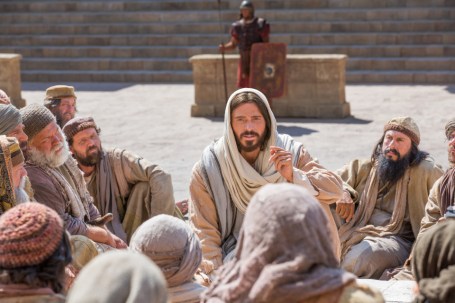 “Open the door, friend, and help me,” the first man says. “I have a friend who has journeyed and he just arrived at my house, but I have nothing to offer him.”
 faithful and trust in the
 me, no tasks to complete, no master to please.
 I was a slave to my sinful nature, but I was unaware of it. I had no clue. I imagine that put me in some pretty stellar company. There are a lot of people who have no clue how beholden they are to the pull of their sinful nature. Sadly, many of them are Christians … or, at least, church-goers … let’s call them “church-ers.”

 At first, when the boy was young, the slave, who was an adult and trusted by the child’s father, watched over the boy and guided his steps. You might say, the slave “ruled over” the child.
 “Chapter 4,” (the chapter headings were not in the original text of the letter), the apostle explains the migration that God the Holy Spirit provides everyone of us who progresses from our natural state — that of “unbelief” — to a new, born-again, state, that of “belief.”
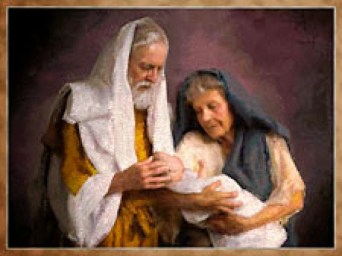 God had promised Abraham and Sarah that He would provide them with a son and that through that son, Abraham’s descendants would populate many nations and would become as numerous as the stars in the sky.
 of inheritance.
  In effect, we who once were born of the slave woman now are children of the free woman and, thus, of God’s promise.
 tempered than that. I don’t know what came over me. I’m tired, hungry even, certainly
 Yes, absolutely true! The Bible is very clear about that. In 1 Corinthians 6:19-20 ESV, Paul states, “Or do you not know that your body is a temple of the Holy Spirit within you, whom you have from God? You are not your own, for you were bought with a price. So glorify God in your body.”
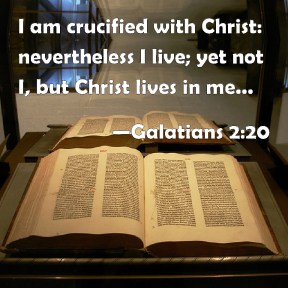 GRACE IS GOD’S FREE GIFT TO MANKIND.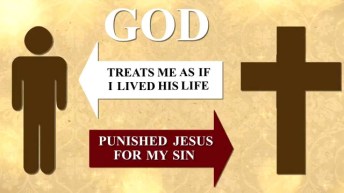
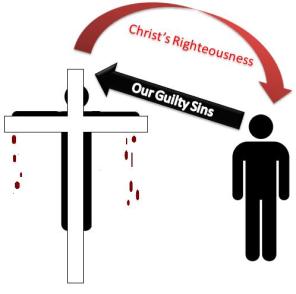 Paul says it this way: “not because I have my own righteousness derived from the law, but because I have the righteousness that comes by way of Christ’s faithfulness—a righteousness from God that is in fact based on Christ’s faithfulness (Philippians 3:9 NET, emphasis mine).
 All of them. Murder. Rape. Adultery. Theft. Slander. Lying.
  Sadly, many so-called Christians today — operating under the rubric of “progressive Christianity” — are busy revising the Gospel to “update” it according to contemporary society’s “reason” and “experiences.” They base their doctoring on a perverted sense of God’s loving nature, while conveniently ignoring His role as humanity’s judge.
  He died for us] to deliver us from the present evil age, according to the will of our God and Father” (v. 4 ESV).
 but I received it through a revelation of Jesus
 “inclusivity” and “tolerance” and “love” is not godly.
  Ward's Words | BY WARD PIMLEY