“Behold, I stand at the door and knock. If anyone hears my voice and opens the door, I will come in to him and eat with him, and he with me.” Revelation 3:20 ESV
“I do not ask for these only, but also for those who will believe in me through their word.” John 17:20 ESV
“Jesus said to him, “Have you believed because you have seen me? Blessed are those who have not seen and yet have believed. “” John 20:29 ESV
A CHRISTIAN MESSAGE
By WARD PIMLEY
Pastor, Journalist, Author
SUMMARY
TOGETHER, THOSE VERSES reveal a glorious pattern: Christ prays for future believers, His word reaches us, He beckons us and waits patiently for us to answer, and those of us who trust Him–even without having seen Him physically–live in communion with Him.
COMMENTARY
In Revelation 3:20, Jesus is addressing the faithless church in Laodicea, the apostate church. He is holding out hope for them, for just as He did with the woman caught in adultery, He is more interested in saving souls than He is in condemning people or even rebuking them.
He says, “I offer Myself to you. I will not force Myself on you but will graciously extend My hand. If you will hear my voice, see My hand, recognize My offer, and accept My gift, I will not turn you down.” He tells us He’ll come in–gladly, warmly, openly–and eat with us. We’ll become friends. However, He remains more than a friend: He also is our Lord (leader) and Saviour (ransom).
This is more than a salvation from judgment, which is the absence of a negative; this is an offer of friendship, which is the presence of a positive.
When this promise is married to that of John 17:20, in His High Priestly Prayer, He is extending that same offer of friendship to those of us who were born 2,000 years later, who did not have the privilege of seeing the Man Jesus in His earthly walk, but who knew Him only through the words of those who had seen Him.
We see something else: The Godhead is willing–eager, even–to work salvation through the words and deeds of mere humans, of us. Fortunately, our forebears carried the mantel. Now, we must pick it up and carry it forward for others.
We see that even in the Messiah’s agony, He is thinking about us and praying for us to the Father. When was the last time any of us prayed for someone 2,000 years from now while we were facing a personal agony, a trial, or a tribulation? I know I haven’t.
Remember the words of the Great Commission in Matthew 28:18-20 (also Acts 1:8; Mark 16:15)–Go and tell the Gospel to every creature–to everyone! I am with you!
Finally, in John 20:29, when He faces the disbelief–and then the honorific of Thomas, “my Lord and my God!”–He says it is a blessing for Thomas to believe because he has seen but even more blessed will it be for those of us who believe without having seen.
CONCLUSION
While we have not seen Him in the flesh, as did our forebears, we do see Him today through the Holy Spirit. Faith, born through apostolic testimony, becomes the door opened to the unseen Saviour.
MESSAGE FOR ME
JESUS IS CALLING ME to do for others what He has done for me, and what He has commissioned those who walked with Him to do for those who would come after them.[Jesus does not just call pastors and theologians to carry the Word but all believers. We need to be partners or co-workers in the harvest field.].
Since I am living proof of the work that has gone before me, I have no excuse for not carrying the mantel forward. The good news for me is this: Jesus promises to go with me. He says, “Lo, I am with you, even to the close of the age.”
I presume that’s forever, but it could mean the end of the Church Age (the Rapture). Either way, He has promised not to leave us as orphans but through the Holy Spirit, to live in our hearts. He is there to guide us, to comfort us, to console us, to encourage us, to teach us, and to share time with us. He also is there to remind us that He advocates for us to the Father.
PRAYER
HEAVENLY FATHER, Lord God, Creator of the Universe – Accept our worship, our praise, and our adoration. You alone, O God, are worthy; You alone, O God, are good. You have called us to be Your friends, while You died to ransom our souls and stand patiently outside the door, knocking, and waiting for us to hear Your voice and open the door. Lord, forgive us for our faithlessness, our wanderings, our disrespect, our disobedience, our willfulness. When I think of my sins, I am ashamed. I ask you, humbly and, if only mentally and in my heart, on my knees before You: Please grant me Your mercy and Your grace, and empower me, O Lord, to extend mercy and grace to others. In the mighty name of Jesus, the Messiah. AMEN
In the beginning was the Word, and the Word was with God, and the Word was God. He was in the beginning with God.All things were made through Him, and without Him nothing was made that was made. In Him was life, and the life was the light of men.And the light shines in the darkness, and the darkness did not comprehend it. – John 1:1-5 NKJV
ALMIGHTY GOD – We thank you for this opportunity to gather in worship of You and to praise Your mighty name. Thank You for how You have blessed us. We pray that this message will be Your message, that it will reflect Your truth, and that we will be guided and encouraged in our fellowship with You. In Jesus’ name we lift this prayer.AMEN
MESSAGE
WE COME TO an interesting question/answer segment in our current series, this one regarding the *Christian Disciplines*, a term that refers to customs and practices faithful Christians follow to stay close to the Lord.
This is the third item in our series.
You’ll recall in our first item, “I Am a New Christian. Now What?”, we had identified five characteristics of the born-again Christ: Rejuvenation (spiritually alive), Redeemed (bought with a price), Justified (declared debt-free), Adopted (part of God’s family), and United With Christ (becoming one with the Son).
In our second item, “Which Version of the Bible Should I Read, we discussed the pros and cons of word-for-word translations as well as thought-for-thought and paraphrase, and concluded that a dedicated Bible reader would want to (1) find a comfortable version to read and (2) might want to read side-by-side translations.
In this lesson, we’ll see that the Christian Disciplines are designed to help us: Abide in Jesus and Draw Near to Jesus.
Jesus told us to abide in Him, and He would abide in us.
[Interesting, at least to me, is that those encouragements came from half-brothers: Jesus told us to abide in Him (John 15), and his half-brother James urged us to draw near to Him (James 4).]
There are six disciplines we’re going to discuss, but we’ll focus mainly on the first three of them: Bible reading, prayer, and meditation; the other three are fasting, tithing, and serving (time and treasure).
Staying connected to the Holy Spirit is critical to keeping us on track during our earthly journey.
When we pull away from God or are slack about staying on the “straight and narrow” path (see Matthew 7:13-14), we’ll lose God’s …
spiritual input,
energy,
guidance, and
direction.
We have a word for that: It’s called *Lost*.
The world tries to pull us away from our spiritual grounding and provides all sorts of enticing diversions, including daydreaming, under the guise of meditation.
The apostle Paul (Romans 12) reminds us not to be “conformed to this world” but to be “transformed by the renewal of [our] minds” so we will know what is the “good, and perfect, and acceptable” will of God.
THE DISCIPLINES
BIBLE READING
All Scripture is given by inspiration of God, and is profitable for doctrine, for reproof, for correction, for instruction in righteousness. – 2 Timothy 3:16 NKJV
For prophecy never came by the will of man, but holy men of God spoke as they were moved by the Holy Spirit. – 2 Peter 1:21 NKJV
YOUR WALK WITH CHRIST SHOULD LEAD YOU TO LOVE READING HIS WORD and to consider the time you spend alone with the Lord to be the highlight of your day.
This is not a duty to be performed before you get on with the real work of your life.
You’ll may find as you start having difficulty carving out even five minutes for morning devotions. Pray that God will carve the time out for you. Soon, you’ll be spending more time and finding it more valuable.
As for which version or translation to read, that depends on your walk. Some people like to stay with one translation; others want to learn the Word from several translations.
You’ll find some translations (NASB, NKJV, ESV) are word-for-word translations, whereas others (NIV, NLT, NET, NCV, GNT) are thought-for-thought.
The WFW Bibles are truer to the original script in writing; the TFT Bibles are easier to read and understand. One technique people use is to read side-by-side versions.
In the end, you need to find what’s comfortable for you, and don’t be surprised if you switch around as you grow.
PRAYING
Very early in the morning, while it was still dark, Jesus got up, left the house and went off to a solitary place, where he prayed. – Mark 1:35 NIV
But you, when you pray, go into your inner room, close your door and pray to your Father who is in secret, and your Father who sees what is done in secret will reward you. – Matthew 6:6 NASB
PRAYER IS A TREMENDOUS PRIVILEGE. We ought to want to treat this as the incredible, and so undeserved, privilege it is; yet so many of us have stale prayer lives or nonexistent prayer lives.
We treat prayer as an obligation and think we’re good if we recite a memorized prayer from our past.
Can you imagine having a conversation with a family member or a good friend who just rattles off memorized comments to you?
“Hi! How are you? I like your blouse (shirt). Isn’t it hot out today? Where are you going now? Okay, goodbye.”
Next day: “Hi! How are you? I like your blouse (shirt). … Okay, goodbye.”
A few days later, we see that person again, and he/she says: “Hi! How are you? I like your blouse (shirt). … Okay, goodbye.”
The Creator of the universe allows sinful man to pray to Him! To talk with Him, ask Him questions, petition Him, seek forgiveness, offer praise, express frustration, and express anger — anything in Jesus’ name!
You don’t need an appointment, you can discuss any topic, and you can stay as long as you want! What other CEO allows you such unfettered access … and loves hearing from you?
This is not a ritual, with ritual words, flung rapidly into the air. Instead, this is thoughtful, heartfelt dialogue within the spiritual realm.
Pray to your Father in secret, and He will hear your prayer.
Jesus said God is spirit, and we are to worship Him in spirit and in truth (John 4:24). Let your prayers be the highlight of your day.
Oh, by the way, Paul urged us to pray constantly, so you can pray – in some way – all through the day, feeling nourished and strengthened by His love. (1 Thessalonians 5:17; Romans 12:12)
Practice using “prayer-lets” – little prayers, like, “God, help me please.” “Thank You, Lord.” “Forgive me, Father.” “Help me find my car keys (wallet, phone).”
You might like an encouraging prayer, like “Bless me, Lord, to be a blessing to others” or “Plan to do the Lord’s work; Work to do the Lord’s plan.”
You also could recite from Galatians 5:22-23 the nine components of the Fruit of the Spirit: “Love, joy, peace, patience, kindness, goodness, faithfulness, gentleness, and self-control.” At least one of them will be helpful in whatever situation you find yourself.
MEDITATING
Blessed is the man who walks not in the counsel of the wicked, nor stands in the way of sinners, nor sits in the seat of scoffers; but his delight is in the law of the LORD, and on his law, he meditates day and night. – Psalms 1:1-2 ESV
May these words of my mouth and this meditation of my heart be pleasing in your sight, LORD, my Rock and my Redeemer. – Psalms 19:14 NIV
Finally, brothers, whatever is true, whatever is honorable, whatever is right, whatever is pure, whatever is lovely, whatever is admirable—if anything is excellent or praiseworthy—think on these things. – Philippians 4:8 BSB
MEDITATION IS AN *UNDERUTILIZD DISCIPLINE* – misunderstood and often neglected.
This is not Eastern-style meditation, which consists of emptying the mind and repeating *hums* to block out intrusive thoughts.
Rather, this is a Scripture-based meditation, which is “thinking on these things.”
Reflecting on the morning’s Scripture reading.
Cultivating stillness to listen for God’s voice.
Praying for insight into private experiences.
Looking to reflect Christ’s love and grace in difficult moments.
Meditation plays a role in prayer and study.
What do we need to pray about?
What questions should we be asking?
What are the relevant/meaningful passages?
Who do we need to reach?
FASTING
And when you fast, do not look gloomy like the hypocrites, for they disfigure their faces that their fasting may be seen by others. Truly, I say to you, they have received their reward. – Matthew 6:16 ESV
“Yet even now,” declares the LORD, “return to Me with all your heart, with fasting, weeping, and mourning.” – Joel 2:12 BSB
WAY UNDERDONE. YOU MIGHT RARELY HEAR OF ANYONE FASTING. Some will fast for a meal, such as skipping lunch. Others will fast solid food for a day but take plenty of liquid. Others will cut back on food consumption (desserts) for three days.
The point is that your cravings for food will grow, and you’ll need to depend on God’s strength and lovingkindness to make it through the fast. Fasting is designed to build your reliance on God.
Fasting can take other forms: social media, television, dessert, soda, sugar, second helpings.
Many Christians, Bible-based, strong-in-the-faith Christians rarely, if ever, fast. You might want to pray about God’s direction for your life, to see what He wants for you. If you fast food and drink, you might want to consider health risks, depending on the extent of your fast.
My approach, instead of denying myself something, is adding something to my devotions. During the fasting period, I will add to my time reading the Bible, add to my time praying, and add to my time in meditation. I will consciously look for additional service opportunities or for another organization to support financially.
My view is that denying myself does little for me and nothing for others I meet; whereas, adding devotions to my life benefits both me and others.
TITHING
“My point is this: The person who sows sparingly will also reap sparingly, and the person who sows generously will also reap generously. Each one of you should give just as he has decided in his heart, not reluctantly or under compulsion, because God loves a cheerful giver.” – 2 Corinthians 9:6-7 NET
“‘Bring the full tenth into the storehouse so that there may be food in my house. Test me in this way,’ says the LORD of Armies. ‘See if I will not open the floodgates of heaven and pour out a blessing for you without measure.’”– Malachi 3:10 CSB
PLEASE DON’T SEE THIS AS THE CHURCH HITTING YOU UP FOR MONEY. Churches are voluntary organizations. They thrive or die on collections.
God was clear that we should give to the church through the thankfulness of our hearts. Prayerfully find a church where you can plug in and support it with your time and treasure.
Consider it all joy that God has called on you to contribute to His Kingdom.
In addition to your giving to the local assembly, you might want to pray about contributions to Christian-based charitable organizations.
SERVING
In the same way, faith by itself is dead if it doesn’t cause you to do any good things. – James 2:17 GNT
I preached that they should repent and turn to God and demonstrate their repentance by their deeds. – Acts 26:29 NIV
Produce fruit worthy of repentance. – Matthew 3:8 BSB
GOD HAS GIFTED EACH OF US DIFFERENTLY TO SERVE HIM IN VARIOUS CAPACITIES (see Romans 12; 1 Corinthians 12).
Some can teach or play musical instruments or sing; others can handle finances or are skilled in painting, carpentry, plumbling, or electrical; others can work with seniors, youth, or in the nursery; while still others make excellent greeters, parking lot attendants, or security detail.
Praising my Savior all day long. Let us raise our voices in song.
We are a mosaic of humans, which God weaves together to form the church.
There is a place for you in His Kingdom building.
Serve humbly; serve joyfully; serve in community.
Remember that Jesus washed His disciples’ feet (see John 13). He said that no student is more important than His teacher (John 13:16).
Jesus’ point is that if He, your Lord, can stoop to wash your dirty feet, surely you can set up tables, serve a meal, teach children, clean bathrooms, greet strangers, or pray with a colleague.
That’s just for starters. Pray about where He wants you. He’ll make it clear to you, if you will listen.
Sometimes, He’ll take you out of your comfort zone, and you’ll need to come under someone else’s authority.
More often, He’ll use the gifts and talents He has given you, augmented by your training, education, and experience, to further His Kingdom.
FINAL WORDS
THE SPIRITUAL DISCIPLINES should not be seen as mere religioius practices, which may give the impression of piety and faithfulness but, in reality, lack any semblance of worship, evangelism, or discipleship.
Instead, they should be seen as God-induced, Bible-supported activities that we can engage in with great enthusiasm to guide, direct, and enhance our walk with Jesus Christ.
We are connecting with God the Father and God the Son through the bonding power of God the Spirit.
Whether you are reading your Bible (or someone is reading it to you, or you are reading it to someone else), or whether you are praying and sharing your heart with your creator, or whether you are “thinking on these things” – meditating, contemplating – you should enter these disciplines with joy and deep anticipation, eager to learn what God wants to share with you.
When you are done, you should feel a closer bond with God the Father and God the Son through the bonding power of God the Spirit.
Keep reading your Bible.
Keep praying.
Keep meditating (thinking on these things).
PRAYER/BENEDICTION
ALMIGHTY GOD, LORD OF CREATION:
Help us, as we go forth, to be mindful of Your presence and Your call on our lives. May we be diligent in following the Christian disciplines so we will remain close to You as faithful disciples and ambassadors for Christ.
NOW, may the Lord bless you and keep you. May the Lord make His face shine on you and be gracious to you. May the Lord turn His face towards you and give you peace, both now and forevermore. AMEN and AMEN
IT IS NORMAL for a new Christian to be confused, excited, and scared. This is new terrain.
The same is true for our friends who are actively seeking answers to their questions about Christianity. We call them “seekers,” and even those skeptics who are beginning to doubt their disbelief.
To help, we have prepared a series called, “Real Questions Asked by Newbies, Seekers, and Skeptics.”
See the first item, I AM A NEW CHRISTIAN. NOW WHAT? at HERE.
We might title this lesson: “I WANT TO KNOW THE TRUTH.”
Today, we have the privilege of eavesdropping on a New Believer’s class, and I believe the instructor is laying the groundwork for a discussion about the integrity of our Bibles. Can we trust its 66 books to deliver the truth?
Let’s listen in, shall we?
INSTRUCTOR
THE BIBLE TELLS US that when we are regenerated, or redeemed, by the Holy Spirit, we become a “new creation” (2 Corinthians 5:17) and so we are.
Last time, in our prior message, we learned that, as new Christians, we are regenerated (spiritually alive), redeemed (bought with a price), justified (our debt paid), adopted (become part of God’s family), and united with Christ (we become one with the Son).
So, when we want to grow in our knowledge of what it means to be a Christian, when we want to know what is “right” as opposed to what is “wrong,” where do we go for the answers? Who, or what, can we trust?
Most Christians go to church with some regularity, and that becomes the limit of their devotion. They don’t read their Bibles, they don’t pray daily, and they don’t witness for their faith. When their church service is based mostly on ritual, they don’t learn anything, either.
As a result, we come a church that is “biblically illiterate.” A biblically illiterate church is ill-equipped to discern false teaching and so can go astray.
For those Christians, once church is “over,” they’ve “done” church, and they go back to the real world without another thought about God and His design for us until the next time they go to church.
That’s why, in this series, we’re going to discuss some of the basics of Christian doctrine and emotions so we can grow in our faith.
As Christians, we’ll assume we go to the Bible for the answers, but that leaves the question: Which version or translation of the Bible is the most reliable?
Some people, especially skeptics, doubters, and the downright hostile, will claim – falsely; we believe – that with so many different translations, there must be numerous errors.
Scholars have assured us that is not so.
They provide great detail demonstrating the care taken in making copies of the original text — called “autographs — and making additional copies of those copies.
The originals date back between 2,000 years ago, when the NT was written, and 3,500 years ago, as much of the OT was written 1,000-1,500 years before Christ was born.
The Bible speaks to the need we have to know the truth:
“Sanctify them by Your truth. Your word is truth.” – John 17:17 NKJV
“Jesus said to him, ‘I am the way, and the truth, and the life. No one comes to the Father except through me.’” – John 14:6 ESV
It looks like we have our first question. Go ahead.
STUDENT’S QUESTION
All right, listen here. I’m sitting in a Bible study. I know most of the folks here. Some of them are really cool, others like to show off their *Bible knowledge*, and a few, like me, stay quiet for the hour.
The thing is, I’ve got an NIV Bible that someone told me was a good introductory version. The instructor uses the NASB, this other guy who’s pretty smart uses ESV, then another guy has the NKJV. I think the guy who sits in back uses KJV, but he doesn’t say much, so I can’t say for sure.
Then there’re a couple of young women who use something called the NLT or the NCV or GNT or TLB. Like every week, they’re into something different.
Point is, I have no idea which Bible I should be reading. I mean, are they all the same, or are they different? Are some good and some bad?
What gives? I want to trust what I read.
NARRATOR
THAT WAS QUITE a question, and we can hear some students murmuring in agreement. It’s a typical question and quite reasonable. It’s a question we have at some time. Why do I say that? Because it was based on a small amount of information mixed with a healthy dose of confusion.
Shh. The instructor is about to respond.
INSTRUCTOR
WE HAVE A CHART that will give you some sense of the Bible translation landscape.
Be grateful to Almighty God that He has made available so many different translations in English for believers, newcomers, scholars, and serious students alike!
The chart is printed below, but I’m going to describe it.
There are three basic classes of Bible translation: word-for-word, thought-for-thought, and paraphrase.
Word-for-word translations will provide the closest English equivalent to the original text word, be it in Hebrew, Aramaic, or Greek.
Thought-for-thought translations will give the English equivalent to a group of words forming a thought. In a sense, they smooth out the writing to make it more palatable to 21st century English-speaking ears.
The thought-for-thought translations cover a range from closer to word-for-word to closer to paraphrase, depending on the amount of license the translators used.
Paraphrase Bibles scrap the original writing and take a broad overview of the text. They might call their invention “holistic,” wherein they look at the “sense” of the passage as opposed to the actual wording.
Here is how our chart depicts the various translations:
HERE’S A SUGGESTION: Read the Bible. Pray to God. Spend time with the Holy Spirit. He will lead you where He wants you to go. Then go there.
For now, why not start with a reputable translation with wording that you can understand. As you delve deeper into Bible study, you’ll become more comfortable comparing versions.
Buy different translation Bibles or use one of the handy Bible apps for your phone or tablet that allow you to download multiple versions of the Bible in multiple languages. Use the split-screen option.
With a split-screen, you can read a word-for-word translation on the left side and a thought-for-thought or paraphrase version on the right side.
By reading them together, you’ll get a deeper sense of the original wording along with an easier-to-understand translation. The two together should help you draw closer to God as well as help you memorize various verses.
Experiment. Have fun! This is God’s Word you’re starting to discover. You’ll find that, if you’re serious about finding God, He’s more than equally serious about finding you.
How’s about this for encouragement: You will seek me and find me when you seek me with all your heart. – Jeremiah 29:13 (NIV)
Note that the wording is from the NIV that you’re so fond of. Experiment on your own to see how other translations compare.
Remember this promise: Draw near to God and He will draw near to you. – James 4:8 (NASB).
Okay, that was from the NASB. Check out where NASB is on the above chart. See where the NIV is and then read James 4:8 in your Bible.
Hey, ask one of those young ladies with the NCV or the GNT or even the man in the back with his KJV what their versions say. Ask them why they like those translations. Listen to them. Tell them your thoughts. Pray with them.
Together, all of you will be joining together on life’s greatest, most rewarding, journey!
Be a Berean!
Don’t know who the Bereans were? Check out Acts 17:11. Go ahead. Look it up. Yes, do it now. Try any translation. Try several!
You’ll be glad you did.
Then, once you’ve read that verse, be a Berean!
NARRATOR
WHAT DID YOU LEARN from that exchange between the Instructor and the Class? You saw 20 translations listed. There are more in English, including some I have used that are not listed, such as the BSB and the WEB. For those of you are fluent, or even semi-fluent, in a second language, you’ll have the advantage of adding more translations to compare.
A web search shows there are more than 450 versions of the Bible in the English language – with estimates of about 900 translations since the 16th century, when the printing press was invented. Most of those translations are no longer in print, having been updated or replaced. The exact number of translations depends on the definition one uses as to what constitutes a new translation versus a revision.
We know the various translations serve different purposes. Scholars and serious students will gravitate to the exact translations, while newer minds will find the easier-to-read options more inviting.
It looks like the instructor is ready to speak.
INSTRUCTOR
The word-for-word translations have the advantage of being truer to the original text being translated, so the accuracy rate is higher. In other words, we can say it is a “truer translation” to the original.
The disadvantage is that the writing often is stilted and can be more difficult for us to read and comprehend.
The thought-for-thought translations seek to rectify the comprehension difficulty of the word-for-word translations by rewriting the text, so it reads like your daily newspaper.
The advantage of comprehension is offset sometimes by slight-to-moderate deviations from the original writing, which can lead to a different interpretation of the text, so one needs to be careful when reading them.
The paraphrase options are the most suspect for serious Bible readers and scholars but often present the easiest-to-understand versions for the casual reader or new Christian.
As we can see, each style has its advantages and disadvantages, so I would recommend doing the following:
EXPERIMENT. Check out various translations and find the one or ones you like. As far as I can tell, there is no wrong choice, just be diligent in reading your Bible.
COMPARE. Read a side-by-side Bible, either in print or digital app version, so you will have a word-for-word translation side-by-side with a thought-for-thought version. That will give you the advantages of both – a truer translation plus an easier-to-read version. Compare both translations against a paraphrase to see if that helps you. It might or it might not. For paraphrases, I like the GNT and often use it in my writing, but I would not depend on it for my study or devotions.
The more comfortable you become reading your Bible, the easier it will be for you to identify the translation that fits you best, the one you turn to for your devotions and study.
NARRATOR – FINAL WORDS
I PREFER USING the New King James Version and the English Standard Version as side-by-side, but I also make heavy use of the Christian Standard Bible, Berean Standard Bible, and New International Version Bible.
In my Life Bible app, I have all five versions called up in two rows: In the top row, I have the NKJV and ESV side-by-side; in the bottom row, with skinnier columns, I have the CSB, BSB, and NIV side-by-side.
That gives me the range of translations I like while making it easier for me to read the NKJV with the ESV as a smoother version to read alongside it.
You’ll need to determine what system works best for you.
Remember: Keep reading your Bible!
PRAYER & BENEDICTION
ALMIGHTY GOD, LORD OF CREATION:
We are so grateful for the love You bestow on us.
You have given us a Bible that we can read and treasure, a book capturing the very words of Jesus Christ, the interpretative letters written by His closest followers, and the prophets and historians of the Old Testament, foretelling the Messiah.
Help these, Your faithful servants, as they go to their rooms for solitude and gather in groups for fellowship, to seek Your truth, Your Word, Your promises that, when followed, will enrich their lives and save their souls.
Whichever version or versions of Holy Writ they decide on, we pray Your encouragement for them to stay in the Word and not find daily excuses to avoid that very important Christian discipline.
As they do, O Lord, may Your Word continue to change their lives.
We lift this prayer in praise and thanksgiving. In Jesus’ name.
NOW, may the Lord bless you and keep you. May the Lord make His face shine on you and be gracious to you. May the Lord turn His face towards you and give you peace, both now and forevermore. AMEN and AMEN
WE ARE PRIVILEGED TODAY to drop in on the first meeting of a church class for three groups of people: new Christians, those seeking answers to life’s basic questions, as well as skeptics, who nevertheless think there could be something to that Jesus message they’ve heard about.
The class is called Real Questions Asked by Newbies, Seekers, and Skeptics.
Some of you might be in that category. If so, as we proceed, we will try to answer your questions about the Christian faith and its doctrines.
We will try to post one topic a week, so those interested should bookmark us or subscribe for e-mails announcing a new posting. You can post questions to the author by clicking on “Contact Editor.”
It looks like class is ready to start, so let’s tune in.
INSTRUCTOR
CONGRATULATIONS, CLASS!
For those who recently joined the Kingdom of God through repentance of sin and declared belief in Jesus Christ as God’s Son, welcome to the family. Jesus in John 3:3 calls it being “born again.”
For those who have walked with Christ for many years, this series should be a good refresher.
For those who are still questioning and wondering whether you ought to jump in, you are most welcome to join us.
It looks like we have our first question.
STUDENT
I recently confessed my sins to Jesus Christ and accepted Him as my Lord and Savior, but now I’m confused. I don’t know what I’m supposed to do or what my salvation means, other than I’ll go to Heaven when I die. So, really, what did I sign up for?
INSTRUCTOR
THANK YOU FOR YOUR QUESTION.
Class, as you think back on your conversion experience, you might be thinking along these lines:
I found myself walking down the aisle at the pastor’s invitation to join others, who were lined up in front of the altar, many of whom I fugre were, like me, not certain they wanted to do this but couldn’t ignore that *tug* in their hearts that said it could be the Father calling. Jesus told us in John 6:44 that “No one comes to Me unless the Father calls him.”
After we recited the “Sinner’s Prayer” and turned our lives over to Jesus, we recall the pastor sharing some comforting Scripture with us:
“Therefore, if anyone is in Christ, he is a new creation. The old has passed away; behold, the new has come.” – 2 Corinthians 5:17 ESV
“My old self has been crucified with Christ. It is no longer I who live, but Christ lives in me. So I live in this earthly body by trusting in the Son of God, who loved me and gave himself for me.” – Galatians 2:20 NLT
You might also recall the pastor listing some categories that, he said, described what it means to be a new Christian.
I am …
REGENERATED
REDEEMED
JUSTIFIED
ADOPTED
UNITED WITH CHRIST
NARRATOR
Well, that’s what we were looking for, isn’t it, a bunch of big words! Let’s see if the class will unpack them so we can understand what the Bible is telling us.
INSTRUCTOR
WE ARE FALLEN CREATURES
THE FIRST ITEM we should discuss is how we got here, how we came to need Christ’s sacrificial death on the cross, and our belief in Him to become what the Bible calls “a new creation.”
Let’s start with this: The world is a messed-up place.
Adam and Eve, in their first recorded act as a married couple in the Garden of Eden, disobeyed God.
If we could remake the world to meet all the wonderful qualities of love, forgiveness, mercy, grace, and tolerance – and teach those values to everyone so they all understand the new rules of the game – it would not take long before the world would degenerate into the same mess we have today.
Why is that?
Because our problems are not problems of poor government or economic poverty. They are problems of the heart. We are, by nature, rebellious men and women, disobedient to God and His word.
The first recorded action of man and woman in the Garden of Eden was to violate God’s command not to eat from the Tree of the Knowledge of Good and Evil. Disobedience was our first response to God as a newly minted married couple living in Paradise.
However, God in His mercy, in what is called the Protoevangelium (Genesis 3:15), promised to send a savior or redeemer, the Messiah, to reclaim us and give us life. That Messiah is Jesus.
Let’s take a look at those five categories listed above that define our new lives.
I AM REGENERATED
JESUS TOLD US in John 3:3 that unless we are “born again,” we will not see the Kingdom of Heaven. So, what does it mean to be “born again?” and how do we accomplish that? First, we don’t accomplish it; God does it for us.
The transformation from death to life is a simple action on our part but one that relatively few people are willing to take. It just involves a short prayer of repentance for our sin and a declaration of belief that Jesus is (a) the Son of God, (b) that He lived a perfect life, and (c) that He died on the cross for our sins.
The difficulty most people have is that in that prayer, we are turning our lives and wills over to Someone else. We want to say, “My life, my will.” God gave us free will, so we can exercise that liberty, but He also calls us to give our wills over to Him.
When we act out our wills, we act in a manner contrary to God’s design in ways that are harmful to our health, our peace, and our self-worth. When we turn our lives over to Him in trust and obedience, He leads us in righteousness. He grants us His peace. We are bathed in His love. We have His forgiveness.
“As for you, you were dead in your transgressions and sins. … But because of his great love for us, God, who is rich in mercy, made us alive with Christ even when we were dead in transgressions – it is by grace you have been saved.”– Ephesians 2:1, 4-5 NIV
Being “made alive” spiritually is what it means to be “saved.” It is what it means to be “regenerated.”
Most of all, we have Heaven to look forward to as our eternal reward.
I AM REDEEMED
Jesus embraces us when we come to Him in childlike faith.
REDEMPTION COMES FROM the Greek word agorazo, which means “marketplace,” and exagorazo, which means “to remove from the marketplace.” There is a third word in the Greek, lutrao, which means “freed” or “to pay a ransom.”
When the three words are grouped together, it means we have been freed from the marketplace of sin because someone paid a ransom for us.
The Bible says we are not redeemed with corruptible things, like silver or gold, but with something more important, more lasting, more enduring – Christ’s blood.
We are redeemed “with the precious blood of Christ, as of a lamb without blemish and without spot.” – 1 Peter 1:19 NKJV
That means our redemption price, or salvation, was paid for by Christ’s self-sacrifice on the cross for our sake.
I AM JUSTIFIED
WHEN WE ARE “JUSTIFIED,” we are declared “righteous” by God; that is, the Creator has named us as “righteous” because He sees us through the sacrificial blood of His Son rather than the sin-filled beings we are.
“Abraham believed the LORD, and he credited it to him as righteousness.” – Genesis 15:6 CSB
“Therefore, since we have been justified through faith, we have peace with God through our Lord Jesus Christ.” – Romans 5:1 BSB
Our “righteousness” does not mean we are faultless or sinless, because we are not. Rather, it means God has chosen to see us as sinless because His Son has endured His wrath or anger for our sinfulness. Therefore, He can hold us as forgiven, clean, and faultless.
That is His gift of grace.
“For all have sinned and fall short of the glory of God, being justified freely by His grace through the redemption that is in Christ Jesus. … For the wages of sin is death, but the gift of God is eternal life in Christ Jesus our Lord.” – Romans 3:23-24; 6:23 NKJV
I AM ADOPTED
WHEN WE ARE ADOPTED by God, we become full-fledged members of His family.
The adoption by God was likened to Roman law, where the adopted son held the same privileges and property rights that would have been his if he were a natural-born son in that family. In fact, any debts or obligations he would have incurred as a member of his former family were abolished as if they never existed.
As new Christians, we are welcomed into “God’s family,” with all the privileges and love that His bestows on His own Son. No, we are not divine, but we are wanted, adored, valued, and cherished.
We can take comfort from the assurance God gives us in His Word:
“For all who are led by the Spirit of God are sons of God.” – Romans 8:14 ESV
“The Spirit Himself bears witness with our spirit that we are children of God, and if children, then heirs—heirs with Christ.” – Romans 8:17-18 NKJV
“So you are no longer a slave but a son, and if a son, then God has made you an heir.” – Galatians 4:7 CSB
“Behold what manner of love the Father has bestowed on us, that we should be called children of God!” – 1 John 3:1 NKJV
“But to all who have received him – those who believe in his name – he has given the right to become God’s children.” – John 1:12 NET
That should be enough to convince you of God’s love for you when you draw near to Him. He blankets you, protects you, and comforts you. Those things are true whether we understand them, or accept them, or even want them.
If we ignore the gift, it lies fallow; if we pick it up, it becomes ours.
As for me, I gladly and willingly accept God’s gift of love and family. I want to draw near to Him, and He has promised to draw near to me. (See James 4:8)
I AM UNITED WITH CHRIST
God’s gift to mankind is eternal life. We can choose to accept it or reject it. The smart choice is to accept it.
WHAT DOES IT MEAN to be “united” with Christ? He is divine; I am human. He is self-existing; I am created. He is eternal; I have lived a short time. (However, I am promised life from now on.) How can I possibly be “one” with Him?
We can liken our relationship with Jesus Christ to the institution of marriage as God designed it to be, where a man and a woman each leave their parents and families of origin, become “one flesh,” and start a new family.
“That is why a man leaves his father and mother and unites with his wife, and they become a new family.” – Genesis 2:14 NET
Here are some verses that describe our “oneness” with Christ:
We are crucified with Jesus. Galatians 2:20
We died with Him. Colossians 2:20
We are buried with Him. Romans 6:4
We are raised with Him. Colossians 3:1
THREE MORE ITEMS FROM ROMANS 8:17:
We will suffer with Him.
We are glorified with Him.
We are joint heirs with Him.
Just a word of caution and consolation. When the Bible says we will “suffer” with Christ, there are two points to make: (1) We might be targeted for our faith; (2) Christ suffers alongside us. We want to be united with our Savior in all respects.
In ancient Israel, Joshua confronted unbelief among the Israelites with these words:
“If serving the LORD seems undesirable to you, then choose for yourselves this day whom you will serve. … But as for me and my household, we will serve the LORD.” – Joshua 24:15 NIV
FINAL WORDS
WE CAN DRAW great comfort from God’s promises. He is unlike any human in this very important aspect: He can be trusted. He keeps His word. Why is that? Well, besides being 100 percent human, He also is 100 percent devine.
“God is not man, that He should lie, Nor a son of man, that He should repent. Has He said, and will He not do? Or has He spoken, and will He not make it good?” – Numbers 23:19 NKJV
“Do not fear, for I am with you; Do not be afraid, for I am your God. I will strengthen you. I will also help you. I will also uphold you with My righteous right hand.” Isaiah 41:10 NASB
“The LORD himself goes before you and will be with you; he will never leave you nor forsake you. Do not be afraid; do not be discouraged.” Deuteronomy 31:8 NIV
“I have told you all this so that you may have peace in me. Here on earth you will have many trials and sorrows. But take heart, because I have overcome the world.” – John 16:33 NLT
God’s promise to restore mankind cost His Son an excruciating death on the cross, which He did for us. Let’s not leave that gift sitting on the table unopened.
As a new Christian, you have opened the gift, and the gift of life is now yours!
CLOSING PRAYER
ALMIGHTY GOD, Our Lord and Creator, we thank You for Your love andYour desire to reconcile us to fellowship with You.
Give strength, courage, and direction, we pray, to these new Christians, all of whom have recently turned their eternal destiny over to Jesus Christ and now wonder what lies ahead.
We pray, O Lord, that our series of articles for new Christians and those curious about Christian beliefs will lead them faithfully to draw closer to You in their walk ahead.
Spare them spiritual warfare, we pray, until they have the confidence to call on You for protection.
Forgive us, Lord, when we fail You. Pick us up and direct us forward on the path You have chosen for us.
In the name of our Lord, Jesus Christ, the Messiah, we lift this prayer. AMEN
“The Spirit of the LORD [is] upon Me, Because He has anointed Me To preach the gospel to [the] poor; He has sent Me to heal the brokenhearted, To proclaim liberty to [the] captives And recovery of sight to [the] blind, To set at liberty those who are oppressed; To proclaim the acceptable year of the LORD.” – Luke 4:18-19 NKJV
A CHRISTIAN MESSAGE
By WARD PIMLEY
Pastor, Journalist, Author
THIS IS THE MEANING OF CHRISTMAS.
Our Lord’s First Advent. His first arrival in human life as Himself human. There were prior appearances as Christophanies, but never before had He come as man. Fully man and fully God.
We cannot understand how He could do that, but He could because He is God.
This message completes the two-part message of The Meaning of Christmas. The first part is here.
PART 2. THE MEANING
This birth of our Lord was a downpayment on the future promise of Paradise Restored after sin cost us Paradise Lost.
Jesus would preach the Gospel – “The time is fulfilled, and the kingdom of God is at hand. Repent, and believe in the gospel.” Repent! The Kingdom of God is at hand. Me. I AM the Kingdom of God. I AM here. Therefore, you repent.
That’s a beautiful message, and we who believe entrust our very salvation and future in Paradise to the truth of that message; yet most men and women in His time and even today reject the Message, want nothing to do with it because He is interfering with their sin, and men and women love their sin. We love our sin.
That’s still the Gospel message that we are called to carry on, to urge those we meet to repent before the time is fulfilled, that the kingdom of God is at hand. Repent, and believe. Tell them what God has done for you.
He then lived a sinless life and died an ignoble death on the cross, having been beaten and lashed so that the Bible says He no longer looked human.
After dying, He rose from the dead, taught for 40 days and nights, then was ascended in glory to sit next to the Father and to send the Holy Spirit to lead us and guide us, which took place 10 days later.
Before leaving the Earth, He commissioned us to carry on His ministry – of preaching, forgiving, healing, baptizing – all in His name.
Through all of this, a tension was building, is building still. Faster and faster this tension builds. Can you see it? Can you feel it? Do you hear the sound of something approaching? Is there not a whisper that says, “Hold on, folks, this is not the end. There is more, much more, coming.”
As glorious as the First Advent was, all of history is building for the crescendo, and that will be the Second Advent, the Second Coming of Jesus, when the whole world will recognize Him as the Jewish Messiah – Yeshua HaMachiach.
Figure 3. The day will come when all mankind worships Jesus as King of kings and Lord of lords, the Christ and Jewish Messiah.
In that moment, the Bible tells us, every knee will bow before Him, and every tongue will confess that He is the Lord of lords and the King of kings.
In that moment, the Bible tells us, the whole world will recognize and acknowledge that Jesus was, is, and forever more will be the Christ, the Messiah.
No longer just a Babe in the manger. You see, that was just the beginning.
PART 3. SECOND ADVENT
DO YOURSELF A BIG FAVOR. Work your way through the three Bible passages below and see if you find anything discordant with the Christmas message.
[HINT: Although they are familiar passages read at Christmas time, they largely reference the Second Advent, not the First Advent.]
The Spirit of the Lord GOD [is] upon Me, Because the LORD has anointed Me To preach good tidings to the poor; He has sent Me to heal the brokenhearted, To proclaim liberty to the captives, And the opening of the prison to [those who are] bound; To proclaim the acceptable year of the LORD, And the day of vengeance of our God; To comfort all who mourn, To console those who mourn in Zion, To give them beauty for ashes, The oil of joy for mourning, The garment of praise for the spirit of heaviness; That they may be called trees of righteousness, The planting of the LORD, that He may be glorified.” – Isaiah 61:1-3 NKJV
“For unto us a Child is born, Unto us a Son is given; And the government will be upon His shoulder. And His name will be called Wonderful, Counselor, Mighty God, Everlasting Father, Prince of Peace. Of the increase of [His] government and peace [There will be] no end, Upon the throne of David and over His kingdom, To order it and establish it with judgment and justice From that time forward, even forever. The zeal of the LORD of hosts will perform this. – Isaiah 9:6-7 NKJV
“Then the angel said to her, “Do not be afraid, Mary, for you have found favor with God. And behold, you will conceive in your womb and bring forth a Son, and shall call His name JESUS. He will be great, and will be called the Son of the Highest; and the Lord God will give Him the throne of His father David. And He will reign over the house of Jacob forever, and of His kingdom there will be no end.””- Luke 1:30-33 NKJV
THE REAL JOY OF CHRISTMAS for many evangelical Christians – and certainly it is for my wife and me – is the promise of the Second Advent, of Christ’s return. At that time, He will establish His forever Kingdom, the one prophesied by Isaiah 750 years before Christ was born – 750 years before Christmas – 750 years before the Babe in the Manger.
If you worked your way through the three Bible passages above, you’ll see something that most churches glide over. The passages do not focus on Christ’s first coming but His second, not His coming as a sacrificial lamb but His coming as a conquering king.
When Jesus spoke in the Temple, He stopped His reading of the prophet Isaiah in the middle of the sentence – at the comma.
To proclaim the acceptable year of the LORD, And the day of vengeance of our God.
That hasn’t occurred yet, but it will. Just as sure as we know the Babe in the manger was fulfillment of biblical prophecy, we know His next arrival also will fulfill biblical prophecy.
PART 4. FINAL WORDS
THAT BRINGS US TO OUR MOST IMPORTANT QUESTION: SO WHAT?
All of that is well and good, but what does any of it have to do with me and my life?
Good question. Here’s the answer: All of us are called to make a decision. We have to decide if we are willing to accept the gift that Jesus is offering us.
Are you ready for the Messiah to return? He will catch us up in the air _ either as the dead in Christ who will rise first or as we who remain _ in the great Harpazo – “to snatch away” – the Rapture.
Unless you are born again, or reborn – know Jesus Christ as your personal Lord and Savior – all of this will be done without you. You will be resurrected, but the Bible tells us it will be after the Tribulation and Millennium are over, when God holds court for the unsaved, called the White Throne Judgment.
Do you know for certain that you are saved and that you will spend eternity in Heaven with God? If you are not sure, let’s change that now. Just repeat after me:
“Lord, I am a sinner in need of Your grace. I believe that Jesus is Your Son, that He lived a perfect life and died on the Cross for my sins, taking Your wrath upon Him for my sake so I could be reconciled to You. I need Your forgiveness. Help me to turn from my unbelieving ways and be counted in Your Kingdom. Please come into my heart now and lead me, both as my Savior and as my Lord. I come to You, Lord, in childlike faith, saying, ‘Save even me.’” In Your name I pray, AMEN.
If you prayed that prayer and were sincere, then welcome to the Kingdom of God!
If you have come to know the Lord before this, then rejoice for those who now have joined us.
This is the meaning of Christmas. It is more than the celebration of a baby’s first cry in the dark but the celebration of forgiveness, of God’s mercy and kindness, and of restored fellowship with the Creator.
This is the fulfillment of the protoevangelium. Let us resolve together never again to let Christmas be just a warm smile for a squirming infant but to recognize with deep humility and gratitude that Almighty God humbled Himself for our sake to redeem us.
His journey was planned in eternity past, but the execution of His salvation plan began at Christmas 2,000 years ago.
Our job is to believe and to carry the message forward.
You see, Christmas was just the beginning.
CLOSING PRAYER & BENEDICTION
LORD, WE THANK YOU for this Christmas season, when we who believe Jesus is the Son of God praise You for this incredible gift, that when our first parents sinned in the Garden of Eden, You proclaimed the First Gospel and vowed to reclaim us in fellowship through the birth, death, and resurrection of Your only Son, the Second Person of the Trinity, and that You promised to send the Holy Spirit, the Third Person of the Trinity, to come and live in our hearts.
Now, as we enter our Mission Field, go with us in front of us to lead, beside us to encourage, and behind us to protect, and may we be the Salt and Light that our Lord assured us we are.
Now to Him who is able to keep you from stumbling, and to present you faultless before the presence of His glory with exceeding joy, to God our Savior, who alone is wise, be glory and majesty, dominion and power, both now and forever.
In Jesus’ Name we pray, and we all say, “Praise God; Praise the Lord.” AMEN
Praise God in His sanctuary; Praise Him in His mighty firmament! Praise Him for His mighty acts; Praise Him according to His excellent greatness!
Praise Him with the sound of the trumpet; Praise Him with the lute and harp! Praise Him with the timbrel and dance; Praise Him with stringed instruments and flutes!
Praise Him with loud cymbals; Praise Him with clashing cymbals! Let everything that has breath praise the LORD.
Praise the LORD!
PREAMBLE
MERRY CHRISTMAS!
Christmas is God’s promise to restore man’s fellowship with God, in loving response to man’s sin, fulfilled in Christ’s humble birth, which is “The First Advent.”
This act of perfect obedience by our Lord Jesus points us to redemption in the present, and in the future His glorious return, which is “The Second Advent,” when He will reign forever.
We make the point in this message that the world might love the Baby Jesus, “asleep in the manger, no crying He makes,” yet this Child grew up and changed the world, and if we keep Him in the manger, we miss the significance of His birth.
His life was so consequential,
He divided history into “before” and “after.”
Countless lives have been saved, with more to come. [God knows the exact number, and He will send His Son to redeem the church when the full number of Gentiles will have come in.]
His birth, and the celebration around it, is the single most riveting event that ties believers together around the world. Although His resurrection and ascension [ Easter and Pentecost] are more important theologically, His birth [Christmas] is what best captures our imaginations.
No other life throughout history has had such an impact on the world. … but if we hold Him as a Child in the manger and do not acknowledge His ministry, His miracles, His teaching, His beating, and His death on the Cross, followed by His burial, His resurrection, and His ascension back into Heaven — unless we acknowledge all of that — we will have missed the whole point of Christmas — God’s promise of redemption.
This, then, is the First Advent or Coming of our Lord.
Christ’s infanthood was merely the beginning.
With that being said, let’s join in prayer and then go to the beginning …
OPENING PRAYER
ALMIGHTY GOD, Our Father and the World’s Creator, we invoke Your presence as we gather this Lord’s Day to praise Your Holy Name. Be with us and guide us, we pray, as we sing songs of praise and thanksgiving, as we open our hearts to prayer, as we hear a message based on passages from Your Word. Take away our discomfort and sorrows, our fears and pains, our disappointments and discouragements, we pray, and replace them with Your peace. As we come boldly before the Throne of Grace in obedience to Your Word … we raise this prayer in the Mighty Name of Jesus, the Christ, the Messiah. AMEN
PART 1. THE BEGINNING
“And I will put enmity Between you and the woman, And between your seed and her Seed; He shall bruise your head, And you shall bruise His heel.” – Genesis 3:15 NKJV
THE BEGINNING OF CHRISTMAS. God promised us a Messiah in Genesis 3 when Adam and Eve – our first parents – were still in the Garden of Eden.
God had forbidden man to eat from one tree – the Tree of the Knowledge of Good and Evil – but Eve was deceived by the Serpent, and Adam was disobedient to God’s directive.
God placed a curse on the Serpent, on Eve, and on Adam. Then He kicked them out of the Garden. Why? Because He did not want them to eat from the Tree of Life, also in the Garden, and inherit eternal life in their fallen state.
FIGURE 1. Our first parents, created in God’s image and placed in Paradise, exercised their free will by disobeying God.
He wanted to redeem them first. Seen on one hand as a punishment for their disobedience, the act also is an act of divine grace, setting Adam and Eve apart for redemption. So, the Protoevangelium. The First Gospel message. God told Satan that He would bruise the Messiah’s heel (crucifixion), but the Messiah would bruise his head.
Genesis 3:16: “He shall bruise your head, And you shall bruise His heel.”
Roman 16:20: “And the God of peace will crush Satan under your feet shortly.”
Revelation 20:10: “The devil, who deceived them, was cast into the lake of fire and brimstone where the beast and the false prophet are. And they will be tormented day and night forever and ever.”
When we swing over to the New Testament and the familiar story of the Messiah’s birth found in Luke 2, we see the further humble sacrifice our Lord made in agreeing to come to earth as the atonement for our sins. Listen to this:
“Joseph also went up from Galilee, out of the city of Nazareth, into Judea, to the city of David, which is called Bethlehem, because he was of the house and lineage of David, to be registered with Mary, his betrothed wife, who was with child. So it was, that while they were there, the days were completed for her to be delivered. And she brought forth her firstborn Son, and wrapped Him in swaddling clothes, and laid Him in a manger, because there was no room for them in the inn.” – Luke 2:4-7 NKJV
Matthew and Luke recount the birth of Jesus, the Christ Child.
We learn a more detailed and robust reading of the event when we combine the two evangelists’ testimonies.
Whereas Matthew recounts the event as the fulfillment of Jewish prophecy – He was the Messiah, after all – Luke gives us a human presentation with Shepherds and Wise Men, with Mary and Joseph and Gabriel (God’s special messenger).
It’s always intrigued me that Mary and Joseph could not find lodging in Bethlehem, either among family or, as a last resort, one of the inns, given that hospitality was an accepted virtue in the Near East at that time.
Do you suppose it had anything to do with the shame of unmarried Mary’s obvious pregnancy?
Knock. Knock.
“Nope, no room for you here, Son. Try the Inn.”
“No, Sir, sorry, we’re all filled up. Try another Inn, the one down the street.”
Nothing here, either, Sonny. Sorry.”
“Last room was rented just yesterday … but wait. There’s a stable out back. You can shove the animals aside and use their feeding trough if you want. Whatever. Just be gone with you.”
Slam. Slam. Slam. One door after another. One judgmental voice after another. One cross look after another.
The humblest birth possible for the most august baby ever born. The Lord of lords and King of kings was born to redeem mankind, and mankind, even from the beginning, shut the door in His face.
We love to celebrate the Baby Jesus because “no crying He makes.” He’s harmless there. He’s not preaching to us there. He’s not challenging us there. He’s just a precious little baby wrapped in swaddling clothes and placed in a manger, no crib for His bed.
Still to come would be His growing up years, with the births of His half-siblings – four boys and several girls – His hanging out at the Temple at the age of 12, discoursing with the rabbis, holding their attention with His questions and His pronouncements. They were astonished with how much this young man knew about Scripture. (Well, He did write the book!)
Still to come would be His calling from the Father, His baptism from John, His 40 days and nights in the wilderness enduring hunger, thirst, exhaustion, and temptation.
Figure 2. Jesus battled temptation, hunger, thirst, and sleeplessness for 40 days and 40 nights.
Still to come would be His calling of disciples – the First Apostles – who would walk with Him for three years and, all but one of them, carry on His ministry.
Still to come would be His coming out party at the Temple in Capernaum, where He told the congregation of His first Advent from a reading in Isaiah, when the reading stopped with a comma. … [More on that in Part 2]
And then the congregation tried to stone Him to death … because He stopped at the comma and sat down, proclaiming that He had come to fulfill that prophecy. The congregation knew only God could fulfill that prophecy, but they would not accept that this man was God.
Still to come would be the Sermon on the Mount, the most exquisite, insightful, erudite sermon ever given in which Jesus would:
Provide salve for our wounds (“Blessed are the meek for they shall inherit the earth”),
Challenge us to our mission (“You are salt and light to the world”), and
Raise the bar on committing sin (“You have heard it said … but I tell you if you even think about it or call your brother a fool you will be judged guilty”).
STILL TO COME WOULD BE …
THREE YEARS OF WANDERING ABOUT, healing the sick and afflicted, teaching the Lord’s Good News message, contending with the Pharisees, scribes, and other Jewish leaders, overturning the merchants’ tables in the Temple’s courts (“My Father’s house shall be called a House of Prayer, but you have turned it into a den of thieves.” “Zeal for my father’s house will consume me.” – Isaiah 56:7; Psalm 69:9, Matthew 21:13; John 2:17). All prophesied in the Scriptures; all fulfilled by Jesus.
GIVING SIGHT TO A BLIND MAN, causing the deaf and mute to hear and speak, and leading a lame man to pick up his mat and skip and jump into the worship service.
RAISING A WIDOW’S SON FROM THE DEAD, healing a woman bleeding for 12 years, raising a 12-year-old girl from the dead, restoring a woman caught in adultery, revealing Himself as the Messiah to a Samaritan woman at the well, and curing Mary Magdalene of her many demons.
THE WOMEN. Did you notice how many of our Lord’s miracles were done to elevate, restore, and heal women?
My sense of this is Jesus’ intent on showing the tenderness, love, protection, and respect that men are charged by God to show women, just as the women, in response to that protection and leading, are to respect their husbands.
Is it any wonder, then, that women flocked to Jesus’ ministry and followed Him and His closest disciples, or that women of means helped cover His expenses?
Even the first evangelist was Mary Magdalene, whose job it was to tell Peter, John, and the rest that she had seen the risen Christ. The Message of His resurrection was first entrusted to her.
STILL TO COME WAS …PASSION WEEK, with Jesus riding a mule into Jerusalem, knowing the week would end with His execution on the Cross, yet He did so for our sakes, and He did so willingly.
You see, the Protoevangelium from Genesis 3 pointed directly to this week. The serpent would bruise His heel, but the Messiah would bruise the serpent’s head. (Romans 16 says He would crush Satan’s head.) Satan would suffer defeat at the very moment he thought was his crowning victory.
Yes, we love to see the Baby Jesus lying in His mother’s arms, His father holding a staff and standing watch nearby, the cattle munching straw and hay, flooding the floor with waste.
As you focus on that Manger scene do you feel a sense of the humiliation, the mundaneness, the unspeakable commonness of this scene, of our introduction to Christmas? What a come down from the glories of His divinity in Heaven to His humanity lying in an animals’ feeding trough, dependent on an unmarried teenage mother and a shell-shocked father for His very survival.
Later, He would slog through the mud and muck of ancient Israel, basically wearing a bathrobe and bedroom slippers.
I would not want to exchange the comforts of my home and my life for that life; yet He willingly sacrificed comforts and joy that far exceed our imagination to live in the most trying of circumstances … and He did so willingly for us, with His heart filled with love for us.
Remember, the Bible says He saw the multitude and had “compassion” on them. (Matt. 9:36)
We love singing the Christmas Carols. Oh, they speak of such joy! Such happiness! Such peace! Such promise!
“Away in a manger, no crib for His bed; the little Lord Jesus laid down His sweet head.”
STILL TO COME WAS THE FUTURE, as we see the message of Christmas play out in human history, as the Christ Child grows into manhood and begins His three-year ministry – healing, exhorting, condemning, encouraging, coaxing — culminating in His crucifixion, death, burial, resurrection, and ascension back to Heaven.
STILL TO COME … but it started in the Manger.
This was Part 1 of a two-part series. Part 2, THE MEANING, is found here.
This message emphasizes God’s promises and patience, as described in 2 Peter 3. It highlights the importance of faith, repentance, and readiness for the Day of the Lord. Believers are encouraged to live holy lives, share the Gospel, and trust in God’s plan for a new heaven and earth where righteousness dwells.
“The Lord is not slow to fulfill his promise as some count slowness, but is patient toward you, not wishing that any should perish, but that all should reach repentance.” 2 Peter 3:9 ESV
“But the day of the Lord will come as a thief in the night, in which the heavens will pass away with a great noise, and the elements will melt with fervent heat; both the earth and the works that are in it will be burned up. Therefore, since all these things will be dissolved, what manner [of persons] ought you to be in holy conduct and godliness.” 2 Peter 3:10-11 NKJV
“But based on his promise, we wait for new heavens and a new earth, where righteousness dwells. Therefore, dear friends, while you wait for these things, make every effort to be found without spot or blemish in his sight, at peace.” 2 Peter 3:13 CSB
A CHRISTIAN MESSAGE
By WARD PIMLEY
PASTOR / JOURNALIST / AUTHOR
We are in the Last Days. We have been in the “last days” since Pentecost, and we’re still in them. We do not know how many days remain until the Lord returns for His faithful followers.
We have been in the Last Days since Pentecost, and we’re still in them. We do not know how many days remain until the Lord returns for His faithful followers.
We call that return the “Rapture,” and there is dispute within the Christian world as to whether there will be a Rapture, and if there is one, when it will take place.
Some faithful believe we move directly into Christ’s Second Coming without a Rapture. That’s the Amillennial position.
Some believe there will be a Rapture, but it will come at the end of the Tribulation, just before the Second Coming of Christ, when He will establish His millennial rule on the Earth. That’s the Post-Tribulation position.
Some believe there will be a Rapture, and that it will occur during the seven-year Tribulation period. That’s either the Mid-Tribulation position or the Pre-Wrath position, depending on whether the Rapture takes place exactly half-way through the seven-year period or whether it occurs slightly afterward when the Sixth Seal judgment is opened.
Finally, some – encompassing most of the evangelical community – believe there will be a Rapture and that it will take place before the Tribulation starts. That is the position of this pulpit and the church we serve. That’s the Pre-Tribulation position.
Whichever you believe, we do not break fellowship with those who hold a different position, especially since God in His wisdom has decided to give us clues but not defining details.
In other words, strive to understand as best you can the events and calendar of what we call The Last Days, but don’t become so doctrinaire in your position that you lose the humility that allows you to recognize that God the Father alone is sovereign, and He alone has the final act under His control.
Figure 1. Worshippers gathered to praise God. Many are praying for the Lord’s return. All are grateful for forgiveness.
Your view, or my view, could be wrong. If God wanted to make the point crystal clear to us, He would have done so. He chose not to.
For now, just focus on the apostle Peter’s writing that God wants everyone to be saved, so He is patiently giving people time to repent.
in our study of 2 Peter 2, we looked at the apostle’s admonition to be on guard for false teachers who would slither into the church with their demented doctrines, their erroneous theology, and their wayward practices – agents of Satan, often dressed in clerical clothes, sent to destroy the church Jesus Christ vowed to build on solid Rock.
In our final chapter of this small book, Chapter 3 of 2 Peter, the apostle urges us to maintain our faith in God’s judgment, knowing that He is not late in fulfilling His eternal promises, but is merciful and patient.
Don’t be disillusioned. The Day of the Lord – Judgment Day – will come in its appointed time. Until then, your job – and my job – is to prepare ourselves for that time and encourage as many others as we can reach to join us. The ship is leaving the dock; the train is leaving the station, and God – the captain and conductor – is shouting, “All aboard! All ashore who’s going ashore.”
We have three parts to today’s message, each anchored by one of the text verses quoted earlier: God Is Patient, The Day of the Lord, and God’s Calling on Our Lives.
PART 1. God Is Patient
“The Lord is not slow to fulfill his promise as some count slowness, but is patient toward you, not wishing that any should perish, but that all should reach repentance.” 2 Peter 3:9 ESV
FOR MANY YEARS after I became a Christian in November 2010, this verse was my “life verse,” the one verse that meant the most to me. The reason? It emphasized God’s patience.
I was overwhelmed by the goodness of a God who could be so patient with me as to wait on me, not call judgment down on my head, not end my life or create more hardships than I could manage. Yes, I had finally reached repentance, to use Peter’s words, and I was “saved” from Hell’s eternal fires.
To say I am relieved would be an understatement. I am giddy with joy – even though I am not always happy – but I am filled with the joy of knowing that my Redeemer lives, and someday He will call me Home to be with Him, that where He is I may be also.
Figure 2. As Christ followers, we are called to share our faith and explain our joy. We are relating what God has done for us.
As a Christ-follower, my job now is to share that message of hope and salvation with you and others I meet. I might not always be faithful in doing so, because I’m not always certain if this moment is the right moment to key up a discussion of spiritual matters, but I do pray for those moments to occur and ask God to prepare me for them so I will be ready to share my testimony when they are presented to me.
That is what Jesus has commissioned each one of us to do when we submit our lives to Him. He has given us the right to share the Gospel message. We do not need anyone else’s permission to tell them what God has done for us, but we do need to live our lives in such a way that others will be willing to hear what we have to say.
Our talk needs to match our walk, and our walk needs to match our talk.
Trying to share the Gospel when our lives are not a testament to the Lord’s message will make us nothing more than what 1 Corinthians 13 calls “noisy gongs or clanging symbols.” We will fill the air with our breath, but we won’t be witnessing to God’s saving grace or His healing power.
Therefore, we must be on guard every moment to ensure our actions and our reactions reflect the light within us. Jesus has commissioned us in Matthew 5 to be “the light of the world.”
That light is the light of the Lord that lives in the hearts of all who call on His name, who believe in His saving grace, and who have been redeemed or reborn.
So, God is patient with us, calling us into His kingdom. If you haven’t felt called yet, then today is your day. Do not let it pass without calling on His name.
The Bible says (2 Cor. 6:2; Rom. 10:13/Joel 2:32; Acts 2:21) “Behold, today is the day of salvation” and “all who call on the name of the Lord will be saved.”
Yes, God is patient, but when patience has run its course, it gives way to judgment. God is patient, but He is not stupid.
Don’t take advantage of His patience; instead, take advantage of it and turn your life over to Him while you can. You’ll be glad you did.
PART 2. Day of the Lord
“But the day of the Lord will come as a thief in the night, in which the heavens will pass away with a great noise, and the elements will melt with fervent heat; both the earth and the works that are in it will be burned up. Therefore, since all these things will be dissolved what manner of persons ought you to be in holy, conduct and godliness.” 2 Peter 3:10-11 NKJV
THAT IS QUITE a dramatic image, isn’t it? It says here the heavens and the earth will melt with fervent heat. Well, Peter isn’t done yet. In fact, as we read in verse 12, he says the heavens will be dissolved, being on fire, and the heavenly bodies will melt as they are burned!
Is that supposed to give us the shivers? To be honest with you, if I were not a believing Christian, that would downright scare me, and I would not want to be around at the time.
But, true to His word, our God promises us a restoration that will surpass in beauty and wonder our current world. Let’s not get ahead of ourselves because that verse, and the promise it contains, will be the third focus of our message.
Here in the second part of our message, we ask this: What is God trying to tell His people in these verses that detail the destruction of the known world?
Figure 3. God will refine us as fire refines minerals. He calls us to surrender to Him, and He promises to restore our souls.
God, through Peter, is using symbolic language to say He is going to refine the world the way fire refines gold, the way fire purifies gold, the way fire burns away the impure elements to present gold in all its splendor. Jesus is not returning to destroy the world but to judge the world and eliminate the evil spawned by Satan and his demons.
The Bible throughout its many passages tells us that the universe has been stained with human sin, that even the physical elements of creation “groan[] and suffer[] the pains of childbirth” (Rom. 8:22 LSB) as we wait for God to restore order.
When God acts, as Romans 8:21 NKJV tells us He will do, His creation “shall be delivered from the bondage of corruption into the glorious liberty of the children of God.”
Something magnificent is happening here, and Peter wants us to be prepared for it. What does that entail? He gives us the clue in this verse in our text passage: “what manner of persons ought you to be in holy conduct and godliness.”
Here it is in verse 14 (NKJV): “Therefore, beloved, looking forward to these things, be diligent to be found by Him in peace, without spot and blameless.”
Now, it starts to make sense, doesn’t it? The coming promise of the Day of the Lord is to give us an impetus, an incentive, a heads up, if you will, to straighten out our lives, to smooth out our wrinkles, to – as the saying goes – “get our act together.”
But we know we don’t do that on our own, that we need God’s power to make that happen. In John 15, the Lord Jesus warns us to “abide” in Him and He promises to abide in us so that we might bear “much fruit.” He says: “For without Me you can do nothing.”
Earlier, I said that if I were not a believing Christian, I would be frightened at the violent imagery depicted of the world dissolving in fire and heat, but these words of assurance from God – as we’ve seen, spoken directly from Jesus and spoken through the apostles Paul and Peter – should bolster our confidence in this merciful God who, as our first passage told us, is “patient” with us, not wanting any of us to perish.
He is calling us to surrender our lives to Him, and then He will impart within us His Holy Spirit, which will restore our brokenness, our weakness, our defeat into lives that reflect the Lord’s light and salt.
PART 3. God Calls Us
“But based on his promise, we wait for new heavens and a new earth, where righteousness dwells. Therefore, dear friends, while you wait for these things, make every effort to be found without spot or blemish in his sight, at peace.” 2 Peter 3:13 CSB
ALL OF WHAT we’ve discussed so far leads up to this verse, and I find the promise it contains for us to be the cherry atop the sundae, well worth the wait, that pot of gold we keep expecting at the end of the rainbow.
Well, in a manner of speaking, that pot of gold is real.
God will create “new heavens and a new earth, where righteousness dwells.” The current heavens and earth have been sin-stained, and God, like a springtime house cleaner, is going to wipe away the dust and cobwebs and polish the furniture and wax the floor and change the lightbulbs.
He is going to make “new heavens and new earth,” and we are invited to join Him in living there.
Not to do the housecleaning. No, He is going to do that because He wants it done right.
Figure 4. Those of us who are walking with Christ are looking forward to our new homes in Heaven. We don’t know what they’ll look like, but they’ll be tailored for us.
He is going to design it; He’ll pick out the furniture and the window treatment; He’ll hook up the platinum TV with surround sound; He’ll set up the popcorn maker to spit out tasty treats while we watch a spellbinding movie that He will pick out.
Now, Peter doesn’t mention anything about the popcorn, the TV, and the movie, but he does tell us that we need to get ready for this new world our God promises, and that means we ought “to make every effort” to be without spot or blemish.
That is, to be sinless. To be obedient. To be faithful. To be loving. To be considerate of others. To serve those in our world.
You know the drill. All of those things God has been telling us from Genesis on, we are to be aware of and dedicated to doing … with God’s help.
Proverbs 3:5-7 NKJV, Solomon says: “Trust in the Lord with all your heart, And lean not on your own understanding; In all your ways acknowledge Him, And He shall direct your paths. Do not be wise in your own eyes; Fear the Lord and depart from evil.”
King David says in Psalm 119:105 NKJV: “Your word [is] a lamp to my feet And a light to my path.” That is another way of saying that God will lead us if we let Him.
Finally, we can’t let this point go without once again claiming the Lord’s promise in John 15:5 NKJV: “I am the vine, you are the branches. He who abides in Me, and I in him, bears much fruit; for without Me you can do nothing.”
QUESTION: How are YOU preparing for the Lord’s return? Are you spending daily time with the Lord in prayer, Bible reading, and meditation?
If you are not doing that, why aren’t you? Do you think you are exempt somehow from life and life’s responsibilities? Do you think God is not making a claim on your life? Do you think Satan has forgotten about you? Do you think that how you spend your day does not matter in terms of your eternity?
My prayer for each of you is that you will see that your life in whatever situation you face is as important to God as is the life of anyone else, even those who are placing their lives on the line to care for others, even those who you think are more righteous and more Godly than you are.
Here’s a news flash: No one is more Godly or more righteous than you are. We are all in the same boat. We are all flawed, and we all need God’s saving grace.
You. Matter. To. God.
FINAL WORDS
THIS LESSON COMPLETES our study of Peter’s letters. We worked our way through 1 Peter 1-5 and now 2 Peter 1-3.
Here’s a quick recap of what Peter wrote to his generation and ours in his two letters:
God is patient with you, and He has promised you a better life in Heaven.
You are a chosen people, and you should always be ready to tell others your testimony; that is, why you have hope amid despair.
Submit your will to God, and live out the Gospel for His glory.
Beware of false teachers and their false doctrines, and believe in the grace and peace that God offers.
Finally, the day of the Lord is coming, when He will judge the earth; so be ready for His coming. Live out the Gospel because you want to please Him.
Here’s a chapter-by-chapter recap of Peter’s two letters:
Although you may suffer in this world, better days lie ahead for us all in Heaven. (1 Peter 1.1)
God uses our life experiences, even our troubles and tribulations, to prepare us for Heaven. (1 Peter 1.2)
We haven’t seen God, but we can still believe in Him. (1 Peter 1.3)
God’s Word is eternal and universal; it needs no refinements to make it relevant to the times. (1 Peter 1.4)
We are a “chosen” people; that is, God “chose” us to be His people, to love us, and to sustain us. (1 Peter 2)
We should “always be ready” to share with others the peace and joy in our hearts. (1 Peter 3)
We should be “salt and light” to the world for God’s glory, not our own. (1 Peter 4)
We must “submit our lives” to God because God loves the humble and will raise them up to glory. (1 Peter 5; 2 Peter 1)
We should be on guard against false teachers and their deceitful doctrines. (2 Peter 2; Jude)
God maintains His promises, and we can take comfort in that fact. (2 Peter 3)
Between our study of Peter’s first letter and his second letter, we took up a two-part series of living lives without regretand God’s promise to restore the lost years to those who love Him and have trusted Him for their salvation.
A personal note:
For the first 10 years after giving my life to Jesus Christ in November 2010, I picked 2 Peter 3:9 as my “Life Verse.” [A life verse is a verse that encapsulates or summarizes a person’s calling or life experience.] That verse tells us that God is patient with us, calling everyone to salvation.
I loved the reassurance that God was patient with me, of His goodness, of His love that He wanted me to be a part of His Kingdom.
However, as I grew in my faith, a few years ago, I switched my life verse to Galatians 5:25, which says: “If we live in the Spirit, let us walk in the Spirit.”
That basically means our actions should support our words, and our words should support our actions. I was confident enough in my new salvation that I felt a responsibility to so live my life that it would be a living testimony to that faith and to God’s goodness and love.
I did not want to talk a big game without supporting it with the way I lived, and I did not want to live out the Gospel without sharing a testimony with others or telling them about the joy my salvation has given me.
As you grow in your faith walk with the Lord, you might find yourself changing your life verse to reflect better your growing spiritual maturity.
Nothing in this world is more important than our relationship with God, with who we think He is, and what we acknowledge He wants from us. Nothing.
Your eternal destiny depends on how you respond to that calling. God calls each of us to believe in Him, and He promises great rewards for those who answer the call.
If you have not said “yes” to God before now, this is your moment. If you have said “yes,” then join us in praise.
PRAYER / BENEDICTION
ALMIGHTY GOD, as we sing Your praise, we know from the praise hymn that You are a “Good Good Father, that’s who You are, that’s who You are;” and “We’re loved by You, that’s who we are, that’s who we are.”
Lord, if anyone here today does not know You in a personal way as both their Savior and their Lord, can You change that today in this very hour.
You said no one comes to the Son without the Father calling them, so please, Lord, call them. You said at “the right time” would be the time of salvation. Lord, please make this hour “the right time” for those who may not know You.
Hear our prayer, O Lord, as we pray together in our hearts:
“Lord, I believe Jesus is Your Son and that He died on the cross for my sins; I believe He is calling me to give Him my heart and soul. Lord, forgive my sins and wipe my slate clean, and enter my life as both Savior and Lord from this moment on. Lord, I give you my life, that I will have eternal life with You.”
Lord, for those already walking with Jesus, we pray continued strength and faith for them to stay in Your will, to be salt and light to those around them, and to be a comforting and encouraging presence wherever they are.
We thank You, Lord, for Your goodness toward us. We praise Your name, and we love You and worship You. In the name of Jesus, we raise this prayer.
“[Now may] The grace of the Lord Jesus Christ and the love of God and the fellowship of the Holy Spirit be with you all.” — 2 Corinthians 13:14 ESV
This message addresses dangers of false teachers and doctrines within the church, based on biblical texts from two early Christian leaders: The Apostle Peter and Jude, a half-brother of Jesus. The chapters, 2 Peter 2 and Jude, highlight various types of false teachers and warns believers to remain vigilant and grounded in Scripture. They remind us that failure to stay close to the Lord in Scripture and Prayer will leave us vulnerable to falsehood. You cannot arm yourself against falsehood unless you ground yourself in God’s Word. There are no shortcuts. Salvation requires vigilance on all our parts. Be on guard!
A CHRISTIAN MESSAGE
By WARD PIMLEY
Pastor, Journalist, Author
“But false prophets also arose among the people, just as there will be false teachers among you, who will secretly bring in destructive heresies, even denying the Master who bought them, bringing upon themselves swift destruction.” – 2 Peter 2:1 ESV
“For certain people have crept in unnoticed who long ago were designated for this condemnation, ungodly people, who pervert the grace of our God into sensuality and deny our only Master and Lord, Jesus Christ.” – Jude 1:4 ESV
PREAMBLE
HERESY, OR FALSE TEACHING, has been a destructive element in the church from the very beginning. Once Jesus Christ returned to Heaven and the First Generation of Christians, led by the very Apostles who followed our Lord for three years, died off, the church was led by men who never walked physically with Jesus, never saw Him heal the sick or restore life to the physically and spiritually dead, nor saw Him walk the Earth following His crucifixion.
During this period and ever since, rival philosophies or theories were, and have been, expounded that the nascent church and its successors have had to defend against.
It has been far easier to advance false or distorted teaching once the Master and His closest followers were gone than when they were present and able to refute false teaching.
They warned us to be on guard.
Among those false teachings were that Jesus was not God but a man, just a prophet; that He had not existed from eternity past but was a created being, denying the existence of the Trinity; failure to recognize the Holy Spirit as a Person but considering Him an ‘It’; that man was not born with a sin nature but developed his own propensity for sin; and that Jesus was not fully God and fully man at the same time.
Additionally, disputes within the church have developed that have broken a unified voice.
One dispute focused on whether salvation was extended only to those whose salvation was pre-destined or pre-selected by God or whether salvation was based on God’s grace and an individual decision in response to the exercise of free will; whether there was double predestination, which included the doctrine of reprobation, where God predetermined who would face an eternity in condemnation and punishment, or whether that punishment also was the result of free will, based on a rejection of God’s calling.
As time went on and controversies were settled, new conflicts arose. The reason for this is simple: Satan was, and is, at work, striving to disrupt God’s plan for salvation and reconciliation.
Whole congregations within the Protestant realm have split over doctrinal disputes, with the more conservative wing holding fast to a literal interpretation of the Bible while the progressive wing divorces itself from literal interpretation in favor of a “living” or evolving interpretation more in keeping with the secular culture.
The Roman Catholic Church faces its controversies separately, teaching that Church doctrine supersedes biblical teaching. That false holding has led its leaders to advance different teachings throughout the ages under the guise of “new revelation.”
That failure to follow Holy Script has led to power struggles within church leadership and faulty teaching like the selling of indulgences and the teaching that faith alone is not sufficient for salvation, even though the Bible says it is.
By the way, Protestant reformers who took issue with the Catholic Church’s teaching fared no better. While they denied that the Catholic Church supplanted Israel, they taught that the Protestant reformed churches were the actual successors to Israel. That also is a false teaching.
It also has led to a highly destructive false teaching that Christianity has replaced Israel and the Jews as God’s favored people. That is not true. The Bible teaches that God’s plan for the Jewish people will come to pass in the Millennium.
Beware the Charlatan! The charismatic, self-proclaimed prophet who dazzles the crowd with ear-pleasing nonsense.
That false teaching is called “replacement theology,” and it denies the Bible’s clear teaching that God is not done with Israel but that He will fulfill every promise He has made to the Jewish people.
In Peter’s second letter, he only makes general references to specific sins so he can urge his listeners (readers) to focus more on the idea of false teaching than on specific ones. Nevertheless, he does point out (a) denying the deity of Jesus, (b) the right to indulge in sexual sin without consequence, and (c) telling lies for personal gain.
Let’s take a look at false teaching and doctrine so we can guard ourselves against its destructive force.
FALSE TEACHERS: SEVEN TYPES
WHILE SATAN HAS SOUGHT to divide the church by attacking it from outside, its most destructive falsehoods have arisen from within, notably when pastors, theologians, and teachers either add words to the Scripture or delete words from it.
The result is a distortion of the Bible’s truth, and not surprisingly, the Bible, in both the Old and New testaments, warns us against doing either.
By way of reminder: To list a variety of false teachers requires us to split into distinct categories descriptions that often overlap and combine with other categories. We should not make the mistake of thinking any individual falls exclusively within one category to the exclusion of others.
THE HERETIC
THE HERETIC teaches as doctrinal truth an idea that one commentator said “blatantly contradicts” a core teaching of Christianity. Heretics usually are gregarious, charismatic figures who lead their flock as though they, themselves, were the Savior.
This category is like the Prophet, except it focuses on false doctrine as opposed to the teacher’s persona.
Our text sources today from 2 Peter 2:1 and Jude 1:4 speak directly to this evil, as both church leaders warned successive generations to be on the look-out for false teachers, who would invade the church and lead the vulnerable astray.
Modern theologians, following a school of skepticism, distort Jesus’ teaching, often because they themselves do not believe in the supernatural. Jehovah’s Witnesses alter the text so that Jesus becomes “a” god as opposed to “the” God, and Mormons add to the Gospel the Book of Mormon, which is not biblical.
The Heretic is the teacher who violates Jude 1:3 ESV, “Beloved, although I was very eager to write to you about our common salvation, I found it necessary to write appealing to you to contend for the faith that was once for all delivered to the saints.”
THE CHARLATAN
THE CHARLATAN uses his position of privilege to enrich himself, urging the faithful to contribute their tithes and offerings to his personal ministry.
Through the ages, this has ranged from the selling of indulgences by the Roman Catholic Church, the profits of which funded construction of St. Peter’s Basilica in Rome, underwrote the pope’s lavish lifestyle, and underwrote some of the world’s most cherished artwork, including that by Michelangelo and Raphael.
That is not an endorsement of the practice of indulgences; only it goes to show the magnitude of the false teaching.
Today, we see television evangelists – called “televangelists” – who use their outsized personas and smooth words to bilk the faithful into sending in contributions ostensibly to grow the ministry but, in reality, grow the speaker’s wealth.
Some have built notable cathedrals as monuments to themselves or drive around in luxury automobiles, all while telling the congregation that they, too, can have their “best life” if they remain faithful to the charlatan’s teaching.
The Apostle Paul was having none of it when he wrote to his disciple Timothy in 1 Timothy 6:3-5 GW:
“Whoever teaches false doctrine and doesn’t agree with the accurate words of our Lord Jesus Christ and godly teachings is a conceited person. He shows that he doesn’t understand anything. Rather, he has an unhealthy desire to argue and quarrel about words. This produces jealousy, rivalry, cursing, suspicion,and conflict between people whose corrupt minds have been robbed of the truth. They think that a godly life is a way to make a profit.”
THE PROPHET
THE PROPHET is the leader who purposefully sets himself up as a voice from God, which is intentional, while in other cases develops over time from the sin of human pride. This is the situation where one’s success in building a church or ministry is attributed not to the workings of the Holy Spirit but to the dedication of the teacher or leader.
The prophet traffics in words of encouragement, prophecy, or rebuke that stem from his own imagination as opposed to God’s actual teaching. Many teachers today claim to be speaking in God’s name when there is no connection between God’s will and the prophet’s mouth.
Their falsehood can be readily discerned by anyone familiar with God’s Word, so they naturally prey upon the gullible – individuals looking for answers to life’s questions who do not know what the Bible teaches and so are more likely to believe falsehood.
Those who are reading their Bibles faithfully are better able to see through the charades, knowing they have been warned, not only by the Apostle Peter and Jude, the Lord’s half-brother, but also by the Apostle John and the Apostle Paul.
Here’s John, “Beloved, do not believe every spirit, but test the spirits to see whether they are from God, because many false prophets have gone out into the world.” 1 John 4:1 NASB
Here’s Paul, “God, by his grace through Christ, called you to become his people. So, I am amazed that you are turning away so quickly and believing something different than the Good News. Really, there is no other Good News. But some people are confusing you; they want to change the Good News of Christ.” Galatians 1:6-7 NCV
THE ABUSER
THE ABUSER uses his position of authority to take advantage of other people. This sin takes place in all Christian churches, both with Catholic priests and Protestant ministers.
They use their position in the religious institutions to cover the evil in their hearts.
False teachers will invade the church, leading the congregation to infighting.
Much of their evil is focused on sexual lust, where the church leader preys on troubled girls looking for guidance from a solid father figure or young boys uncertain about their own sexuality.
The abuser claims he is tending to the souls of the flock, especially of the weakest and most vulnerable members, but his (or her) true interest is in gaining illicit sexual liaisons, or adding to their personal bank account, or gaining power and influence.
Throughout the ages, the church has been infected with abusers. In its earliest days, the faithful followed the sexual perversions of the pagans around them; the papacy was a battleground of political struggle, and even today, Christian icons are felled by sexual and moral failings. So many examples abound, and the secular press is always eager to pounce on any rumor of waywardness.
One woman sadly told me years ago, “My ex-husband graduated from seminary and still had an affair, which ended our marriage.” In her confusion, she asked, “How can that be?”
Peter, in 2 Peter 2 NLT says, “Many will follow their evil teaching and shameful immorality. And because of these teachers, the way of truth will be slandered.”
Jude says this in Jude 1:4 CSB: “For some people, who were designated for this judgment long ago, have come in by stealth; they are ungodly, turning the grace of our God into sensuality and denying Jesus Christ, our only Master and Lord.”
THE DIVIDER
THE DIVIDER uses false doctrine to divide a church, separating brothers and sisters of faith into warring parties.
There always will be disagreement within the church body, just as there is disagreement within households, but the divider, as described here, is not just someone who sees things differently than the church leader but someone who hungers for the attention that being a spoiler brings.
This person can ride a minor doctrinal or practice dispute into a major rift, forcing factions within the church to choose sides.
Their sole purpose is to feed the satisfaction they receive by seeing others suffer.
Jude warned against this abuse this way (Jude 1:18-19 NIV), “In the last times there will be scoffers who will follow their own ungodly desires. These are the people who divide you, who follow mere natural instincts and do not have the Spirit.”
THE TICKLER
THE TICKLER is the teacher who tells the flock what they want to hear. This is the man-pleaser, the one who sacrifices the hard sayings of the Bible into story time and feeds the egos of church members, eager to “feel good” about themselves.
Satan is in the pulpit! Not all pastors/teachers are strong believers in God’s Word. Some alter the text to be pleasing to their flock.
The tickler’s driving force is the desire for fame and popularity, to be “liked” by many. Sometimes, the tickler is driven by a desire to build the church into a large, profitable organization that drips with money and prestige.
Regardless of church size, the Tickler’s weekly message evokes happiness among the flock, as opposed to salvation. There is a reason our Lord came to Earth from Heaven to die on a Cross, but that reason is our sin, and who wants to hear about sin? Especially not when the reason comes at the expense of a good joke.
After all, the church attendees are less interested in praising God because they would rather praise themselves and feel “good” about themselves.
In 2 Timothy 2:3-4 BSB, Paul says, “For the time will come when men will not tolerate sound doctrine, but with itching ears they will gather around themselves teachers to suit their own desires. So, they will turn their ears away from the truth and turn aside to myths.”
These are the false voices who echo Jeremiah’s cry in 6:4 NKJV, “They have also healed the hurt of My people slightly, Saying, ‘Peace, peace!’ When there is no peace.”
THE SPECULATOR
THE SPECULATOR wants to be original or spectacular in some way, not for Godly gain but for its own sake.
This is a false prophet who is a consummate entertainer, eager to spout the latest nonsense regarding the “last days” or “end times” and giving, perhaps, his own interpretation of what the current world landscape portends.
This is not to be confused with “end times” prophecy, which is based on biblical teaching but is mere speculation based on the Speculator’s own imagination.
These are the people who rake in millions of dollars from those who want to read their prognostications on when the world will end. The world will end, but God has not seen fit to tell us when.
Teaching focused on speculation displaces the sure and steady doctrine of Scripture. The Speculator tosses aside the bulk of the Bible’s content and the weight of the Bible’s emphasis to obsess about matters that are trivial or novel. He grows weary of the old truths and pursues respectability through originality.
In God’s eyes, the Speculator is neither respected nor original. He’s just plain wrong.
Sometimes he plants himself in academia, where one of his recent masterpieces is a re-imagined God who is unable to see and know the future. Well did Paul label the Speculator a contradictory, irreverent babbler.
Haven’t we been told in multiple books of the canon not to dabble in false teaching?
Here are some reminders:
“Do not be carried about with various and strange doctrines.” Hebrews 13:9a NKJV
“I asked you to stay longer in Ephesus when I went into Macedonia so you could command some people there to stop teaching false things.” 1 Timothy1:3b NCV
“But as for you, speak the things which are proper for sound doctrine.” Titus 2:1 NKJV
“Timothy, guard what God has trusted to you. Stay away from foolish, useless talk and from the arguments of what is falsely called “knowledge.” By saying they have that “knowledge,” some have missed the true faith. Grace be with you.” 1 Timothy 6:20-21 NCV
CONCLUSION
THESE DESIGNATIONS were provided in a 2017 article from Pastor Tim Challies, a Canadian speaker and author [Pastor Tim Challies].
While these are overview snippets of a wider and deeper treatment in various books he has written and speeches he has given, each highlights a portion of the evil against which we should be vigilant [7 False Teachers in the Church Today, Jan. 31, 2017, Pastor Tim Challies.]
Separating the whole into segments is much like looking at each individual color in the rainbow, when, in reality, we are unlikely to see one false teacher as the color “red,” another one as “blue,” and so one. Instead, they will be a blend of several categories, although it is possible to point out one or two characteristics that seem to define this one or that one more specifically.
The point of this is that Satan’s greatest weapons are not necessarily the secularists outside the church attacking Christianity or decrying the power of “thoughts and prayers” or naming believers as “bigots,” “haters,” and “intolerant,” or even the academics discounting the possibility of supernatural intervention in human life.
No, the greatest danger to the churches may well come from within the church, from its leaders – its pastors, theologians, and teachers – the very people we should be trusting to deliver the truth to us, to lead us and guide us according to God’s eternal plan.
Pastor Tim describes Satan’s tactics as being “studied, clever, predictable, [and] effective.” “Studied” means Satan watches us carefully; “Clever” means he is tricky; “Predictable” means he uses the same tactics over again; and “Effective” means, well, they work.
False teaching, like weeds, sprouted up as soon as the Church Age began, and false teaching, like weeds, have been growing splendidly for 2,000 years and more. They follow the falsehoods perpetrated in the Old Testament by false prophets.
We, the church, must not be cowed by false teaching, but we must stand on guard against it and fight back. We do that by being grounded in the Word of God.
Church, if you do not ground yourself in God’s Word, you will remain vulnerable to the power and deception of false teaching.
Jesus warned us in His Sermon on the Mount, Matthew 7:15-16a NKJV, “Beware of false prophets, who come to you in sheep’s clothing, but inwardly they are ravenous wolves. You will know them by their fruits.”
FINAL WORDS
WHEN WE DISCUSS the topic of “false teaching” or “false doctrine,” we need to be careful in how we approach it.
One reason is that, apart from those core doctrinal points that our God has made crystal clear, much of church doctrine is subject to interpretation, and one person’s interpretation can differ from another person’s interpretation without either of them being entirely right or entirely wrong.
Here are some doctrinal beliefs that are without conflict: Jesus was both God and man, Jesus was born of a virgin woman, Jesus was crucified for our sins, Jesus was raised from the dead, and Jesus now sits at the Father’s side in Heaven. To be saved, the Bible says, we need to believe those points and receive the Holy Spirit into our hearts.
Many other teachings — such as the nature of the elements in Communion, the actual naming of Communion, whether children can be baptized into the faith or whether baptism is reserved for those who believe, whether the act of baptism itself has salvation power or whether it is only an outward symbol of an inner transformation — are not core doctrines. We can dispute another’s opinion, but they are not central to our salvation.
There are three teachings in particular today that are causing a rift in Christendom, with fissures and fractures causing denominations to splinter and factions to grow within denominations even without a formal separation.
They are:
Homosexuality, transgenderism, and same-sex marriage.
Illegal immigration, asylum, open borders, and controlled migration.
Women’s role in the church, whether it should be driven by “egalitarian” or “complementarian” principles. (Each teaches the equality of women and men, but one says God created the sexes differently for complementary roles while the other says the two sexes are interchangeable, with the only exceptions being the ones related to reproduction.)
What this pulpit can say is that you, the faithful believer, must do your due diligence. You must continue to read your Bible, stay faithful in prayer, and ask God to continue to do what He wants to do anyway, which is this: Lead you.
“Trust in the LORD with all your heart, And lean not on your own understanding; In all your ways acknowledge Him, And He shall direct your paths.” – Proverbs 3:5-6 NKJV
“Then you will know the truth, and the truth will make you free.” – John 8:32 NCV
“Do not be conformed to this world, but be transformed by the renewal of your mind, that by testing you may discern what its the will of God, what is good and acceptable and perfect.” – Romans 12:2 ESV
To remain faithful to His will, we need to remain faithful in our devotions – that is, reading our Bibles (or listening to the Bible read to us), praying to God, and asking Him to teach us His will for our lives.
My friends, let us resolve not to give in to the heretics, charlatans, false prophets, abusers, ticklers, dividers, and speculators among us. Let us remain faithful to God’s will.
If you do that, you will be blessed. That’s God’s promise, and that definitely is not false teaching.
BENEDICTION PRAYER
LORD, You have warned us to be on guard against those agents of Satan who would poison the church and our minds with false doctrine, aiming to mislead us and drive a wedge between believers and God, and aiming to split the church into warring factions, competing for attention, adherents, and resources.
Thank You for Your warning so we will be on guard against falsehood. Give us the desire, Lord, to read Your Word daily, to engage in prayer daily, and to strive daily to live according to Your plan for us. Forgive us, please, when we fail You. For those among us who may not know You in a personal way, may this be the moment that all changes.
Hear our prayer when we say: Lord, I am a sinner in need of Your forgiveness. I believe Jesus is Your Son and that He died on the Cross for my sins and that all who believe in Him and call on His name will be saved. Come into my heart, O Lord, and redeem me. Be my Savior and my Lord.
Lord, for those who do know You, we rgive thanks for the sacrifice of Your Son on our behalf. Give us the leading and the strength to be a living witness for what God has done for us that all may hear the Truth and give God the glory.
Now may the Lord bless you and keep you; may the Lord make His face shine upon you and be gracious to you. May the Lord lift up His countenance upon you and give you peace … both now and forevermore. Guide us and direct us, Lord, as we enter our mission field. AMEN and AMEN
“Restoring Lost Years” emphasizes God’s promise to restore and renew the lives of those who come to faith in Christ. For many of us who failed to accept the Lord’s invitation to a personal relationship until well into our adult years, we grieve for those “lost years” when we walked with the Enemy. We know the people we hurt, and it grieves us. God, in His grace and mercy, encourages believers to leave those past regrets behind, embrace God’s plan for the present and future, and trust in His power to transform our lives. He promises to restore the years “the swarmig locust has eaten.”
This is Part 2 of a two-part series on Lost Years. Part 1, “God Says: Forget the Past,” appears here.
“So I will restore to you the years that the swarming locust has eaten, The crawling locust, The consuming locust, And the chewing locust.” – Joel 2:25 (NKJV)
A CHRISTIAN MESSAGE
By WARD PIMLEY
Pastor, Journalist, Author
PREAMBLE
GOD’S WONDERFUL PROMISE or those redeemed in Christ — those of us who have received God’s free gift of salvation through faith in Christ — is that He will bring joy and wonder in abundance, more than enough to compensate for the lean years, those years we lived without Him in our hearts.
Coming to faith in Jesus Christ is like turning on a light switch in our hearts. We see our “before” years as walking in darkness, and our “reborn” years as walking in the light.
Jesus said, “I am the Light of the world. Whoever follows me will not walk in darkness but will have the light of life.” – John 8:12 ESV (also John 9:5)
The psalmist said of God, “Your word is a lamp to my feet And a light to my path.”– Psalm 119:105 NKJV
Jesus said, “You are the light of the world. A city set on a hill cannot be hidden. Nor do people light a lamp and put it under a basket, but on a stand, and it gives light to all in the house. Let your light so shine before men, that they may see your good works and give glory to your Father who is in Heaven.” – Matthew 5:13-16 ESV
So, yes, when we come to the Lord in humility and sincerity and submit our wills to His, He baths us with His light, and we walk with more joy and peace than we knew before.
*****
YOU’LL RECALL in “God Says: Foreget the Past” we discussed God’s call on our lives to avoid living in the past and living with regret – those lost years before we came to faith in Jesus Christ. [You can find that message here.]
God’s Holy Spirit breathes life, hope, and peace. All can be ours if we will believe.
This time, we are focusing on the new life God promises to those of us who have heeded His call to repent of our sins, to turn from our self-centeredness, and to submit our wills and life goals to Him.
With this rebirth, we can look back on our former lives and see the waste and loss of precious time spent in discouragement and pain, spent chasing after our own rainbows, relishing diversions to deaden the pain of our being lost, and how we simply marked time in life.
Don’t despair! Be grateful! In our text source today, the Bible tells us that God will restore those lost years and make them productive. That is, He can and will use those lost years to help us become more productive and more zealous for Him in our new lives. That promise is available onlyto those who love Him and are called to His purpose. (Rom. 8:28)
I certainly believe He has kept that promise with me by giving me this ministry to proclaim God’s love for us, which is the task that most gladdens my heart.
This message explores the biblical promise of restoration and renewal for those who have come to faith in Christ, emphasizing God’s power to redeem lost years and transform lives through His grace.
PART 1. RESTROSPECTIVE (1 of 3)
THIS IS A wonderful follow-up message for me to give because I love to focus on God’s rich promises. This one, especially, strikes home because it follows last time’s message with God’s encouragement for us to leave the past alone, to let it go, so we can open our lives to what God has planned for us now.
Instead of just regretting lost opportunities in the past, He calls us to focus on the new opportunities He is presenting to us now; and He says if we focus on the past, we’ll miss the cues, the signs of where He’s calling us to go.
Our wallowing in grief because we failed to follow His guidance when we were younger will do nothing for our present life, nor will it set us up for embracing a future that could be exactly where God wants to take us.
I have found that, since turning my life over to Jesus Christ in November 2010, He has come in and taken over – often (I must admit) against my wishes – but always (I must admit) to my benefit.
With Him in charge,
I have stopped drinking alcohol
I am more patient
I am more considerate of others
I strive to be obedient to God
I ache because of my sins
I ache for those I have hurt in my ‘before-Jesus’ life.
In their place,
I have a strong desire to read His Word
I love going to Him in prayer
I enjoy singing songs of praise
I want to help others, especially in line with my gifts
I feel joy in my heart and peace in my soul.
Those are gifts from God. All of this is His doing.
I do not want to give the misimpression that I am a completed being, for I am not. Like many of us, I am a work in progress. My part was to repent of my sin, recognize my need for a Savior, and then open my life to His guidance and leadership.
So, when I say, for example, “I am more patient” or “I am more considerate of others,” that also could be reversed to say, “I am less impatient” and “less inconsiderate of others.” That’s what the progression means.
I become more “less impatient” and more “less inconsiderate” as I walk with Christ and let Him lead me in faith.
Since for so many years I failed to live according to His standards, holding His in-dwelling Spirit in my heart, this two-part series is tailor-made for me; it might also be for you.
The first part of this two-part series focused on leaving the past behind; this part of the two-part series focuses on letting God restore the lost years, what the Bible calls, “the years the locusts ate.”
We rejoice in the richness of God’s blessings when we let Him restore the richness of lost years to us.
If we let Him, those blessings He will give us in our new lives will more than make up for the lost years. I can assure you; they certainly have been for me.
For reassurance, the Bible tells us:
“Trust in the LORD with all your heart, and do not lean on your own understanding. In all your ways acknowledge him, and he will make straight your paths.” – Proverbs 3:5-6 ESV
“Therefore, if anyone is in Christ, he is a new creation; old things have passed away; behold, all things have become new.” – 2 Corinthians 5:17 NKJV
PART 2. CHARTING OUR WAY FORWARD (2 of 3)
ANYONE WHO HAS “come to faith” as an adult, whether in their 20s or 40s or 70s or anywhere in-between, sees a clear demarcation between the “before” years and the “after” years.
Those who came to faith earlier in life and wandered during their rebellious “Jonah years,” may feel similar remorse.
They may well fall into the sin of remorse, of wishing so much they had come to know the Lord in a personal and intimate way earlier in life — or continued their walk with Him uninterrupted — so much so they may be less receptive to the new gift God is providing.
Satan is redirecting their attention away from where God is calling them that, left unchecked, they’ll miss the new life that God is restoring to them.
Yet the Bible tells us:
“Give us gladness in proportion to our former misery! Replace the evil years with good.” – Psalm 90:15 NLT
“Weeping may endure for a night, But joy [comes] in the morning.” Psalm 30:5b NKJV
We look at those words from Scripture, and we can see how God recognizes how we might well grieve over our lost years.
Even Jesus, in His earthly life, wept, but He wept for us, not for Himself.
Two times, the Bible tells us He wept. Once, when His friend Lazarus had died and once when He was entering into Jerusalem at the start of Passion Week, when He lamented the Jews failure to recognize what the Bible calls “the day of their visitation.”
[That day, by the way, was prophesized to the day in the Old Testament.]
We can see from our text sources that God shows us a way forward, a door opening in front of us, with the pathway laid out. All we need to do is, through faith, take the first step forward, go through the doorway, and keep going down the path before us.
So many of us are afraid to take those steps, but our God is a patient God, and He is compassionate.
If you are one of those who fears taking the next step, do not be surprised if the Lord brings someone into your life who He has tasked with giving you a helping hand.
“For he says, ‘In a favorable time I listened to you, and in a day of salvation I have helped you.’ Behold, now is the favorable time; behold, now is the day of salvation.” – 2 Corinthians 6:2 ESV
PART 3. FULL RESTORATION OF LIFE (3 of 3)
WHEN OUR ENERGY is diverted from living-for-God to remorse for having rejected Him earlier, God cannot use us for His Kingdom.
Why is that?
Because instead of looking forward, where the path is leading, we keep looking behind us where we have been. We are not marking our progress; we are reliving where we were and hoping somehow to conjure up a different outcome.
Meanwhile, God is calling us to move along with Him on the path He has laid out for us to reach the goal He has in store for us … and do not miss this … that will provide a different outcome.
The outcome that will give us peace lies ahead of us, not behind us. Where are you going?
God has worked through me to give me a new purpose to life, one I had never imagined possible, yet one that fulfills Scriptural promise that He can and will turn our ashes into rainbows, our coal into diamonds, our pumpkins into chariots.
Those lost years we spent foundering about? He can turn those into productive years boosted by the character He’s built in us when we suffered.
Think of an oyster, which makes pearls as a defense mechanism against irritants, such as parasites or food particles. The oyster secretes layers of a substance called “nacre” around the irritant which, over time, produces the pearl.
You probably knew that; didn’t you?
I didn’t; I had to look it up.
Okay, then what, if anything, holds you back?
Don’t let anything stop you from embracing all that God has in store for you, but it will require you to give up self-loathing, self-pity, defensiveness, and then replacing it with a humble heart that’s open to God’s love and grace, that is open to His teaching and His leading.
The Bible gives us this promise:
“To console those who mourn in Zion, To give them beauty for ashes, The oil of joy for mourning, The garment of praise for the spirit of heaviness; That they may be called trees of righteousness, The planting of the LORD, that He may be glorified.” – Isaiah 61:3 NKJV
FINAL WORDS
WHERE ARE YOU GOING? How are you living your life? Are you wasting your days wishing and hoping and planning and scheming … or are you trusting in the One who gave you life in the first place to come alongside you and redeem your life?
It’s your choice.
Reading through the Bible together is a good way to connect with God’s message.
God has given each of us the choice to decide how we want to spend the days He has allotted us. You can choose for good or for ill. But if you choose for ill, do not blame God or anyone else for the outcome that might not be what you want.
If you choose good … and that’s the choice God wants you to make … He can and will shower you with blessings. They might not be worldly riches, but they will be the type that will make eternity for you an extreme pleasure.
We know that God will give us rewards in Heaven based on our faithfulness on earth. Those rewards will be similar to the rewards He graces us with now. Those who are most committed to Him will feel the most peace, the most joy, the most fulfillment. Those who are less committed will find their rewards limited to just existing.
We need to focus on how God’s Holy Spirit redeems our hearts and souls and energizes us with a desire to live out the Gospel.
When we do, we won’t need to look back with remorse, with regret, but instead we will want to look ahead with anticipation. The Bible says God will “replace the evil years with good” and “restore … the years … the swarming locus has eaten.”
Our eternal life starts the day we receive the Holy Spirit into our hearts and lives and extends past our earthly deaths into all eternity.
While our yesterday was filled with weeping, the psalmist assures us “joy comes in the morning.”
“I will exalt you, Lord, for you lifted me out of the depths and did not let my enemies gloat over me. Lord my God, I called to you for help, and you healed me.
You, Lord, brought me up from the realm of the dead; you spared me from going down to the pit. Sing the praises of the Lord, you his faithful people; praise his holy name.
For his anger lasts only a moment, but his favor lasts a lifetime; weeping may stay for the night, but rejoicing comes in the morning.
When I felt secure, I said, “I will never be shaken.” Lord, when you favored me, you made my royal mountain stand firm; but when you hid your face, I was dismayed.
To you, Lord, I called; to the Lord I cried for mercy: “What is gained if I am silenced, if I go down to the pit? Will the dust praise you? Will it proclaim your faithfulness? Hear, Lord, and be merciful to me; Lord, be my help.”
You turned my wailing into dancing; you removed my sackcloth and clothed me with joy, that my heart may sing your praises and not be silent. Lord my God, I will praise you forever.” – Psalms30:1-12 NIV
You can have that joy, that promise of blessing, that reassurance of God’s faithfulness, if you want it. All you need to do is open your heart to the God who created you and who calls you to fellowship with Him.
You need to leave the past behind, take hold of His outstretched hand, and let Him guide you into the future.
Today, will you let Him into your heart and renew you?
“Today, when you hear his voice, do not harden your hearts. … Behold, today is the day of your salvation.”
Praise God!
PRAYER
O LORD, we praise Your wonderful name! We give thanks, O Most High, for your steadfast love and bountiful mercy and grace. You not only have promised us an eternity with You in paradise, where we will look upon Your face and You will be our God and we will be Your people, but You have assured us that eternity starts here, in this life, in this world, the moment we come to You in childlike innocence and proclaim, “Lord, I am a sinner in need of Your grace. Thank You, O Lord, for Christ’s work on the cross for me. I believe He is Your Son and that He lived a perfect life as a man and died for my sins and rose to glory as the first to be resurrected from the dead.” So, too, we, O Lord, will be raised from the dead at Your command. Thank You. We praise You, O Lord. In Jesus’ powerful and majestic name, we lift this prayer. AMEN and AMEN
Why does God tell His followers to stop dwelling on the past? Often, we reminisce just to savor the great memories or linger over hurts; in one case, revisiting our successes, in the other, figuring a way we could have avoided errors. Aren’t our mistakes instructive in some way? Possibly so, if we’re delving back to relive a victory or stave off a defeat, but He doesn’t want us to fixate on yesterday.He has a plan for our lives, and that plan involves pushing forward, opening the door, stepping through, and embracing the challenge.Best of all, He promises to go with us.
CHRISTIAN MESSAGE
By WARD PIMLEY
Pastor, Journalist, Author
“Do not say, ‘Why is it that the former days were better than these?’ For it is not from wisdom that you ask about this.” – Ecclesiastes 7:10 NASB
“Forget the former things; do not dwell on the past.” – Isaiah 43:18 NIV
“Brothers, I do not consider myself as having laid hold of it yet, but one thing I do: forgetting what lies behind and reaching forward to what liesahead.” – Philippians 3:13 LSB
WHY DOES GOD tell us not to dwell on the past? Why does He encourage us, even command us, throughout Scripture, to focus on the “new things,” to be open to where He wants us to go? [1]
[1] This Meditation is a revision of a previous post from July 10, 2020, with the same name. This version also contains a second part, a revision of a post from July 02, 2020.
Part 1: It’s Always Groundhog Day
THIS IS A VERY important issue for me – and possibly for you, as well – and one where I often come up short … very short … very often.
I constantly revisit the past and wonder how I could have handled events differently if I had known the Lord then. Of course, I would have been a different person, with a different mindset, a different heart, and with different priorities.
Also, I would have sought advice from different people — definitely, my pastor and probably a youth leader – neither of which I did.
Jesus said to him, ‘No one who puts his hand to the plow and looks back is fit for the kingdom of God.’” – Luke 9:62 ESV
I was not very good at taking direction from adults because I did not trust their judgment. My own judgment was willful and purposeful, but, because of my youth, without much experience behind it. I thought I knew more than I actually did; and, as a result, I made more mistakes than I should have.
Yes, I suffered for those mistakes.
Yet God exhorts me to put aside those idle speculations and live the life He is offering me, as His child, to serve the Kingdom and to be a blessing to those He places in my path.
Part 2: Can We Accept Forgiveness?
THE ISSUE IS CLEAR. I see three factors: One, our sin; two, God’s eagerness to forgive our sin, and three, our unwillingness to forgive ourselves.
We hold onto the moment, lamenting lost opportunities, wrong paths taken, selfish actions, bad decisions.
We see the evil in our hearts play itself out in our lives, and we long to rewrite the story. We see the people we have hurt, the innocent lives of children who trusted us, their eyes beckoning us to change course and come back; the broken heart of a spouse whose dreams of a future with us were dashed on the rocks of our self-centeredness. “
We see the evil in our hearts play itself out in our lives, and we long to rewrite the story. We see the people we have hurt, the innocent lives of children who trusted us, their eyes beckoning us to change course and come back; the broken heart of a spouse whose dreams of a future with us were dashed on the rocks of our self-centeredness.
The disappointed note in our employer’s voice as he who had recruited us, encouraged us, and enticed us to work by his side, in sadful resignation, lets us go, finding it preferable to work unburdened by our weight.
My failures during turbulent years when my first marriage broke apart were so devastating to me, I could not bear the pain I felt. Not only did my actions hurt my wife (the mother of my children), but I denied my children the full time and attention of their father when they needed me most.
I still hurt with the memory of those years, but with my life turned over to Jesus Christ, He has helped me heal from the worst of it and start living a productive life. Perhaps it that even today, as I stand before you and preach the Gospel, that this is what God was preparing me for.
He certainly has given me a humility to relate to those who are suffering, and, for better or worse, some life stories to share that fit the occasion.
Part 3: Is There a New Story?
GOD ASSURES US He has written the story, and if we would drop the baggage of our past, we could join Him in this new adventure He has planned for us.
Recently, I had breakfast with a former neighbor who recently moved to Arkansas with his wife, who had been offered a promising job.
He told me he was not sure what he would be doing in his new surroundings, where God would be calling him, but he ~ being a man of great faith ~ said he believes God will let him know the place He has planned for him when he’s ready to accept the opportunity.
SOLOMON, the wisest man to live, tells us not to lean on our own understanding but to trust in God’s direction. (Prov. 3:5-6)
KING DAVID says God’s light illuminates the path before us, showing us where we need to go. (Psalms 119:105)
THE APOSTLE PAUL reminds us that through Christ, we are crucified to our sinful pasts, and with Him living in our hearts, we are open to the challenges and adventures that God has waiting for us. (Gals. 2:20)
THE LORD JESUS admonishes us by saying those who put their hand to the plow and keep looking back, not forward, are “not fit” for the Kingdom of God. (Luke 9:62)
SOME MIGHT SAY if we ignore the past, we’ll fail to learn from it. We can see the truth in that statement, but God is telling us something more. He is pointing out the difference between learning from our errors and dwelling on them.
Once He has forgiven us, we need to leave the spot of sin and not build memorials to our past. Otherwise, we’re saying that Christ’s work on the Cross was not sufficient to complete God’s plan, when God said, quite emphatically, that it was sufficient.
He wants us to believe that and embrace it.
Remember, Jesus told us that He came to give us life “abundantly” — a full-throttled life experience full of community with Him and each other (John 10:10), unlike the life promised us by the devil – who only approaches us to steal joy from us or suck the life out of us.
When we dwell in the past, God says, we’re demonstrating our lack of faith in His good provision, and we’re missing the new opportunities He has planned for us.
Part 4: Can We Trust God?
INSTEAD OF FOCUSING on the past, God exhorts us to refocus our attention on what life is offering us in the present, right here today, and on the future … because that’s where He longs to take us.
LEARN from the Past FOCUS on the Present PREPARE for the Future
Jesus said God is always working (John 5:17), and He wants us to join Him in that effort to spread the Good News to everyone.
Here are a few of His reminders:
“Look, I am about to do something new; even now it is coming. Do you not see it? Indeed, I will make a way in the wilderness, rivers in the desert.” Isaiah 43:19 CSB
“Look, I am about to do something new; even now it is coming. Do you not see it? Indeed, I will make a way in the wilderness, rivers in the desert.” Isaiah 43:19 CSB
“Therefore we were buried with Him through baptism into death, so that as Christ was raised from the dead through the glory of the Father, so we too might walk in newness of life.” Romans 6:4 LSB
“I press toward the goal for the prize of the upward call of God in Christ Jesus.” Philippians 3:14 NKJV
“And he who was seated on the throne said, ‘Behold, I am making all things new. Also he said, ‘Write this down, for these words are trustworthy and true.’” Revelation 21:5 ESV
FINAL WORDS
SAVOR THE MESSAGE. FEEL THE LOVE. CLAIM THE BLESSING.
Remember: Scripture is God talking to us. To you and to me.
It is our job to listen, to trust, and to obey.
I leave you with two more verses to consider.
Decide which vision you want for yourself. Hint: One of them is forward looking, gratefully accepting the role God has carved out for us; the other one looks backward in regret, challenging God’s plan for us, ungrateful for His benevolence.
Vision 1: “Therefore, if anyone is in Christ, he is a new creation. The old has passed away; behold, the new has come.” – 2 Corinthians 5:17 ESV
Vision 2: “But Lot’s wife looked back, and she became a pillar of salt.” – Genesis 19:26 NIV
I know which one I choose: the first one. I want to keep chugging forward, unburdened by yesterday’s mistakes, sins, errors, and misjudgments.
I want to be open to where God is leading me, and wherever He plants me, there it is I want to blossom.
PRAYER
ALMIGHTY GOD, OUR HEAVENLY FATHER, Our Abba, our Daddy, Thank You for focusing our attention on our tendency to dwell on the past, wishing we could have a “redo” or “do over.”
We want to avoid the mistakes we’ve made that have taken us down the wrong paths. As we’ve come under Your umbrella as children of God, we want to take away the hurt we’ve caused others, people who counted on us, only to find we came up empty.
Lord, some of it is so painful we would give anything to *redo* the past, to avoid making the bad decisions our sinful natures led us to make, actions that brought ruin and heartache to our lives and to lives around us.
We cannot rewrite the script to benefit from wiser decisions, but through Your love and grace, You have given us each day a new beginning.
Help us, O Lord, to believe so fully in Your promises that we eagerly abandon the tendency to look back on our sins and hold onto the plow as it moves forward.
Lord, we want to be fit for the Kingdom, and we thank You for giving us that opportunity!
We lift this prayer in the majestic name of our Lord and Savior, Jesus Christ. AMEN

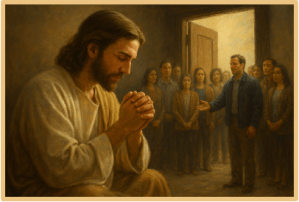








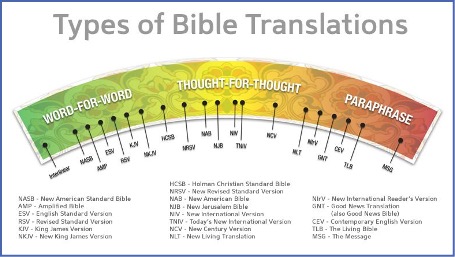




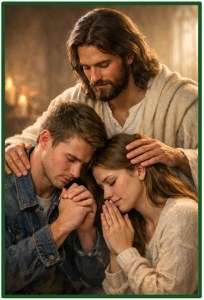
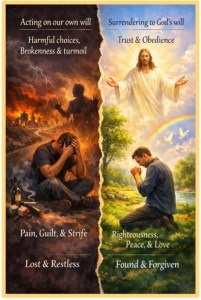



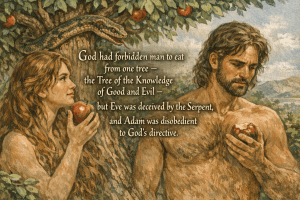
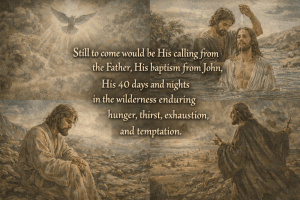

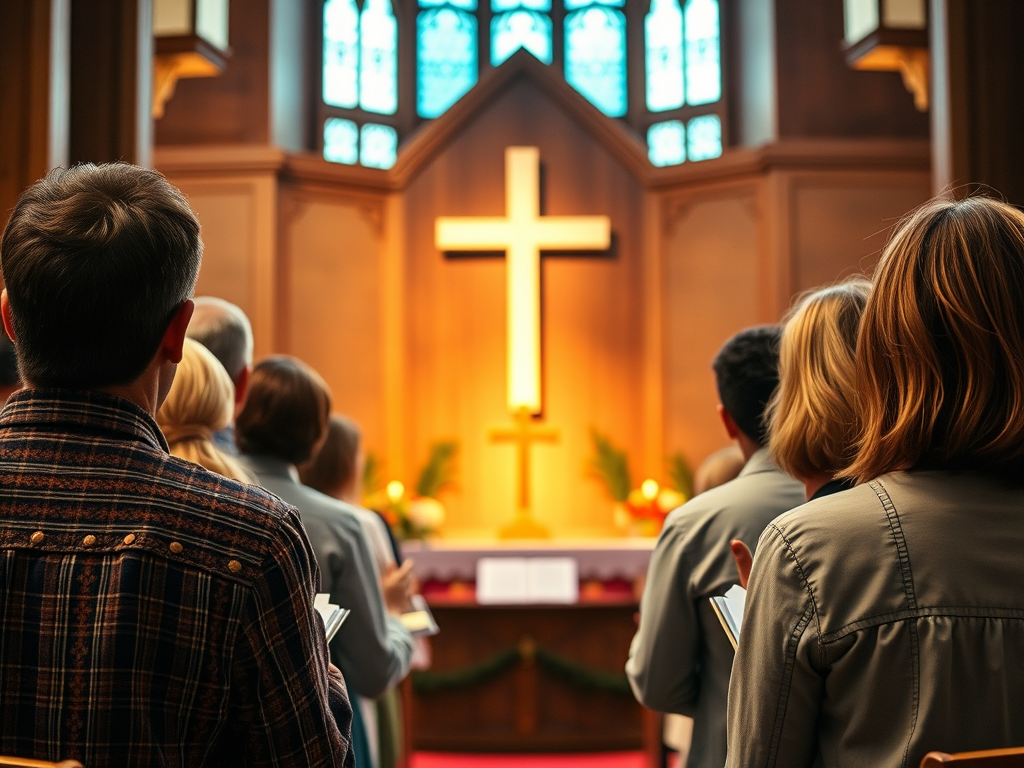






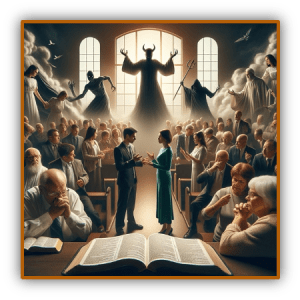






 Ward's Words | BY WARD PIMLEY