
A CHRISTIAN MESSAGE
By WARD PIMLEY
Pastor, Journalist, Author
INTRODUCTION
AS CHRISTIANS, we are called to believe that God is Absolute Truth and that He has revealed that Truth to us through His Holy Word, which is our Bible.
This raises certain questions for us:
- Do you believe the Bible is God’s true word?
- Do you believe the Bible is inerrant and infallible?
- Can you explain any of that to those who ask you?
Welcome to the fourth message in our series of “Real Questions Asked by New Believers, Seekers, and Skeptics.” The first three were: rebirth, translation, and disciplines or guardrails. They can be found here: “I Am a New Christian, Now What?”, “Which Version of the Bible Should I Read?”, and “What Are the Christian Disciplines?”.
CALL TO WORSHIP | PRAYER
Jesus answered, “My kingdom is not of this world. If My kingdom were of this world, My servants would fight, so that I should not be delivered to the Jews; but now My kingdom is not from here.” Pilate therefore said to Him, “Are You a king then?” Jesus answered, “You say [rightly] that I am a king. For this cause I was born, and for this cause I have come into the world, that I should bear witness to the truth. Everyone who is of the truth hears My voice.” Pilate said to Him, “What is truth?” (John 18:36-38b NKJV)
HEAVENLY FATHER, Lord of all creation, You and You alone are Truth. You and You alone are God. What we know of truth is what you have revealed to us in Your Word, which we know as the Bible.
Lord, help us to see Your Word for what it is: the highest authority for what is true. There is no interpretation from man that triumphs over Your Word.
Forgive us, Lord, when we try to reconfigure Your teaching to our liking. Jesus told us that He is the Truth, and when we know the Truth, when we know Jesus, He said we will be free.
We praise You and we worship You, O Lord. In the name of the Messiah, Jesus the Christ of God, we pray. AMEN
MESSAGE
WE LIVE IN WHAT has been called a *post-modern* world, where truth is relative, and everyone proclaims his or her own personal truth.
Folks say, “Truth is relative. We each have our own truth.”
How do we alone know what that absolute truth is? We do not know it through our finite knowledge, or wisdom, or reasoninHg, but through God’s revelation to us.

The Christian, on the other hand, believes there is only one truth, that it is “absolute truth,” and that we can know what it is.
We do not discern what Truth is; God tells us what Truth is.
Why do we need to know that the Bible is Truth, wholly and completely, without doubt or equivocation?
It is because our eternal salvation depends on our having a true and explicit roadmap, that if we believe it, follow it, and hold onto it, we will spend eternity in Paradise with our Lord and not in that other place without the Lord.
You can see that a lot is riding on our discovering what the Truth is and where we can find it, because we are counting on the Bible’s truth and God’s promises for our eternal salvation.
The Bible tells us that our eternal destination is determined not by what we do or by what we know but by what we believe.
Let me share with you some verses that support that statement:
- Jesus said to him, “I am the way, the truth, and the life. No one comes to the Father except through Me.” (John 14:6 NKJV)
- Jesus answered and said to him, ‘Most assuredly, I say to you, unless one is born again, he cannot see the kingdom of God.’ (John 3:3 NKJV)
- That is why I told you that you would die in your sins. For unless you believe that I am He, you will die in your sins. (John 8:24 BSB)
If such an important outcome as our eternal fate is dependent on that one factor, then shouldn’t we know we are basing our life decisions on rock solid ground other than, “Some guy in church told me so?”
Once we know how we can trust God’s Word for our own salvation, then we can explain to others what we believe in and why we believe it.
We can identify four major reasons for asserting the Bible is the true Word of God.
1. GOD SAYS HIS WORD IS TRUE. This is called a “truth claim.” We cannot claim something about the Bible that the Bible does not claim for itself.
2. FULFILLED PROPHECY. God tells us something will happen, and then it happens. Some are “predictions”; others are “types.” Greek – predictions; Hebrew – types
3. ARCHEOLOGICAL RECOVERIES. What comes out of the ground proves places, people, activities, and customs.
4. TRANSFORMED LIVES. Reading God’s Word changes people when they are open to learning and receiving the Holy Spirit.
This message focuses on the truth claims; future messages will cover the other items.
1. GOD SAYS SO
The Bible makes “truth claims” for itself.
In thousands of passages, the Bible declares explicitly or implicitly that it is nothing short of God’s word.
The Old Testament contains some 3,800 references (well over 2,000 times) to prophets saying, “God has said” or “Thus says the Lord.”
- “Thus says the Lord” – ~420
- “The word of the Lord came to me” ~ 400
- “The Lord spoke/God spoke” ~ 400+
- “Utterance (oracle) of the Lord” ~ ~360
Most of those references are in the prophetic books of Isaiah, Jeremiah, Ezekiel, Amos, Haggai, and Zechariah.
HERE ARE THE TOPICS COVERED IN THE FIRST FOUR MESSAGES IN OUR CURRENT SERIES:
- Rebirth – Spiritually alive, redeemed with a ransom, or declared righteous without sin, joined to God’s family, and united with Christ.
- Bible – Which translation(s) should we read?
- Spiritual Disciplines (Meditation) – Contemplation of God’s Word, listening for God’s voice.
- God’s Word is Truth – God makes truth claims.
The New Testament also contains truth claims:
All Scripture is breathed out by God and profitable for teaching, for reproof, for correction, and for training in righteousness, that the man of God may be complete, equipped for every good work. (2 Timothy 3:16-17 ESV)
For the word of God [is] living and powerful, and sharper than any two-edged sword, piercing even to the division of soul and spirit, and of joints and marrow, and is a discerner of the thoughts and intents of the heart. (Hebrews 4:12 NKJV)
Above all, you do well if you recognize this: No prophecy of scripture ever comes about by the prophet’s own imagination, for no prophecy was ever borne of human impulse; rather, men carried along by the Holy Spirit spoke from God. (2 Peter 1:20-21 NET)
Sanctify them by the truth. Your word is truth. (John 17:17 CSB)
“For this purpose I was born and for this purpose I have come into the world—to bear witness to the truth. Everyone who is of the truth listens to my voice.” (John 18:37 ESV)
The point of the Bible is to assure us of eternal life.
These are written that you may believe that Jesus is the Christ, the Son of God, and that believing you may have life in His name. (John 20:31 NKJV)
I write these things to you who believe in the name of the Son of God, that you may know that you have eternal life. (1 John 5:13 ESV)
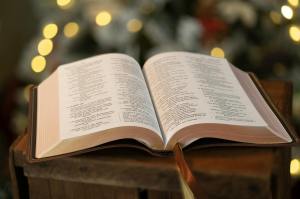
If the Bible is not God’s true word, how can you have any assurance that you will have eternal life?
“If Christ has not been raised, your faith is futile and you are still in your sins.” (1 Corinthians 15:17 ESV)
“Those, then, who have fallen asleep (died) in Christ have also perished. If we have put our hope in Christ for this life only, we should be pitied more than anyone.” (1 Corinthians 15:18-19 CSB)
What would you make of the most frequently cited passage in the entire Bible, a passage displayed on billboards and sporting events, sweatshirts and handbags, and rallies and songfests, unless the Bible were God’s true word?:
“For God so loved the world that He gave His only begotten Son, that whoever believes in Him should not perish but have everlasting life. For God did not send His Son into the world to condemn the world, but that the world through Him might be saved. He who believes in Him is not condemned; but he who does not believe is condemned already, because he has not believed in the name of the only begotten Son of God.” (John 3:16-18 NKJV)
2. VERBAL PLENARY INSPIRATION
When we say the Bible is inspired by God, we mean it is a verbal plenary inspiration.
That means not only are the thoughts and ideas in the Bible, the revelation of facts, absolutely true and inspired by God, but even the very words themselves penned by God’s chosen authors were inspired by God’s Holy Spirit – right down to the letters and verb tenses of the words.
God used the personalities, life experiences, and writing styles of His chosen craftsmen, but He inspired the writing, itself. By the way, don’t let that sentence drift past you without noting: God chose the various authors of the 66 books of the Bible.
Because He superintended the process, both in selecting the authors and in guiding their writing, we now have a unified message in the Bible.
If only the thoughts were God-inspired, then men could (and probably would) quibble over the words, and thus distort God’s meaning.
If only part of the Bible were inspired, then who would determine which part was inspired and which was not?
If we could not believe the Bible records God’s very words, His promises to us, what comfort could we derive from verses such as these:
- For God has not destined us for wrath, but to obtain salvation through our Lord Jesus Christ, who died for us so that whether we are awake or asleep we might live with him. (1 Thessalonians 5:9-10 ESV) [SEE ALSO Revelation 3:10]
- And so we too constantly thank God that when you received God’s message that you heard from us, you accepted it not as a human message, but as it truly is, God’s message, which is at work among you who believe. (1 Thessalonians 2:13 NET)
- We are of God. He who knows God hears us; he who is not of God does not hear us. By this we know the spirit of truth and the spirit of error. (1 John 4:6 NKJV)
3. GOD’S WORD IS ACCURATE
God’s Word is true; it is also accurate.
Its accuracy has been proven. This covers every factual statement it makes concerning people, places, customs, clothing, food, activities, devotion, and matters of war and peace.
When we say the Bible is accurate, that means the Bible is both infallible and inerrant. Its infallibility means it accomplishes the full purpose for which God inspired the writing; its inerrancy means it is fully without error. It is accurate both in its spiritual instruction and in its historical and geopolitical details.
Luke, a physician who wrote more of the New Testament even than Paul, is considered by scholars and historians to have been a first-rate historian. His description of place names, important officials, distances traveled, and events occurring hold up to the test of time and have been verified by archaeological artifacts.
An historic affirmation of the Bible, written 50 years ago and since then adopted by many evangelical churches, asserts the following:
- “Holy Scripture, being God’s own Word, written by men prepared and superintended by His Spirit, is of infallible divine authority in all matters upon which it touches: It is to be …
- Believed, as God’s instruction, in all that it affirms;
- Obeyed, as God’s command, in all that it requires; and
- Embraced, as God’s pledge, in all that it promises.
So, we see the Bible as God’s own Word for how He instructs us or teaches us, how He commands us or encourages us, and how He promises us or graces us.
4. GOD’S WORD IS TRUSTWORTHY / SUFFICIENT
Additionally, the Bible is both trustworthy and sufficient.
That means the Bible is inspired by a God who is perfect, eternal, unchanging, and whole, and it means the Bible’s spiritual statements are enough (all we need) for our salvation.
That means we don’t need *other words* or more books of the canon to make those points God intends us to receive.
- I am the Lord. I do not change. (Malachi 3:6 ESV)
- Jesus Christ is the same yesterday and today and forever. (Hebrews 13:8 ESV)
- Every good gift and every perfect gift is from above, coming down from the Father of lights, with whom there is no variation or shadow due to change. (James 1:17 ESV)
- Of old you laid the foundation of the earth, and the heavens are the work of your hands. They will perish, but you will remain; they will all wear out like a garment. You will change them like a robe, and they will pass away, but you are the same, and your years have no end. (Psalms 102:25-27 ESV)
- Remember the former things of old; for I am God, and there is no other; I am God, and there is none like me, declaring the end from the beginning and from ancient times things not yet done. (Isaiah 46:9-10 ESV)
- Heaven and earth will pass away, but my words will not pass away. (Matthew 24:35 ESV) [Mark 13:51; Luke 21:33]
Our Bibles contain the very words of Jesus.
We don’t need anything more than what we have been shown and promised in the Bible for our salvation. The Bible says we are to believe that Jesus is the Son of God and that His death on the cross is sufficient to satisfy our sin debt, and that believing in Him is all we need for God to declare us righteous and justified in His eyes.
Why? Because God said so!
“We can trust the Bible because God is trustworthy, and He has told us to hear, obey, and trust His Word. … We are not awaiting new books of the Bible, but the preaching and study of the Bible brings fresh insights and applications.” – R. Albert Mohler Jr.
5. GOD’S WORD IS NOT A CIRCULAR ARGUMENT
Our final point is to debunk the skeptic’s argument that quoting the Bible’s testimony that the Bible is God’s Truth is a *circular argument*.
What is a circular argument? It is a logical fallacy, where the conclusion is assumed in the premise, thus creating a closed loop. Instead of offering evidence, the initial statement repeats itself with different words, so you restate the argument to support it.
How would we know the whole Bible is God’s Truth unless He told us it is and then backed it up with proven truth?
Let’s look at the Bible’s writers. Let’s look at the apostles first.
- They had nothing to gain financially for their efforts.
Peter, John, and Paul gave us most of the New Testament’s doctrine, and Jesus’ half-brothers, James and Jude, gave us the rest (except for Hebrews, and Luke’s work was largely historical).
- People do not willingly die for a falsehood or a lie.
Each suffered physically. Peter, Paul, James, and Jude were martyred; John was banished to hard labor.
- They firmly believed that Jesus was the Messiah.
They saw that He died on the cross and was resurrected from the dead and then ascended into Heaven. They were eyewitnesses.
- They were not dishonest men.
They were apostles, each chosen by Jesus to write Scripture. In their writings, they condemned lying, stressed honesty, and encouraged Christian followers to be respectful, law-abiding citizens.
The one who conquers will inherit these things, and I will be his God, and he will be my son. But to the cowards, unbelievers, detestable persons, murderers, the sexually immoral, he and those who practice magic spells, idol worshipers, and all those who lie, their place will be in the lake that burns with fire and sulfur. That is the second death. (Revelation 21:7-8 NET)
- The apostles were the New Testament messengers, just as God used the prophets to reveal His testimony in the Old Testament.
The prophets prepared us for the Messiah; the apostles reminded us of what the Messiah taught us.
Both the Old Testament and the New Testament are equally God’s Word, equally inspired text. Jesus testified to that in His Sermon on the Mount:
“Don’t think that I came to abolish the Law or the Prophets. I did not come to abolish but to fulfill. For truly I tell you, until heaven and earth pass away, not the smallest letter or one stroke of a letter will pass away from the law until all things are accomplished.” (Matthew 5:17-18 CSB)
Then He said to them, “O foolish ones, and slow of heart to believe in all that the prophets have spoken! Ought not the Christ to have suffered these things and to enter into His glory?” And beginning at Moses and all the Prophets, He expounded to them in all the Scriptures the things concerning Himself. (Luke 24:25-27 NKJV)
Those statements by Jesus assures us that He blessed the Old Testament as being accurate and part of God’s eternal, universal Word.

The academic C.S. Lewis said of Jesus, that He was shown not to be a liar nor a deceiver. If He was neither of those, then He must be who He said He is, the Son of God.
That same test could be applied to those Jesus chose to write His story: they were who they said they were, prophets and apostles, chosen by Jesus and inspired by His Spirit to write the Old and the New Testaments.
All of this means one thing: God’s Word is Truth.
RECAP: We Know the Bible is God’s Word Because:
- He made the truth claim
- His word is true
- His word is accurate
- His word is trustworthy and sufficient
- His word is not a circular argument.
In future lessons, we’ll show how biblical prophecy has been fulfilled, how archaeological findings prove descriptions and identifications, and how the Bible’s testimony transforms lives.
6. FINAL WORDS
Knowing this, then how should we respond?
- With my whole heart I have sought You; Oh, let me not wander from Your commandments! Your word I have hidden in my heart, That I might not sin against You. Blessed [are] You, O LORD! Teach me Your statutes. (Psalm 119:10-12 NKJV)
- The law of the LORD [is] perfect, converting the soul; The testimony of the LORD [is] sure, making wise the simple; The statutes of the LORD [are] right, rejoicing the heart; The commandment of the LORD [is] pure, enlightening the eyes; The fear of the LORD [is] clean, enduring forever; The judgments of the LORD [are] true [and] righteous altogether. More to be desired [are they] than gold, Yea, than much fine gold; Sweeter also than honey and the honeycomb. Moreover by them Your servant is warned, [And] in keeping them [there is] great reward. (Psalm 19:7-11 NKJV)
- “If you confess that Jesus is Lord and believe that God raised him from death, you will be saved.” (Romans 10:9 GNT)
- “For everyone who calls on the name of the Lord will be saved.” (Romans 10:13 NET)
Church, those words directly from God are praiseworthy. They are life-giving words; they are promises that we can cling to and rest assured that, if we believe in Him, we will be saved and are guaranteed to spend eternity with Him.
We can only believe if we know with absolute certainty that God’s Word is the absolute Truth, and that it is both eternal and universal.
God’s Word can be trusted unto salvation for everyone for all time.
BENEDICTION PRAYER

ALMIGHTY GOD, Lord Creator of the Universe, we depend on you for so much in our lives. Without You, our existence has no meaning; with You, we have peace and joy. The promise of eternal existence with You in Paradise fills our hearts with joy and our tongues with praise.
Lord, thank You for Your patience with us, Your love for us, and Your promises to us. Forgive us, O Lord, when we fail to obey You, and lead us along the straight and narrow path, the one that Jesus said leads to life.
Lord, we love You, we praise You, and we worship You. In Jesus’ name we pray.
The LORD bless you and protect you; the LORD make His face to shine upon you and be gracious to you; the LORD lift up His countenance upon you and give you peace. AMEN (Numbers 6:24-26 NET)


 Ward's Words | BY WARD PIMLEY