Tag: christianity

  • CHRISTMAS: FIRST ADVENT [Part 2 of 2]


    A CHRISTIAN MESSAGE

    Pastor, Journalist, Author


    THIS IS THE MEANING OF CHRISTMAS.

    Our Lord’s First Advent. His first arrival in human life as Himself human. There were prior appearances as Christophanies, but never before had He come as man. Fully man and fully God. 

    We cannot understand how He could do that, but He could because He is God.

    PART 2. THE MEANING

    This birth of our Lord was a downpayment on the future promise of Paradise Restored after sin cost us Paradise Lost. 

    Jesus would preach the Gospel – “The time is fulfilled, and the kingdom of God is at hand. Repent, and believe in the gospel.” Repent! The Kingdom of God is at hand. Me. I AM the Kingdom of God. I AM here. Therefore, you repent.

    That’s a beautiful message, and we who believe entrust our very salvation and future in Paradise to the truth of that message; yet most men and women in His time and even today reject the Message, want nothing to do with it because He is interfering with their sin, and men and women love their sin. We love our sin.

    That’s still the Gospel message that we are called to carry on, to urge those we meet to repent before the time is fulfilled, that the kingdom of God is at hand. Repent, and believe. Tell them what God has done for you.

    He then lived a sinless life and died an ignoble death on the cross, having been beaten and lashed so that the Bible says He no longer looked human. 

    After dying, He rose from the dead, taught for 40 days and nights, then was ascended in glory to sit next to the Father and to send the Holy Spirit to lead us and guide us, which took place 10 days later. 

    Before leaving the Earth, He commissioned us to carry on His ministry – of preaching, forgiving, healing, baptizing – all in His name.

    Through all of this, a tension was building, is building still. Faster and faster this tension builds. Can you see it? Can you feel it? Do you hear the sound of something approaching? Is there not a whisper that says, “Hold on, folks, this is not the end. There is more, much more, coming.”

    As glorious as the First Advent was, all of history is building for the crescendo, and that will be the Second Advent, the Second Coming of Jesus, when the whole world will recognize Him as the Jewish Messiah – Yeshua HaMachiach

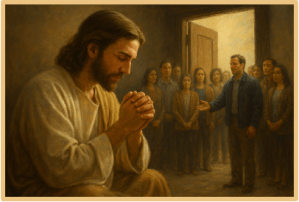
    Figure 3. The day will come when all mankind worships Jesus as King of kings and Lord of lords, the Christ and Jewish Messiah.

    In that moment, the Bible tells us, every knee will bow before Him, and every tongue will confess that He is the Lord of lords and the King of kings.

    In that moment, the Bible tells us, the whole world will recognize and acknowledge that Jesus was, is, and forever more will be the Christ, the Messiah.

    No longer just a Babe in the manger. You see, that was just the beginning.

    PART 3. SECOND ADVENT

    DO YOURSELF A BIG FAVOR. Work your way through the three Bible passages below and see if you find anything discordant with the Christmas message.

    [HINT: Although they are familiar passages read at Christmas time, they largely reference the Second Advent, not the First Advent.]

    The Spirit of the Lord GOD [is] upon Me, Because the LORD has anointed Me To preach good tidings to the poor; He has sent Me to heal the brokenhearted, To proclaim liberty to the captives, And the opening of the prison to [those who are] bound; To proclaim the acceptable year of the LORD, And the day of vengeance of our God; To comfort all who mourn, To console those who mourn in Zion, To give them beauty for ashes, The oil of joy for mourning, The garment of praise for the spirit of heaviness; That they may be called trees of righteousness, The planting of the LORD, that He may be glorified.” – Isaiah 61:1-3 NKJV

    “For unto us a Child is born, Unto us a Son is given; And the government will be upon His shoulder. And His name will be called Wonderful, Counselor, Mighty God, Everlasting Father, Prince of Peace. Of the increase of [His] government and peace [There will be] no end, Upon the throne of David and over His kingdom, To order it and establish it with judgment and justice From that time forward, even forever. The zeal of the LORD of hosts will perform this. – Isaiah 9:6-7 NKJV

    “Then the angel said to her, “Do not be afraid, Mary, for you have found favor with God. And behold, you will conceive in your womb and bring forth a Son, and shall call His name JESUS. He will be great, and will be called the Son of the Highest; and the Lord God will give Him the throne of His father David. And He will reign over the house of Jacob forever, and of His kingdom there will be no end.””- Luke 1:30-33 NKJV


    THE REAL JOY OF CHRISTMAS for many evangelical Christians – and certainly it is for my wife and me – is the promise of the Second Advent, of Christ’s return. At that time, He will establish His forever Kingdom, the one prophesied by Isaiah 750 years before Christ was born – 750 years before Christmas – 750 years before the Babe in the Manger.

    If you worked your way through the three Bible passages above, you’ll see something that most churches glide over. The passages do not focus on Christ’s first coming but His second, not His coming as a sacrificial lamb but His coming as a conquering king.

    When Jesus spoke in the Temple, He stopped His reading of the prophet Isaiah in the middle of the sentence – at the comma

    That hasn’t occurred yet, but it will. Just as sure as we know the Babe in the manger was fulfillment of biblical prophecy, we know His next arrival also will fulfill biblical prophecy. 

    PART 4. FINAL WORDS

    THAT BRINGS US TO OUR MOST IMPORTANT QUESTION: SO WHAT?

    All of that is well and good, but what does any of it have to do with me and my life?

    Good question. Here’s the answer: All of us are called to make a decision. We have to decide if we are willing to accept the gift that Jesus is offering us.

    Are you ready for the Messiah to return? He will catch us up in the air _ either as the dead in Christ who will rise first or as we who remain _ in the great Harpazo – “to snatch away” – the Rapture.

    Unless you are born again, or reborn – know Jesus Christ as your personal Lord and Savior – all of this will be done without you. You will be resurrected, but the Bible tells us it will be after the Tribulation and Millennium are over, when God holds court for the unsaved, called the White Throne Judgment. 

    Do you know for certain that you are saved and that you will spend eternity in Heaven with God? If you are not sure, let’s change that now. Just repeat after me:

    If you prayed that prayer and were sincere, then welcome to the Kingdom of God! 

    If you have come to know the Lord before this, then rejoice for those who now have joined us.

    This is the meaning of Christmas. It is more than the celebration of a baby’s first cry in the dark but the celebration of forgiveness, of God’s mercy and kindness, and of restored fellowship with the Creator. 

    This is the fulfillment of the protoevangelium. Let us resolve together never again to let Christmas be just a warm smile for a squirming infant but to recognize with deep humility and gratitude that Almighty God humbled Himself for our sake to redeem us. 

    His journey was planned in eternity past, but the execution of His salvation plan began at Christmas 2,000 years ago. 

    Our job is to believe and to carry the message forward. 

    You see, Christmas was just the beginning.


    CLOSING PRAYER & BENEDICTION

    LORD, WE THANK YOU for this Christmas season, when we who believe Jesus is the Son of God praise You for this incredible gift, that when our first parents sinned in the Garden of Eden, You proclaimed the First Gospel and vowed to reclaim us in fellowship through the birth, death, and resurrection of Your only Son, the Second Person of the Trinity, and that You promised to send the Holy Spirit, the Third Person of the Trinity, to come and live in our hearts.

    Now, as we enter our Mission Field, go with us in front of us to lead, beside us to encourage, and behind us to protect, and may we be the Salt and Light that our Lord assured us we are.

    In Jesus’ Name we pray, and we all say, “Praise God; Praise the Lord.” AMEN

  • 2 PETER 3: God Fulfills His Promises


    The Lord is not slow to fulfill his promise as some count slowness, but is patient toward you, not wishing that any should perish, but that all should reach repentance.” 2 Peter 3:9 ESV

    “But the day of the Lord will come as a thief in the night, in which the heavens will pass away with a great noise, and the elements will melt with fervent heat; both the earth and the works that are in it will be burned up. Therefore, since all these things will be dissolved, what manner [of persons] ought you to be in holy conduct and godliness.” 2 Peter 3:10-11 NKJV

    But based on his promise, we wait for new heavens and a new earth, where righteousness dwells. Therefore, dear friends, while you wait for these things, make every effort to be found without spot or blemish in his sight, at peace.” 2 Peter 3:13 CSB


    By WARD PIMLEY


    We are in the Last Days. We have been in the “last days” since Pentecost, and we’re still in them. We do not know how many days remain until the Lord returns for His faithful followers. 

    We have been in the Last Days since Pentecost, and we’re still in them. We do not know how many days remain until the Lord returns for His faithful followers. 

    We call that return the “Rapture,” and there is dispute within the Christian world as to whether there will be a Rapture, and if there is one, when it will take place.


    Whichever you believe, we do not break fellowship with those who hold a different position, especially since God in His wisdom has decided to give us clues but not defining details. 

    In other words, strive to understand as best you can the events and calendar of what we call The Last Days, but don’t become so doctrinaire in your position that you lose the humility that allows you to recognize that God the Father alone is sovereign, and He alone has the final act under His control. 

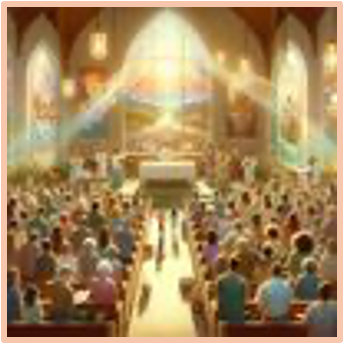
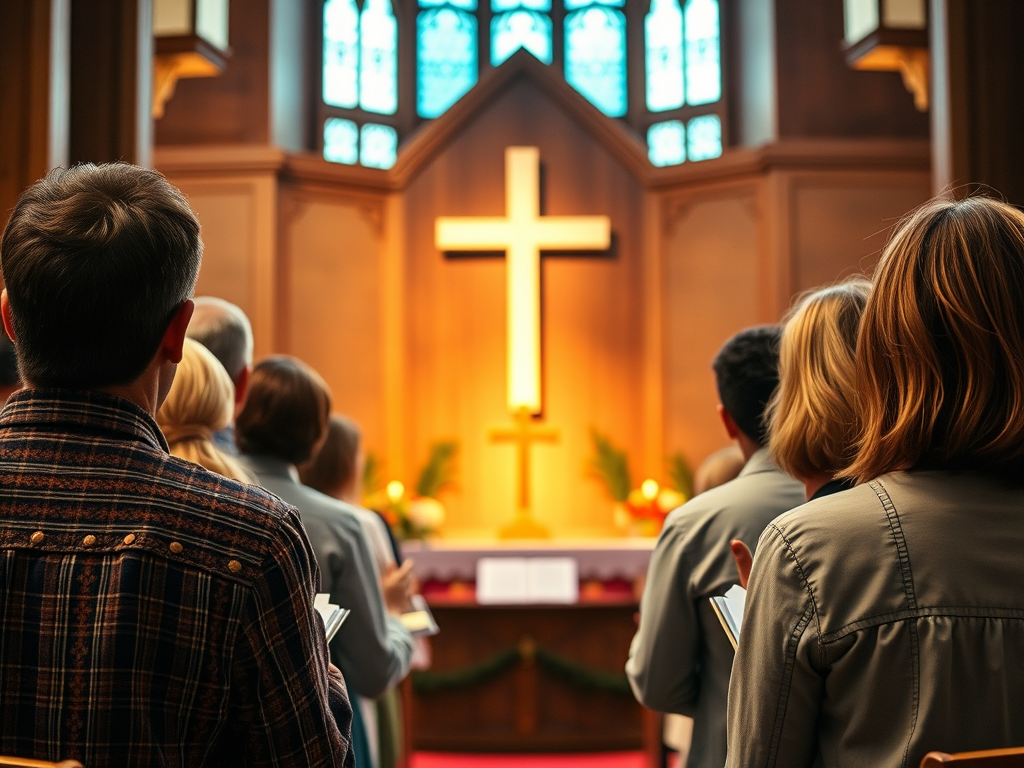
    Figure 1. Worshippers gathered to praise God. Many are praying for the Lord’s return. All are grateful for forgiveness.

    Your view, or my view, could be wrong. If God wanted to make the point crystal clear to us, He would have done so. He chose not to.

    For now, just focus on the apostle Peter’s writing that God wants everyone to be saved, so He is patiently giving people time to repent.

    in our study of 2 Peter 2, we looked at the apostle’s admonition to be on guard for false teachers who would slither into the church with their demented doctrines, their erroneous theology, and their wayward practices – agents of Satan, often dressed in clerical clothes, sent to destroy the church Jesus Christ vowed to build on solid Rock.

    In our final chapter of this small book, Chapter 3 of 2 Peter, the apostle urges us to maintain our faith in God’s judgment, knowing that He is not late in fulfilling His eternal promises, but is merciful and patient.

    Don’t be disillusioned. The Day of the Lord – Judgment Day – will come in its appointed time. Until then, your job – and my job – is to prepare ourselves for that time and encourage as many others as we can reach to join us. The ship is leaving the dock; the train is leaving the station, and God – the captain and conductor – is shouting, “All aboard! All ashore who’s going ashore.”

    We have three parts to today’s message, each anchored by one of the text verses quoted earlier: God Is Patient, The Day of the Lord, and God’s Calling on Our Lives.


    PART 1. God Is Patient


    “The Lord is not slow to fulfill his promise as some count slowness, but is patient toward you, not wishing that any should perish, but that all should reach repentance.” 2 Peter 3:9 ESV

    FOR MANY YEARS after I became a Christian in November 2010, this verse was my “life verse,” the one verse that meant the most to me. The reason? It emphasized God’s patience.

    I was overwhelmed by the goodness of a God who could be so patient with me as to wait on me, not call judgment down on my head, not end my life or create more hardships than I could manage. Yes, I had finally reached repentance, to use Peter’s words, and I was “saved” from Hell’s eternal fires.

    To say I am relieved would be an understatement. I am giddy with joy – even though I am not always happy – but I am filled with the joy of knowing that my Redeemer lives, and someday He will call me Home to be with Him, that where He is I may be also. 

    Figure 2. As Christ followers, we are called to share our faith and explain our joy. We are relating what God has done for us.

    As a Christ-follower, my job now is to share that message of hope and salvation with you and others I meet. I might not always be faithful in doing so, because I’m not always certain if this moment is the right moment to key up a discussion of spiritual matters, but I do pray for those moments to occur and ask God to prepare me for them so I will be ready to share my testimony when they are presented to me.

    That is what Jesus has commissioned each one of us to do when we submit our lives to Him. He has given us the right to share the Gospel message. We do not need anyone else’s permission to tell them what God has done for us, but we do need to live our lives in such a way that others will be willing to hear what we have to say. 

    • Our talk needs to match our walk, and our walk needs to match our talk.

    Trying to share the Gospel when our lives are not a testament to the Lord’s message will make us nothing more than what 1 Corinthians 13 calls “noisy gongs or clanging symbols.” We will fill the air with our breath, but we won’t be witnessing to God’s saving grace or His healing power. 

    Therefore, we must be on guard every moment to ensure our actions and our reactions reflect the light within us. Jesus has commissioned us in Matthew 5 to be “the light of the world.”

    That light is the light of the Lord that lives in the hearts of all who call on His name, who believe in His saving grace, and who have been redeemed or reborn.

    So, God is patient with us, calling us into His kingdom. If you haven’t felt called yet, then today is your day. Do not let it pass without calling on His name. 

    The Bible says (2 Cor. 6:2; Rom. 10:13/Joel 2:32; Acts 2:21) “Behold, today is the day of salvation” and “all who call on the name of the Lord will be saved.”

    Yes, God is patient, but when patience has run its course, it gives way to judgment. God is patient, but He is not stupid. 

    Don’t take advantage of His patience; instead, take advantage of it and turn your life over to Him while you can. You’ll be glad you did.


    “But the day of the Lord will come as a thief in the night, in which the heavens will pass away with a great noise, and the elements will melt with fervent heat; both the earth and the works that are in it will be burned up. Therefore, since all these things will be dissolved what manner of persons ought you to be in holy, conduct and godliness.”  2 Peter 3:10-11 NKJV

    THAT IS QUITE a dramatic image, isn’t it? It says here the heavens and the earth will melt with fervent heat. Well, Peter isn’t done yet. In fact, as we read in verse 12, he says the heavens will be dissolved, being on fire, and the heavenly bodies will melt as they are burned!

    Is that supposed to give us the shivers? To be honest with you, if I were not a believing Christian, that would downright scare me, and I would not want to be around at the time.

    But, true to His word, our God promises us a restoration that will surpass in beauty and wonder our current world. Let’s not get ahead of ourselves because that verse, and the promise it contains, will be the third focus of our message.

    Here in the second part of our message, we ask this: What is God trying to tell His people in these verses that detail the destruction of the known world? 

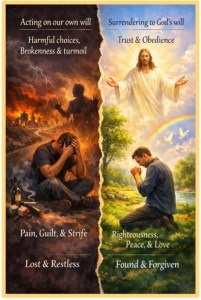
    Figure 3. God will refine us as fire refines minerals. He calls us to surrender to Him, and He promises to restore our souls.

    God, through Peter, is using symbolic language to say He is going to refine the world the way fire refines gold, the way fire purifies gold, the way fire burns away the impure elements to present gold in all its splendor. Jesus is not returning to destroy the world but to judge the world and eliminate the evil spawned by Satan and his demons.

    The Bible throughout its many passages tells us that the universe has been stained with human sin, that even the physical elements of creation “groan[] and suffer[] the pains of childbirth” (Rom. 8:22 LSB) as we wait for God to restore order.

    When God acts, as Romans 8:21 NKJV tells us He will do, His creation “shall be delivered from the bondage of corruption into the glorious liberty of the children of God.”

    Something magnificent is happening here, and Peter wants us to be prepared for it. What does that entail? He gives us the clue in this verse in our text passage: “what manner of persons ought you to be in holy conduct and godliness.”

    Here it is in verse 14 (NKJV): “Therefore, beloved, looking forward to these things, be diligent to be found by Him in peace, without spot and blameless.”

    Now, it starts to make sense, doesn’t it? The coming promise of the Day of the Lord is to give us an impetus, an incentive, a heads up, if you will, to straighten out our lives, to smooth out our wrinkles, to – as the saying goes – “get our act together.”

    But we know we don’t do that on our own, that we need God’s power to make that happen. In John 15, the Lord Jesus warns us to “abide” in Him and He promises to abide in us so that we might bear “much fruit.” He says: “For without Me you can do nothing.”

    Earlier, I said that if I were not a believing Christian, I would be frightened at the violent imagery depicted of the world dissolving in fire and heat, but these words of assurance from God – as we’ve seen, spoken directly from Jesus and spoken through the apostles Paul and Peter – should bolster our confidence in this merciful God who, as our first passage told us, is “patient” with us, not wanting any of us to perish.

    He is calling us to surrender our lives to Him, and then He will impart within us His Holy Spirit, which will restore our brokenness, our weakness, our defeat into lives that reflect the Lord’s light and salt. 


    “But based on his promise, we wait for new heavens and a new earth, where righteousness dwells. Therefore, dear friends, while you wait for these things, make every effort to be found without spot or blemish in his sight, at peace.” 2 Peter 3:13 CSB

    ALL OF WHAT we’ve discussed so far leads up to this verse, and I find the promise it contains for us to be the cherry atop the sundae, well worth the wait, that pot of gold we keep expecting at the end of the rainbow.

    Well, in a manner of speaking, that pot of gold is real. 

    God will create “new heavens and a new earth, where righteousness dwells.” The current heavens and earth have been sin-stained, and God, like a springtime house cleaner, is going to wipe away the dust and cobwebs and polish the furniture and wax the floor and change the lightbulbs.

    He is going to make “new heavens and new earth,” and we are invited to join Him in living there. 

    Not to do the housecleaning. No, He is going to do that because He wants it done right. 

    Figure 4. Those of us who are walking with Christ are looking forward to our new homes in Heaven. We don’t know what they’ll look like, but they’ll be tailored for us.

    He is going to design it; He’ll pick out the furniture and the window treatment; He’ll hook up the platinum TV with surround sound; He’ll set up the popcorn maker to spit out tasty treats while we watch a spellbinding movie that He will pick out.

    Now, Peter doesn’t mention anything about the popcorn, the TV, and the movie, but he does tell us that we need to get ready for this new world our God promises, and that means we ought “to make every effort” to be without spot or blemish.

    That is, to be sinless. To be obedient. To be faithful. To be loving. To be considerate of others. To serve those in our world. 

    You know the drill. All of those things God has been telling us from Genesis on, we are to be aware of and dedicated to doing … with God’s help.

    • Proverbs 3:5-7 NKJV, Solomon says: “Trust in the Lord with all your heart, And lean not on your own understanding; In all your ways acknowledge Him, And He shall direct your paths. Do not be wise in your own eyes; Fear the Lord and depart from evil.”
    • King David says in Psalm 119:105 NKJV: “Your word [is] a lamp to my feet And a light to my path.” That is another way of saying that God will lead us if we let Him.
    • Finally, we can’t let this point go without once again claiming the Lord’s promise in John 15:5 NKJV: “I am the vine, you are the branches. He who abides in Me, and I in him, bears much fruit; for without Me you can do nothing.”

    QUESTION: How are YOU preparing for the Lord’s return? Are you spending daily time with the Lord in prayer, Bible reading, and meditation? 

    If you are not doing that, why aren’t you? Do you think you are exempt somehow from life and life’s responsibilities? Do you think God is not making a claim on your life? Do you think Satan has forgotten about you? Do you think that how you spend your day does not matter in terms of your eternity?

    My prayer for each of you is that you will see that your life in whatever situation you face is as important to God as is the life of anyone else, even those who are placing their lives on the line to care for others, even those who you think are more righteous and more Godly than you are.

    Here’s a news flash: No one is more Godly or more righteous than you are. We are all in the same boat. We are all flawed, and we all need God’s saving grace.

    You. Matter. To. God.


    THIS LESSON COMPLETES our study of Peter’s letters. We worked our way through 1 Peter 1-5 and now 2 Peter 1-3. 

    Here’s a quick recap of what Peter wrote to his generation and ours in his two letters: 

    Here’s a chapter-by-chapter recap of Peter’s two letters: 

    Between our study of Peter’s first letter and his second letter, we took up a two-part series of living lives without regret and God’s promise to restore the lost years to those who love Him and have trusted Him for their salvation.

    A personal note:

    For the first 10 years after giving my life to Jesus Christ in November 2010, I picked 2 Peter 3:9 as my “Life Verse.” [A life verse is a verse that encapsulates or summarizes a person’s calling or life experience.] That verse tells us that God is patient with us, calling everyone to salvation.

    I loved the reassurance that God was patient with me, of His goodness, of His love that He wanted me to be a part of His Kingdom.

    However, as I grew in my faith, a few years ago, I switched my life verse to Galatians 5:25, which says: “If we live in the Spirit, let us walk in the Spirit.”

    That basically means our actions should support our words, and our words should support our actions. I was confident enough in my new salvation that I felt a responsibility to so live my life that it would be a living testimony to that faith and to God’s goodness and love.

    I did not want to talk a big game without supporting it with the way I lived, and I did not want to live out the Gospel without sharing a testimony with others or telling them about the joy my salvation has given me.

    As you grow in your faith walk with the Lord, you might find yourself changing your life verse to reflect better your growing spiritual maturity. 

    Nothing in this world is more important than our relationship with God, with who we think He is, and what we acknowledge He wants from us. Nothing. 

    Your eternal destiny depends on how you respond to that calling. God calls each of us to believe in Him, and He promises great rewards for those who answer the call.

    If you have not said “yes” to God before now, this is your moment. If you have said “yes,” then join us in praise.


    ALMIGHTY GOD, as we sing Your praise, we know from the praise hymn that You are a “Good Good Father, that’s who You are, that’s who You are;” and “We’re loved by You, that’s who we are, that’s who we are.”

    Lord, if anyone here today does not know You in a personal way as both their Savior and their Lord, can You change that today in this very hour.

    You said no one comes to the Son without the Father calling them, so please, Lord, call them. You said at “the right time” would be the time of salvation. Lord, please make this hour “the right time” for those who may not know You.

    Hear our prayer, O Lord, as we pray together in our hearts:

    “Lord, I believe Jesus is Your Son and that He died on the cross for my sins; I believe He is calling me to give Him my heart and soul. Lord, forgive my sins and wipe my slate clean, and enter my life as both Savior and Lord from this moment on. Lord, I give you my life, that I will have eternal life with You.”

    Lord, for those already walking with Jesus, we pray continued strength and faith for them to stay in Your will, to be salt and light to those around them, and to be a comforting and encouraging presence wherever they are.

    We thank You, Lord, for Your goodness toward us. We praise Your name, and we love You and worship You. In the name of Jesus, we raise this prayer.

    “[Now may] The grace of the Lord Jesus Christ and the love of God and the fellowship of the Holy Spirit be with you all.”  — 2 Corinthians 13:14 ESV

    AMEN and AMEN

  • 2 PETER 2 & JUDE: Warning Against False Teachers 

    This message addresses dangers of false teachers and doctrines within the church, based on biblical texts from two early Christian leaders: The Apostle Peter and Jude, a half-brother of Jesus. The chapters, 2 Peter 2 and Jude, highlight various types of false teachers and warns believers to remain vigilant and grounded in Scripture. They remind us that failure to stay close to the Lord in Scripture and Prayer will leave us vulnerable to falsehood. You cannot arm yourself against falsehood unless you ground yourself in God’s Word. There are no shortcuts. Salvation requires vigilance on all our parts. Be on guard!


    A CHRISTIAN MESSAGE

    Pastor, Journalist, Author


    “But false prophets also arose among the people, just as there will be false teachers among you, who will secretly bring in destructive heresies, even denying the Master who bought them, bringing upon themselves swift destruction.” – 2 Peter 2:1 ESV

    “For certain people have crept in unnoticed who long ago were designated for this condemnation, ungodly people, who pervert the grace of our God into sensuality and deny our only Master and Lord, Jesus Christ.” –  Jude 1:4 ESV


    During this period and ever since, rival philosophies or theories were, and have been, expounded that the nascent church and its successors have had to defend against. 

    It has been far easier to advance false or distorted teaching once the Master and His closest followers were gone than when they were present and able to refute false teaching.

    They warned us to be on guard.

    Among those false teachings were that Jesus was not God but a man, just a prophet; that He had not existed from eternity past but was a created being, denying the existence of the Trinity; failure to recognize the Holy Spirit as a Person but considering Him an ‘It’; that man was not born with a sin nature but developed his own propensity for sin; and that Jesus was not fully God and fully man at the same time. 

    Additionally, disputes within the church have developed that have broken a unified voice. 

    One dispute focused on whether salvation was extended only to those whose salvation was pre-destined or pre-selected by God or whether salvation was based on God’s grace and an individual decision in response to the exercise of free will; whether there was double predestination, which included the doctrine of reprobation, where God predetermined who would face an eternity in condemnation and punishment, or whether that punishment also was the result of free will, based on a rejection of God’s calling.

    As time went on and controversies were settled, new conflicts arose. The reason for this is simple: Satan was, and is, at work, striving to disrupt God’s plan for salvation and reconciliation. 

    Whole congregations within the Protestant realm have split over doctrinal disputes, with the more conservative wing holding fast to a literal interpretation of the Bible while the progressive wing divorces itself from literal interpretation in favor of a “living” or evolving interpretation more in keeping with the secular culture.

    The Roman Catholic Church faces its controversies separately, teaching that Church doctrine supersedes biblical teaching. That false holding has led its leaders to advance different teachings throughout the ages under the guise of “new revelation.” 

    That failure to follow Holy Script has led to power struggles within church leadership and faulty teaching like the selling of indulgences and the teaching that faith alone is not sufficient for salvation, even though the Bible says it is.

    By the way, Protestant reformers who took issue with the Catholic Church’s teaching fared no better. While they denied that the Catholic Church supplanted Israel, they taught that the Protestant reformed churches were the actual successors to Israel. That also is a false teaching. 

    It also has led to a highly destructive false teaching that Christianity has replaced Israel and the Jews as God’s favored people. That is not true. The Bible teaches that God’s plan for the Jewish people will come to pass in the Millennium.

    Beware the Charlatan! The charismatic, self-proclaimed prophet who dazzles the crowd with ear-pleasing nonsense.

    That false teaching is called “replacement theology,” and it denies the Bible’s clear teaching that God is not done with Israel but that He will fulfill every promise He has made to the Jewish people.

    In Peter’s second letter, he only makes general references to specific sins so he can urge his listeners (readers) to focus more on the idea of false teaching than on specific ones. Nevertheless, he does point out (a) denying the deity of Jesus, (b) the right to indulge in sexual sin without consequence, and (c) telling lies for personal gain.

    Let’s take a look at false teaching and doctrine so we can guard ourselves against its destructive force.

    WHILE SATAN HAS SOUGHT to divide the church by attacking it from outside, its most destructive falsehoods have arisen from within, notably when pastors, theologians, and teachers either add words to the Scripture or delete words from it.

    The result is a distortion of the Bible’s truth, and not surprisingly, the Bible, in both the Old and New testaments, warns us against doing either. 


    THE HERETIC teaches as doctrinal truth an idea that one commentator said “blatantly contradicts” a core teaching of Christianity. Heretics usually are gregarious, charismatic figures who lead their flock as though they, themselves, were the Savior.

    This category is like the Prophet, except it focuses on false doctrine as opposed to the teacher’s persona. 

    Our text sources today from 2 Peter 2:1 and Jude 1:4 speak directly to this evil, as both church leaders warned successive generations to be on the look-out for false teachers, who would invade the church and lead the vulnerable astray. 

    Modern theologians, following a school of skepticism, distort Jesus’ teaching, often because they themselves do not believe in the supernatural. Jehovah’s Witnesses alter the text so that Jesus becomes “a” god as opposed to “the” God, and Mormons add to the Gospel the Book of Mormon, which is not biblical.


    THE CHARLATAN uses his position of privilege to enrich himself, urging the faithful to contribute their tithes and offerings to his personal ministry. 

    Through the ages, this has ranged from the selling of indulgences by the Roman Catholic Church, the profits of which funded construction of St. Peter’s Basilica in Rome, underwrote the pope’s lavish lifestyle, and underwrote some of the world’s most cherished artwork, including that by Michelangelo and Raphael. 

    That is not an endorsement of the practice of indulgences; only it goes to show the magnitude of the false teaching.

    Today, we see television evangelists – called “televangelists” – who use their outsized personas and smooth words to bilk the faithful into sending in contributions ostensibly to grow the ministry but, in reality, grow the speaker’s wealth.

    Some have built notable cathedrals as monuments to themselves or drive around in luxury automobiles, all while telling the congregation that they, too, can have their “best life” if they remain faithful to the charlatan’s teaching.


    THE PROPHET is the leader who purposefully sets himself up as a voice from God, which is intentional, while in other cases develops over time from the sin of human pride. This is the situation where one’s success in building a church or ministry is attributed not to the workings of the Holy Spirit but to the dedication of the teacher or leader. 

    The prophet traffics in words of encouragement, prophecy, or rebuke that stem from his own imagination as opposed to God’s actual teaching. Many teachers today claim to be speaking in God’s name when there is no connection between God’s will and the prophet’s mouth.

    Their falsehood can be readily discerned by anyone familiar with God’s Word, so they naturally prey upon the gullible – individuals looking for answers to life’s questions who do not know what the Bible teaches and so are more likely to believe falsehood.

    Those who are reading their Bibles faithfully are better able to see through the charades, knowing they have been warned, not only by the Apostle Peter and Jude, the Lord’s half-brother, but also by the Apostle John and the Apostle Paul.


    THE ABUSER uses his position of authority to take advantage of other people. This sin takes place in all Christian churches, both with Catholic priests and Protestant ministers.

    They use their position in the religious institutions to cover the evil in their hearts. 

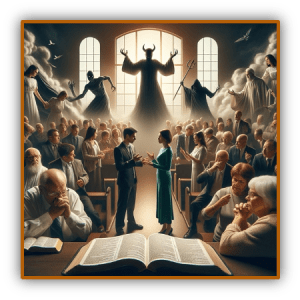
    False teachers will invade the church, leading the congregation to infighting.

    Much of their evil is focused on sexual lust, where the church leader preys on troubled girls looking for guidance from a solid father figure or young boys uncertain about their own sexuality. 

    The abuser claims he is tending to the souls of the flock, especially of the weakest and most vulnerable members, but his (or her) true interest is in gaining illicit sexual liaisons, or adding to their personal bank account, or gaining power and influence.

    Throughout the ages, the church has been infected with abusers. In its earliest days, the faithful followed the sexual perversions of the pagans around them; the papacy was a battleground of political struggle, and even today, Christian icons are felled by sexual and moral failings. So many examples abound, and the secular press is always eager to pounce on any rumor of waywardness.

    One woman sadly told me years ago, “My ex-husband graduated from seminary and still had an affair, which ended our marriage.” In her confusion, she asked, “How can that be?”


    THE DIVIDER uses false doctrine to divide a church, separating brothers and sisters of faith into warring parties. 

    There always will be disagreement within the church body, just as there is disagreement within households, but the divider, as described here, is not just someone who sees things differently than the church leader but someone who hungers for the attention that being a spoiler brings. 

    This person can ride a minor doctrinal or practice dispute into a major rift, forcing factions within the church to choose sides.

    Their sole purpose is to feed the satisfaction they receive by seeing others suffer.


    THE TICKLER is the teacher who tells the flock what they want to hear. This is the man-pleaser, the one who sacrifices the hard sayings of the Bible into story time and feeds the egos of church members, eager to “feel good” about themselves.

    Satan is in the pulpit! Not all pastors/teachers are strong believers in God’s Word. Some alter the text to be pleasing to their flock.

    The tickler’s driving force is the desire for fame and popularity, to be “liked” by many. Sometimes, the tickler is driven by a desire to build the church into a large, profitable organization that drips with money and prestige. 

    Regardless of church size, the Tickler’s weekly message evokes happiness among the flock, as opposed to salvation. There is a reason our Lord came to Earth from Heaven to die on a Cross, but that reason is our sin, and who wants to hear about sin? Especially not when the reason comes at the expense of a good joke. 

    After all, the church attendees are less interested in praising God because they would rather praise themselves and feel “good” about themselves.


    THE SPECULATOR wants to be original or spectacular in some way, not for Godly gain but for its own sake. 

    This is a false prophet who is a consummate entertainer, eager to spout the latest nonsense regarding the “last days” or “end times” and giving, perhaps, his own interpretation of what the current world landscape portends. 

    This is not to be confused with “end times” prophecy, which is based on biblical teaching but is mere speculation based on the Speculator’s own imagination.

    These are the people who rake in millions of dollars from those who want to read their prognostications on when the world will end. The world will end, but God has not seen fit to tell us when.

    Teaching focused on speculation displaces the sure and steady doctrine of Scripture. The Speculator tosses aside the bulk of the Bible’s content and the weight of the Bible’s emphasis to obsess about matters that are trivial or novel. He grows weary of the old truths and pursues respectability through originality.

    In God’s eyes, the Speculator is neither respected nor original. He’s just plain wrong.

    Sometimes he plants himself in academia, where one of his recent masterpieces is a re-imagined God who is unable to see and know the future. Well did Paul label the Speculator a contradictory, irreverent babbler.

    Haven’t we been told in multiple books of the canon not to dabble in false teaching?

    Here are some reminders:


    THESE DESIGNATIONS were provided in a 2017 article from Pastor Tim Challies, a Canadian speaker and author [Pastor Tim Challies].

    While these are overview snippets of a wider and deeper treatment in various books he has written and speeches he has given, each highlights a portion of the evil against which we should be vigilant [7 False Teachers in the Church Today, Jan. 31, 2017, Pastor Tim Challies.]

    Separating the whole into segments is much like looking at each individual color in the rainbow, when, in reality, we are unlikely to see one false teacher as the color “red,” another one as “blue,” and so one. Instead, they will be a blend of several categories, although it is possible to point out one or two characteristics that seem to define this one or that one more specifically.

    The point of this is that Satan’s greatest weapons are not necessarily the secularists outside the church attacking Christianity or decrying the power of “thoughts and prayers” or naming believers as “bigots,” “haters,” and “intolerant,” or even the academics discounting the possibility of supernatural intervention in human life.

    No, the greatest danger to the churches may well come from within the church, from its leaders – its pastors, theologians, and teachers – the very people we should be trusting to deliver the truth to us, to lead us and guide us according to God’s eternal plan. 

    Pastor Tim describes Satan’s tactics as being “studied, clever, predictable, [and] effective.” “Studied” means Satan watches us carefully; “Clever” means he is tricky; “Predictable” means he uses the same tactics over again; and “Effective” means, well, they work.

    False teaching, like weeds, sprouted up as soon as the Church Age began, and false teaching, like weeds, have been growing splendidly for 2,000 years and more. They follow the falsehoods perpetrated in the Old Testament by false prophets.

    We, the church, must not be cowed by false teaching, but we must stand on guard against it and fight back. We do that by being grounded in the Word of God.

    Church, if you do not ground yourself in God’s Word, you will remain vulnerable to the power and deception of false teaching.


    WHEN WE DISCUSS the topic of “false teaching” or “false doctrine,” we need to be careful in how we approach it. 

    One reason is that, apart from those core doctrinal points that our God has made crystal clear, much of church doctrine is subject to interpretation, and one person’s interpretation can differ from another person’s interpretation without either of them being entirely right or entirely wrong.

    Here are some doctrinal beliefs that are without conflict: Jesus was both God and man, Jesus was born of a virgin woman, Jesus was crucified for our sins, Jesus was raised from the dead, and Jesus now sits at the Father’s side in Heaven. To be saved, the Bible says, we need to believe those points and receive the Holy Spirit into our hearts.

    Many other teachings — such as the nature of the elements in Communion, the actual naming of Communion, whether children can be baptized into the faith or whether baptism is reserved for those who believe, whether the act of baptism itself has salvation power or whether it is only an outward symbol of an inner transformation — are not core doctrines. We can dispute another’s opinion, but they are not central to our salvation.

    There are three teachings in particular today that are causing a rift in Christendom, with fissures and fractures causing denominations to splinter and factions to grow within denominations even without a formal separation.

    They are:

    What this pulpit can say is that you, the faithful believer, must do your due diligence. You must continue to read your Bible, stay faithful in prayer, and ask God to continue to do what He wants to do anyway, which is this: Lead you.

    To remain faithful to His will, we need to remain faithful in our devotions – that is, reading our Bibles (or listening to the Bible read to us), praying to God, and asking Him to teach us His will for our lives.

    My friends, let us resolve not to give in to the heretics, charlatans, false prophets, abusers, ticklers, dividers, and speculators among us. Let us remain faithful to God’s will.

    If you do that, you will be blessed. That’s God’s promise, and that definitely is not false teaching.


    BENEDICTION PRAYER

    LORD, You have warned us to be on guard against those agents of Satan who would poison the church and our minds with false doctrine, aiming to mislead us and drive a wedge between believers and God, and aiming to split the church into warring factions, competing for attention, adherents, and resources. 


    Thank You for Your warning so we will be on guard against falsehood. Give us the desire, Lord, to read Your Word daily, to engage in prayer daily, and to strive daily to live according to Your plan for us. Forgive us, please, when we fail You. For those among us who may not know You in a personal way, may this be the moment that all changes.


    Hear our prayer when we say: Lord, I am a sinner in need of Your forgiveness. I believe Jesus is Your Son and that He died on the Cross for my sins and that all who believe in Him and call on His name will be saved. Come into my heart, O Lord, and redeem me. Be my Savior and my Lord.


    Lord, for those who do know You, we rgive thanks for the sacrifice of Your Son on our behalf. Give us the leading and the strength to be a living witness for what God has done for us that all may hear the Truth and give God the glory.

    Now may the Lord bless you and keep you; may the Lord make His face shine upon you and be gracious to you. May the Lord lift up His countenance upon you and give you peace … both now and forevermore. Guide us and direct us, Lord, as we enter our mission field. AMEN and AMEN

  • 2 PETER 1: God’s Grace and Peace Encourage Us To Be Faithful Servants

    This Christian message focuses on the themes of faith, humility, and perseverance. It discusses Peter’s letters to the dispersed churches, emphasizing the importance of holding onto the truth, avoiding false teachings, and growing in faith. The message encourages believers to remain faithful and close to God.


    A CHRISTIAN MESSAGE

    Pastor, Journalist, Author


    “Simon Peter, a bondservant and apostle of Jesus Christ, To those who have obtained like precious faith with us by the righteousness of our God and Savior Jesus Christ. Grace and peace be multiplied to you in the knowledge of God and of Jesus our Lord, as His divine power has given to us all things that [pertain] to life and godliness, through the knowledge of Him who called us by glory and virtue, by which have been given to us exceedingly great and precious promises, that through these you may be partakers of the divine nature, having escaped the corruption [that is] in the world through lust.” 2 Peter 1:1-4 (NKJV)


    I LOVE THOSE OPENING WORDS to Peter’s second letter to the dispersed churches of Asia.

    He was not, what we like to call today, a “name dropper.” He could have been, but he chose not to be, because filled with the Holy Spirt, he saw himself as a mere mortal, as just a humble servant of the Divine Mission.

    We know him as one of the Lord’s chosen apostles; not only that, but he was one of the favored three and even named leader of the pack.

    Although Peter was a close follower of Jesus in His earthly ministry; he does not tout himself as being anything special.

    Second, he goes on to say in writing to fellow believers that they “have obtained like precious faith with us” (NKJV) or “a faith of equal standing with ours” (ESV) or “a faith as precious as ours” (NIV] or “a faith of the same kind as ours” [NASB]. 

    Can you imagine that? Peter, who walked with the Lord, is telling fellow Christ followers – both Jewish and Greek – that their faith, their belief, their connection with the Lord is equal to his. That means so is your faith and mine.

    The humility that Peter expresses is identical to the humility the other letter writers exhibit, whether it’s Paul (the greatest evangelist of the Church Age] or James (the Lord’s half-brother) or John [the disciple Jesus loved] or Jude (another half-brother of the Lord] and even the anonymous author of Hebrews [who scholars speculate could be Apollos or Paul. I think Paul, with Silas as scribe.]

    LET’S REMEMBER AS WE READ through Peter’s two letters that he is writing to the dispersed Christians who are being persecuted by Roman authorities for their religion. While his main focus was on believing Jews, he also included the Greeks (Gentiles).

    God gave some to be teachers of the Word to help us understand.

    In First Peter, we learned that the apostle was writing to a persecuted people, so he encouraged them, giving them hope for a better future in Heaven, telling them they are a “chosen” people, reminding them they should always be ready to share their joy and hope, to do their good works not for their own glory but that of God, and to believe in the promise of being raised with immortal bodies, equipped for eternal life.

    Even though Peter is facing his own death by crucifixion, as foretold by Jesus in John 21, he is not burdened with his own death. Instead, he is burdened with a heartfelt desire to encourage his fellow believers. In First Peter, he reached out to offer solace and comfort; but in Second Peter, we see him encouraging the faithful to avoid destructive doctrines and false teaching, to hold onto the truth.

    In successive chapters in Second Peter, he brings up Grace and Faith, False Prophets and Teachers, and the Day of the Lord (Christ’s return).

    While Peter, a Galilean fisherman, did not benefit from the august scholarship of his fellow apostle and church planter Paul, he nevertheless was inspired by the Holy Spirit to tackle key doctrinal issues that were plaguing the early church. As such, we benefit from studying his writings because today’s church struggles with its own set of false teaching.

    From our vantage point in the Twenty-First Century, we can see – regretfully – it didn’t take long for the church our Savior installed and died for to begin sprouting weeds, much like our own cultivated yards and gardens sprout weeds.

    Fighting for the church – Christian belief and fellowship – has been, is, and will continue to be a struggle for as long as the Church Age continues and Satan rules the world. The present age will end when Jesus returns for His saints, ushering in the seven-year Tribulation before the Lord returns a second time, plants His feet on the earth, and declares the Millennium.

    The Millennium will be a literal 1,000-year reign ruled by Christ sitting on His throne in Jerusalem with the aid of His saints – you and me. At the end of that time, Jesus will usher in Eternity.


    THERE’S AN INTERESTING PARALLEL between the Christians of the First Century and our forebears, Adam and Eve, in the Garden of Eden. 

    Our Lord created mankind in His image as His favored creation.

    We read that Eve was deceived by evil, and Adam was disobedient to God’s rule, but both the man and the woman had been given ample instruction by God on what He expected from them; that is, what they could and should do and, conversely, what they could and should not do. 

    The one prohibition was to avoid eating fruit from the Tree of Knowledge of Good and Evil. 

    Well, someone was listening. Satan heard. Satan paid attention to what God instructed the First Couple to do, and he knew he also had to upend the creation order God established by addressing Eve, who was to be sheltered by and protected by Adam.

    Eve failed to follow God’s instructions through Adam, and Adam failed to follow God’s instructions to protect Eve.

    Apparently, the only one listening to God’s instructions was Satan, and that was not so he could obey God but to learn what he needed to do to thwart God’s design.

    At the start of the Church Age, when Peter is writing, we see in the nascent church the same pattern replicated. [The Church Age started at Pentecost and continues until the Rapture.]

    The Apostles benefitted from Jesus’ teachings during His three-year earthly ministry, and they dutifully passed that teaching on to their disciples who were to pass it down to their disciples, and so on through to our own day and beyond to generations that follow us. 

    Yet, somehow in the translation, the message started growing weeds, or maybe you prefer an analogy of the plaster starting to crack.

    Satan, the evil one, listened intently to what God said to His people; not so he could obey God but so he could mislead God’s followers. 

    Satan today is up to those same tricks. 

    Do you not see that in your own life, or in the lives of fellow believers, or in the church at large? If you do not see it, I would say it is because you are missing it, not because it is not there.

    I am constantly battling against Satan’s lies in my life. I will believe I can accomplish great things in my own abilities, or I will believe someone is belittling me, or stepping on my toes, or infringing in my space, or making unreasonable demands on my time or binding me to unsustainable burdens or maligning my contributions. Oh, woe is me!

    I know those are lies, but I still come under their power when I let Satan manipulate the truth. His falsehoods are never outright blatant lies. Instead, they are shadings of the truth, nearly parallel lines that nevertheless bend outward soon enough, or a darkening of the vision, slowly at first before picking up the pace until we see only darkness.

    Before you know it, the “almost but not quite right” becomes the outright wrong, and we are walking in quicksand … and sinking deeper and deeper.

    Like Peter walking on the water, we take our focus off the Savior and look around us, suddenly more conscious of the waves and the wind than we are of the Savior’s love. So, we sink.

    You are not called to show your brilliance. You are called to show your faith.

    Ward’s Words

    Like Peter when he was drowning, when we call out to the Lord, we find He is still faithful and will save us.

    Peter is telling his audience that God has given them all the instructions they need to live a godly and holy life, but he also reminds them that it will be a struggle. To win the battle, he tells them, they will need to keep learning and growing in their faith.

    That is the same with us. We need to keep learning and growing in the faith. How do we do that? By walking with the Lord. 

    We are to read His instructions in the Bible, stay close to Him in prayer, live lives of faithfulness, and be willing to speak when God presents us with the opportunity to share our faith.

    We learned earlier in our study of First Peter that sharing our faith means simply giving a brief testimony of what God has done for us. 

    Giving our testimony does not mean quoting Scripture like an Awana class or spouting doctrine like a systematic theology textbook, nor does it mean a recounting of your entire life. It does mean telling people how Jesus has changed you. First, and foremost, it is a personal testimony. 

    You are not called to show your brilliance. You are called to show your faith.


    ARE YOU STRUCK, AS I AM, with Peter’s sanguinity — his peace, his calm — in this letter? 

    He is not focused, as you or I might be, on our rapidly approaching death, death not by natural causes according to the order of life, but by a crude and gruesome method of torture — crucifixion.

    Do you see any sign of the jitters there? Any backing away from his calling? Any shirking of his duty? I do not. 

    We are called to be diligent in reading God’s Word.

    This is what he says, according to the New Revised Standard Version (Updated Edition): 

    “I think it right, as long as I am in this body, to refresh your memory, since I know that my death will come soon, as indeed our Lord Jesus Christ has made clear to me.” – 2 Peter 1:13-14 NRSVUE

    That’s it! That is his sole commentary on his impending death.

    [I have heard more whining and complaining from someone going to a routine dental appointment than I see with Peter referencing his impending execution. (Most of that complaining has come from me.)]

    Why do you suppose he is so peaceful about this torturous event that looms ever closer? 

    Isn’t it because he has grown in his learning and faith by walking with the Lord, by talking with Him, by reflecting on what He remembers the Lord having said, by revisiting the scenes of Jesus – feeding the crowds, healing the sick, raising the dead, confronting the religious leaders, forgiving sins, and offering Peter forgiveness for his backsliding, when he denied knowing the Lord? 

    When Peter tells us to remain in the faith and grow our faith through a strong personal relationship with the Master, he is basing his teaching on his own experience, his own life, his own walk with the Lord.

    He says: “This is what I do. This method works. Keep on coming. Keep on walking. Don’t quit now. Come on, y’all. You can do it.” He’s encouraging them.


    AS A FINISHING FLOURISH, Peter references a special event that he shared with the Lord, along with only two other apostles – John and John’s older brother James – on the mountaintop. 

    Known as “The Transfiguration,” Peter and the two sons of Zebedee saw the Lord transfigured into a shimmering glow of dazzling white. Alongside Him, talking like long-time chums, were Elijah and Moses. 

    Moses and Elijah prophesying in Jerusalem during the Tribulation.

    Interesting imagery for at least two reasons: one, the apostles had never seen either Elijah or Moses, yet the Bible tells us they knew who they were; and two, Elijah and Moses represented the Law (Moses) and the Prophets (Elijah).

    Revelation 11 tells us during the Tribulation there will be two evangelists witnessing for 1,260 days (3.5 years) until the “beast that arises from the bottomless pit” rises and kills them. Their dead bodies will lie in the streets, unburied, for 3 ½ days, when God will reinstall life to them and call them up to glory. 

    Like Moses, the two witnesses will be given power to send plagues; like Elijah, God will give them power to keep rain from falling. Now, the Bible does not identify them, but most speculation centers on Moses and Elijah, who best represent the Law and the Prophets.

    Moses and Elijah might make another appearance in the Scriptures.

    So, Peter was one of the favored three apostles to witness this brief encounter on the mountaintop, and he testified in his letter that they heard a voice from “Majestic Glory” (NRSVUE/CSB/ESV/NASB), although they NKJV calls it “Excellent Glory.”

    This is the only “power play” Peter uses in this chapter, and he uses it effectively. He knows that this story is well known within the Christian community of believers, so when he says we heard God’s voice say: “This is My beloved Son, in whom I am well pleased” (verse 17), he does not use it to brag that he was one of the Favored Three picked by the Master to witness this event.

    Instead, he uses it to reinforce his next point, that the Scriptures were not, and are not, man-made inventions but holy writings inspired by God’s Holy Spirit; and as such, are truthful statements from the Creator, Himself, and you can rest assured in His faithfulness.

    Our modern expression might be something like this: “You can take that to the bank;” or “You can bet the farm on it.”

    Then Peter hits us, both the “us” of the First Century and the “us” of the Twenty-First Century, with this line:

    “For no prophecy (Scriptural text) was ever produced by the will of man, but men spoke from God as they were carried along by the Holy Spirit.” – 2 Peter 1:21 ESV

    Then he says: 

    “And we have as more sure the prophetic word, to which you do well to pay attention as to a lamp shining in a dark place, until the day dawns and the morning star arises in your hearts.” (2 Peter 1:19 LSB)

    Church, the “morning star” is Jesus. [Note: In Isaiah 14:12, Satan is referred to as the Morning Star, while in Revelation 22:16 (NKJV), Jesus refers to Himself as the “Root and Offspring of David, the Bright and Morning Star.”]

    Peter is calling us to remain faithful in our walk with Jesus Christ. That closeness pays spiritual dividends, and you will be blessed if you do. Peter is reminding us, as James — the Lord’s half-brother does in a later book in the Bible — to draw near to God because God will draw near to you.

    The apostle John reminds us in His gospel account of Jesus’ ministry that the Lord promised He would never leave us. He would always be with us. That was the point of sending the Holy Spirit to replace Him on earth. Jesus could only be in one place at a time, but the Holy Spirit can be everywhere at once.

    If you are feeling distant from God, then you are the one who moved. Jesus tells us to abide in Him because without Him, we can do nothing.

    Matthew also reminds us that Jesus made the same point when He commissioned us to spread the Word throughout the world by saying, “And, lo, I am with you always, even to the end of the age.” (Matt. 28:20b NKJV)

    Stay close to God, Church, and He will reward you with “exceedingly great and precious promises.”


    FINAL WORDS

    As we finish, we return to where we started: Peter addressing the dispersed believers in Asia shortly before his own crucifixion. He’s encouraging them to be faithful servants.

    “Grace and peace be multiplied to you in the knowledge of God and of Jesus our Lord,” he writes. That means “grace and peace” will grow increasingly in your hearts as you believe in Him and walk obediently with Him.

    Check the majesty of the language, the beauty of the blessing, the certainty of the reward.

    Yes, my brothers and sisters in the body of Christ, you are blessed if you do, if you remain close to the Lord in your heart and in your prayers. 

    You can do that because the hard part – paying the penalty of God’s wrath for your sin – has been paid by Someone else. That would be Jesus. 

    You have the easy part, which is this: Receive and Believe. Receive the gift of grace and believe in God’s promise of life.

    If you do believe and receive, you will have no worries; if you do not believe and receive, you will have no excuse.

    God gave you the choice.

    Which option will you choose? 

    My wife and I have chosen, choose now, and forever will choose to receive and believe.

    Praise God!


    OH, LORD, we praise Your Glorious Name, You alone are God. You created all that is, and nothing that exists came about without Your will, Your imprint, Your design. 

    We are eternally grateful that You sent Your Son to endure Your wrath for our sins so that we would be spared that trauma, that suffering, that pain. Further, You said that believing in Him was sufficient for our salvation. Lord, we bless You for that gift.

    For those among us who do not yet know the Lord in a personal way, we ask that You receive their prayers now, their prayers of humble repentance and willingness ~ even eagerness ~ to receive Your Holy Spirit into their hearts and lives, bringing forgiveness of sins and renewal of soul . Hear their prayers now.

    For those among us who have been walking with the Lord, we pray for strengthened resolve in our daily struggles, knowing that the perfecter of our faith was raised from the dead as the first fruits of our own resurrection to come shortly. 

    As You give us opportunity to share our faith, we pray, O Lord, You will give us the words to touch each individual heart, sharing with them merely what God has done for us and then being willing to share more of our heart should they ask us.

    Come, Lord Jesus. Maranantha.

    In the name of Yeshua, our Lord and Savior, our King and Messiah, we lift this prayer and petition.

    AMEN