“He (man formerly blind) replied, ‘The man they call Jesus made some mud and put it on my eyes. He told me to go to Siloam and wash. So I went and washed, and then I could see.’” John 9:11 (NIV)
“The man (formerly blind) answered, ‘Now that is remarkable! You don’t know where he comes from, yet he opened my eyes. We know that God does not listen to sinners. He listens to the godly person who does his will.’” John 9:30-31 (NIV)
HOW COULD THIS POSSIBLY BE?
Jesus passes by a man who we learn is blind from birth, takes pity on him, and without asking if the man wants to see, makes some mud from dirt in the ground, rubs it on the man’s eyes, and tells him to “go” wash the mud off in the Pool of Siloam. The man does as he’s told and, lo, he can see!
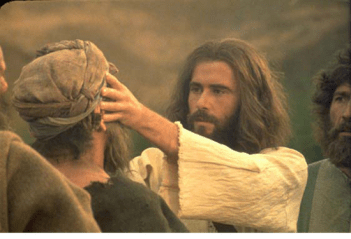 Incredible for several reasons: one, unlike most of the Bible stories where Jesus applies His healing touch, there is no record in the Scriptures that the man asked anything of Jesus; and, two, there is no record in the Scriptures as to what would happen to the man if he obeyed Jesus.
In fact, John’s account of the encounter tells us the man didn’t even know who Jesus was!
Jesus was telling His disciples several truths here, two of which we’ll cover: one is that, as God, He could give the man sight, not merely restore the man’s sight, for the man was born blind and, therefore, had never seen; and two, that as God, He was Lord of the Sabbath and the Sabbath was made for man, not the other way around.
+++
OH, THAT SABBATH THING AGAIN.
How is that significant?
Well, this where the story, which begins as a really nice story of Jesus healing a blind man and everyone lives happily ever after, turns ugly. Really ugly. (It ends well, but we have to go through the ugly part first.)
John tells us in v. 13 that “they” brought to the Pharisees the man who had been born blind and now could see. The Pharisees were the religious leaders of the day and, basically, busybodies who had arrogated to themselves the job of putting everyone else down to puff themselves up.
 In this case, they actually find fault with Jesus—who, let’s remember, had just given the gift of sight to a man who had never, ever, from Day One, been able to see—simply because He healed the man on the Sabbath, the Day of Rest.
+++
THE PHARISEES COULDN’T GET OVER THAT FACT.
Yes, Jesus healed on the Day of Rest, which violated the Pharisee’s law. True, the Pharisees based their regulations on God’s commandment to honor the Sabbath and keep it holy, but Jesus tells us the purpose of the Sabbath was to give men a day of rest, not to set on men a whole new set of burdens that made that rest difficult.
Jesus routinely challenged the Pharisees, telling them in Matthew 12:8 (NIV) that “the Son of Man is Lord of the Sabbath.” In other words, He was saying it is MY commandment to keep the Sabbath holy, so listen to me when I tell you you’re not honoring it the way I intended.
So, the Pharisees went to work doing what they did best — making things difficult for the flock.
First, they called the formerly blind man to the Temple to tell them who had healed him and how. Were they thrilled that the man could see? No, they were angry that he was healed on the Sabbath. By the way, they, like many in their day, thought the man’s congenital blindness was caused either by his prenatal sin or their parents sin, whatever that might have been, so, in their minds, he had no business being healed in the first place.
Then, because Jesus healed the man on the Sabbath, they concluded that Jesus, the Son of God, could not have been sent from God.
+++
NEXT, THEY CALLED THE MAN’S PARENTS IN.
They questioned them as to whether this man, now able to see, was actually their son and had been born blind.
Did the parents express gratitude to Jesus for His healing grace? No, they were more afraid of the Jewish leaders and being thrown out of the Temple than they were of the God they claimed to serve. They said they didn’t know how their son was healed nor who healed him. They didn’t seem all that interested in finding out, either.
So, the Pharisees called the man back in after his parents had left and again asked him how it was he could see. The man, exasperated at this point, asked if their interest meant they, also, wanted to believe in the man who had healed him.
Instead of saying “Yes,” which seems the reasonable thing to have done, they insulted the man for daring to suggest they were in need of the Lord’s healing grace and threw him out of the Temple, effectively cutting him off from polite society.
+++
THE STORY ENDS ON A HIGH NOTE.
When Jesus heard the man had been thrown out of the Temple, He found the man and asked him, “‘Do you believe in the Son of Man?’”
The man replied that he was not sure who the Son of Man was, but he certainly was willing to believe. When Jesus then said, “‘You have now seen him; in fact, he is the one speaking with you,’” the man replied in the way we would have hoped the Pharisees and the man’s mother and father would have replied, “‘Lord, I believe,’ and he worshipped him.” (vv 35-38).
We need to pause here. Let’s count up the number of people who have touched this story. There’s Jesus and the man born blind, his two parents, maybe 30-50 Pharisees, probably a dozen or two neighbors and townsfolk who saw Jesus apply  mud to the man’s eyes and later saw him with restored sight (plus those who heard the story and those who heard the story from them), and we count up at least 50 people, maybe 100, excluding the disciples, who already believed in Jesus.
Yet only one of them — the man healed, the man ostracized from community, the man virtually disowned by his parents — only that man saw Truth when Truth stood in front of him.
The rest of the cast missed it completely.
Jesus concluded this vignette by rebuking the Pharisees in front of the townspeople, humbling them in front of those who, themselves, could not see, and reassuring those of us who do believe in Him that He came into the world to give sight to us when we were blind in our sin.
+++
THIS IS A STORY OF REMARKABLE GRACE on Jesus’ part, yet it captures so painfully the broken state of today’s world.
Even when Truth — God’s remarkable Grace offered to us with no strings — is offered to us and standing right in front of us, most people don’t even see it. Even when they get a glimpse of it, they don’t want it.
Sadly, John was right when he told us (John 3:19 NIV) that Jesus, the Light, had come into the world, but His own creation rejected him because “[they] loved darkness instead of light because their deeds were evil.”
As sad as that is, sadder still is the world’s continuing failure to see the Truth, the Light of the world. Are we failing to see Jesus in our own lives? Do we miss him when He is standing right in front of us?
+++
PRAYER: O LORD, Our Heavenly and Gracious Father, we are in desperate need of Your healing grace, your loving arms, your comforting smile. We know our sin keeps us from complete fellowship with You, so we would ask You to expose our sin, lead us to repentance, and restore us to a right relationship with You. In Jesus’ Holy Name. Amen
 Trump alone survived, leading to a predictable result: Old Guard politicians and establishment figures from both parties joining forces against Trump, their common foe. Too soon to tell if the electorate, wearied from a year of politics, will yawn and back the establishment candidate or continue the assault and overturn the status quo.
 In both arenas — the role of government and the cultural war — there is no middle ground. If one is not “right,” then one is “wrong” — not partly right or mostly right, but completely wrong.
 We’ve seen what happens when God’s people fail to consult with God on all matters of their lives, from Adam and Eve’s decision to eat of the
 Immediately, the believing community raised their
 The whole idea that God wanted the non-Jewish world to be saved from eternal damnation was a difficult enough concept for many of the Jews to understand, but worse, they were hearing reports that Paul and Barnabas were teaching salvation by faith, not by good works. Moreover, they were teaching that Gentiles did not have to convert to Judaism before becoming a follower of Christ and that they were not bound by the Law of Moses.
  Nowhere in the four Gospels does Jesus ever say that His followers must convert to Judaism and follow Moses’ law to be saved from God’s wrath. Instead, in John chapter 3, Jesus says His followers must be “born again.” In Luke chapter 9, He says His followers must “take up their cross daily” and follow Him.
  So far, the apostles Paul and Barnabas had spoken, the Pharisees had had their
 be He talked to man, but that was then; this is now.”
 We have Holy Writ translated into numerous English translations, plus translations into most of the world’s languages. Bible translators say Scripture has been made available in more than 2,500 languages, with another 1,500 or so, mostly minor languages or dialects, without a translation.
 And what’s with the singing? You’ve been to churches where a choir of 50 or more senior citizens sing some old dusty hymn to a pipe organ, and you’ve been to churches
 you rephrased the question, your answer probably is “Yes.”
  we are freed from all of life’s uncertainties, its hardships, its troubles. We are free to express our eternal gratitude to the God who, in His mercy, gave us a way back to Him, despite our rebellion.
 in addition to women and children, so there probably were 15,000 people — then He does it again with 4,000 men — plus their families — shortly afterward. If that weren’t enough, He tells the wind to shush and the waves to quiet.
  we want Almighty God to take care of, much like giving him His morning “To Do” list. Even while we lay our requests at His feet, we can’t help wondering if our weak requests in our puny lives in our insignificant corner of the universe is even worth His attention?
 mountaintop, “I asked Your disciples to cure him, but they weren’t able to.” The man searches the Lord’s face earnestly, then asks, meekly, much like many of our prayers, “Can You help him?”
 Even as believers, we are likely to pray “small.” Most of our prayers focus on our lives, and our families and loved ones. As part of prayer and fellowship groups, we extend our
 wonderful things, but the Apostle Paul told the church in Ephesus that He prayed that the love of the Lord Jesus Christ would dwell in their hearts through faith.
 It’s easy for us as readers in the 21st Century to wonder how they could possibly doubt that God would rescue them from their every adversity and provide for their every need.
 River Jordan by John, known as The Baptist. John, you will recall, was actually Jesus’ cousin, and he was the fulfillment of the Old Testament prophecy that Elijah would return to herald the Messiah.
 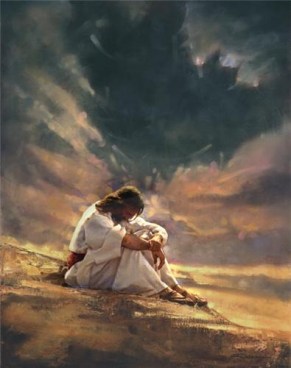 Holy Spirit into the dessert to be tempted by Satan. What a graduation present! That’s far worse than being given a toy and finding out the batteries are not included. This would not be an easy temptation, either.
  same question against us.
 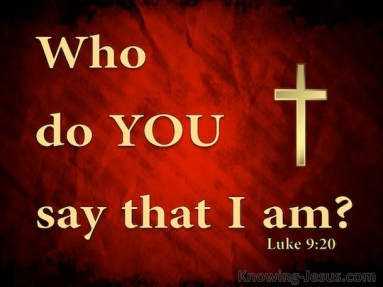 from two disciples, Peter and Judas. Peter answered right away, declaring that Jesus, looking every bit a man just like them, dressed in robe and dirty sandals, a man who tired after a long day’s work with no place to lay His head at night, was the Messiah, the Son of the Living God.
 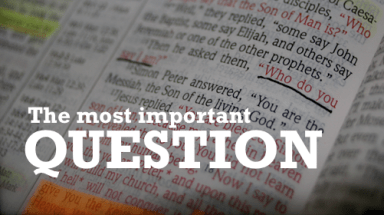 and yes, it is said He spoke with authority on the Scriptures, an uneducated man besting the most learned scholars of the day, often leaving them speechless with his responses to their vexing questions.
  Ward's Words | BY WARD PIMLEY