• Dear Skeptics—A Love Letter to My Family


    Missed a blog post? Find prior posts at LoveAndGrace.

    [Jesus] said, “Truly I say to you, no prophet is welcome in his hometown.” (Luke 4:24 NASB)

    So Jesus’ brothers said to him, “You should leave here and go to Judea so your followers there can see the miracles you do. Anyone who wants to be well known does not hide what he does. If you are doing these things, show yourself to the world.” (Even Jesus’ brothers did not believe in him.) (John 7:3-5 NCV)

    Someone told Jesus, “Your mother and your brothers are standing outside. They want to see you.” (Luke 8:20 GW)

    IF YOU COULD ASK JUST ONE QUESTION OF SOMEONE YOU LOVE, WHAT  WOULD IT BE?

    This would have to be a humdinger of a question, wouldn’t it? Something really 45. Life's_Big_Qsspecial, more important than a lame, “How are you?” or “What are you planning for the rest of your life?”

    Something that cuts through the noise of life. You know, a question that stops them in their tracks, makes them put down their mobile phone, or mute the TV, or drop a book. Something that makes them turn around and look straight at you, intent on their face, an ear cocked, their hands stilled.

    What would that question be that would be your last outreach to a loved one? This would be a close family member probably. Most likely a spouse or a child, even an adult child. It could be a sibling or a longtime friend.

    Maybe it would be someone who had wounded you years ago with a sharp remark, or someone who was by your side no matter what the situation, good or bad. Maybe you’re looking at a child who looks just like you, only younger than you and more vibrant. Maybe you’re staring into the eyes of the person whose body has warmed yours for decades and with whom you’ve raised a family.

    An important person — an important question.

    What would it be?

    +++

    MINE WOULD BE some form of this: [Name of loved one inserted here], do you know Jesus? I probably would explain the question this way: I mean, really know Him? Have you invited Him into your heart to be your Lord and Savior? Have you Men Sharing Gospelconfessed your  sins to Him (He knows what they are, anyway), and asked Him to blot them out, just forget about them, and give you a clean slate?

    If you haven’t, what keeps you from reaching out to the One who’s reaching out to you? Do you think it’s pride, a feeling that you can handle life’s adventures, even the emergencies, on your own; or maybe it’s fear that He’ll demand something of you that you’re not ready to give?

    If you have come to know the Lord, how did that go? Did you weep? Did you sing? Did you leap for joy? Did you just feel an unimaginable peace wash over you as He lifted the weight of worry from your shoulders? Or, was it just another moment, and you’re not sure what happened, if anything, but your life has changed?

    Why would I ask that question of all questions? If I  knew the person well, and the person had come to what many call “a saving knowledge” of Jesus Christ, wouldn’t I know already if they knew Jesus?

    Maybe, but maybe not.turn_away3

    There probably are three categories people fall into in regards to matters of faith: those who know the Lord and proudly witness for their faith, those who have no personal connection with the Lord but think their good works or church attendance or wonderful intentions will merit divine favor, and those who could care less.

    +++

    THE TROUBLING POINT is that those we care most about, the ones we pray for and long to see in eternity, are the ones who won’t listen to our voice of encouragement. They’ll listen to a stranger first (someone whose own family won’t listen to them!).

    Beginning a conversation around the topic is difficult.

    Not everyone who truly knows the Lord will share that information with others, even though the Bible clearly commands us to do that. For whatever reason, some folks never get over their personal discomfort.

    Those in the other two categories aren’t likely to bring up the subject, either. The church attenders who are not personally connected with the Lord are content with appearances — simply showing up is enough; while those who disdain faith have no reason to discuss the matter, unless it’s to detract from it.

    +++

    SO, WITHIN OUR THREE CATEGORIES, nearly everyone finds a way to avoid discussing the one question that, above all other questions, needs an answer.

    Jesus put it this way to His disciples: “But what about you,” he asked. “Who do you say I am?” (Matthew 16:15 NIV).

    Pastor John Piper of Desiring God ministries, poses the following questions to skeptics, and they’re ones I would present to my loved ones: “If God exists, would it 45. Children_Ignoring_Parentsbe  important for you to get your life right with Him?” and “Do you put Jesus in the same category as other religious leaders?”

    Usually, there’s flak that comes back. “The Christians I know are a bunch of hypocrites,” or “Jesus was a really fine moral man and a great teacher, but He wasn’t God,” or maybe “Bible stories sound nice, but they’re just designed to make us feel good.”

    While those responses can be tossed aside easily as mere fluff, what they expose is an emptiness of soul that is painful for a loved one to see. Especially when we have come to accept the Lord’s promise of life as a result of His grace, and we want desperately to share that blessing with our closest family and friends … only to realize … they won’t listen to us.

    +++

    WHEN CONFRONTED BY His earthly family to curtail His ministry, Jesus asked rhetorically, who His mother and brothers and sisters were and answered His own question this way: “Whoever does the will of my Father in heaven is my brother and sister and mother” (Matthew 12:50 NIV).

    The way we have resolved the dilemma is to continue praying for our loved ones, that the Lord will change their hearts from skeptical to open and that He will bring Christ-focused people into their lives.

    In turn, we believe the Lord has called us to make a difference in someone else’s life, to be the Christ-focused people for them to hear, especially those people who are deaf to the questions posed from their own loved ones.

    We’re called to serve and share our faith, keeping others in prayer. The rest is out of our hands.

    +++

    PRAYER: O gracious and merciful Father, we know too often we turn deaf ears to Your Word and ignore Your voice, often uncertain of how to act. We know You did not give us timid hearts but bold hearts. We pray, then, for boldness in reaching out to our loved ones with the message of Love and Truth, and we pray for softened hearts on their part to hear our plea. Come, Lord Jesus, into the hearts and lives of our loved ones, both family and friends. Reconcile them to the Father and to the Truth. In Jesus’ Name we pray. Amen


  • God’s Reassuring Voice of Love


    Missed a blog post? Find prior posts at LoveAndGrace.

    For I am the Lord your God who takes hold of your right hand and says to you, Do not fear; I will help you. (Isaiah 41:13 NIV)

    Give all your worries to him, because he cares about you. (1 Peter 5:7 NCV)

    AS PARENTS, WE ALL KNOW THE PLAINTIVE CRY OF OUR YOUNG CHILDREN.

    It’s past their bedtimes. They’ve been washed, brushed, dressed, prayed over, kissed, and tucked in … and, yet, restless or fearful, they’ve reawakened and cry out for our  attention.

    44. Woman_Comforts_BabyAs former children, ourselves, we know the scary moments in our darkened rooms when we awake, uncertain of our surroundings but certain something ghostlike hovers about. So we call out to our parents to scamper forthwith, turn on the lights, and maybe bring a glass of water with them.

    God does that for us.

    Imagine. The Creator of the universe tucks His children into bed at night and reassures them, telling them not to be afraid and assuring them that He is with them — us — always. It’s true! It’s in your Bible. In both the Old and New Testaments. Well, maybe not the tucking in part, but certainly and absolutely true about telling us not to be afraid or  feeling abandoned.

    +++

    WHAT WE’RE SAYING is that the Creator of Everything cares about each one of us individually and passionately.44. Stars_GOD_Names

    Here are just a few of the many verses that attest to that. They include some about avoiding fear, some about eternal life, some about the Almighty’s plan for our lives, some about the resurrected Christ. All shown an amazing intimacy between the Creator and His creation:

      • “He counts the number of the stars;  He gives names to all of them.” (Psalms 147:7 NASB)
      • “Even the hairs on your head are counted. So don’t be afraid! You are worth much more than many sparrows.” (Luke 12:7 CEV)
      • “For you created my inmost being; you knit me together in my mother’s womb.” (Psalms 139:13 NIV)
      • “When I saw him, I fell down at his feet lik
      • e a dead man. Then he [Jesus] laid his right hand on me and said, ‘Don’t be afraid! I am the first and the last, the living one. I was dead, but now I am alive forever.’” (Revelation 1:17-18 GW)
      • “For God so loved the world, that he gave his only Son, that whoever believes in him should not perish but have eternal life.” (John 3:16 ESV)

    +++

    HOW AMAZING IT IS that we’ve only just touched the surface of wonderfully reassuring verses of God’s love for His creation.  44. Home_Garden

    Isn’t it similar to how a gardener knows each plant or flower he/she has planted. What looks to us like indistinguishable stalks of celery or heads of lettuce, each one acopy of the one beside it, has had a personal encounter with the grower, who tenderly planted the seeds, packed the soil, fed the young buds, pruned the leaves, and watered the growing plant.

    While Christian theologians differ over the role of an individual’s choice in one’s salvation, most agree with two very important points, both drawn from God’s amazing love for us as his creation: (1) that our salvation from God’s justifiable wrath toward our sins comes through the atoning work of His Son, and (2) that it is God’s grace, acting through the Holy Spirit, that quickens our hearts to accept that call.

    We see that sinful man stumbles in the dark, unable to see his way through life without the sustaining light that God provides. In Psalms 119:105 NIV, the psalmist says, “Your word is a lamp for my feet, a light on my path,” and Solomon teaches us in Proverbs 3:5-6 NIV: “Trust in the Lord with all your heart and lean not on your own understanding … and he will make your paths straight.”

    As we stumble here and bounce off something there, how reassuring it is when God’s loving hand reaches out and grabs our trembling fist, pats our head, and says, “Do not fear” and “Follow me” (Lamentations 3:57 NIV; Matthew 9:9 NIV).

    “I have said these things to you,” Jesus told His disciples and followers, “that in me you may have peace. In the world you will have tribulation. But take heart; I have overcome the world” (John 16:33 ESV).

    +++

    THE WHOLE NOTION OF A PERSONAL GOD is more than most people can fathom.

    It’s difficult enough for those of us who have come to know the Lord in a personal way to appreciate that the Creator of the universe cares about us individually; how much more difficult must it be for those who reject the notion that God even exists to accept that He created us in his image and then sent His Son to suffer our punishment so that the Father could reclaim us as His children.

    How could they begin to take in the notion that God reveals Himself to us and claims us for His own?44. Cross_on_Bible

    Yet, the compelling message of a loving Father soothing our brow and speaking words of love into our hearts draws us to his side. Once we accept this as true, we begin to see the same loving touch impact the lives of fellow believers, which just reinforces its powerful message.

    Jesus said to us, “I am the way, and the truth, and the life. No one comes to the Father except through me,” (John 14:6 ESV). This connection between God and man through Jesus Christ works both ways. Not only is He God’s hand to us, but He is our hand back to the Father: “There is one God and one mediator between God and humanity, the human Christ Jesus” (1 Timothy 2:15 CEB).

    How comforting to hear His voice telling us not to worry, that He’s watching over us. He’s in charge.

    PRAYER: Loving and merciful Father, we praise Your holy name and give thanks for Your everlasting love for us. Reassure us, our Heavenly Father, that we are Your children and heirs with Jesus Christ of Your eternal grace. We ask this through Jesus Christ, our Lord. Amen


  • God and Man: An Asymmetric Bond


    Missed a blog post? Find prior posts at LoveAndGrace.

    God to man:

    Don’t be afraid, for I am with you. Don’t be discouraged, for I am your God. I will strengthen you and help you. I will hold you up with my victorious right hand. (Isaiah 41:10 NLT)

    Turn all your anxiety over to God because he cares for you. (1 Peter 5:7 GW)

    “For God so loved the world, that he gave his only Son, that whoever believes in him should not perish but have eternal life. (John 3:16 ESV)

    Man to God:

    They have turned against the Lord and can’t be trusted. They have refused his teaching and have said to his messengers and prophets: Don’t tell us what God has shown you and don’t preach the truth. Just say what we want to hear, even if it’s false. Stop telling us what God has said! We don’t want to hear any more about the holy God of Israel. (Isaiah 30:9-11 CEV)

    For all have sinned and fall short of the glory of God. (Romans 3:23 NKJV)

    “What then should I do with Jesus who is called Christ?” Pilate asked. They all answered, “Crucify Him!” (Matthew 27:22 BSB)

    GOD AND MAN — TALK ABOUT AN ASYMMETRIC RELATIONSHIP!

    43. God's-GraceGod gives, and man, well, sometimes man is gracious enough to take … but not always. In fact, the Bible notes that most men and women will not take God’s gifts, but prefer to go their own way.

    Yet, still God gives.

    Man’s reluctance to take, or accept, God’s gifts is based on man’s pride. Allowing mankind, both men and women, the gift of free choice was an amazing risk our Creator was willing to take, especially since He foreknew what we would do with that power — we would reject Him and His plan for our lives.

    Yet God so loved us that He gave us a safety line, one that cost Him dearly — the pain and suffering of His only Son, not just the physical pain associated with the flogging and  crucifixion, but more so the emotional pain associated with enduring God’s wrath.

    Let’s stop for a minute and take another look at that.

    The pain that Jesus suffered physically from the Roman flogging and crucifixion, which seems immense to us, was nothing to Him. What hurt Jesus more — what 43. Jesus-Praying-for-Mecaused Him anguish in anticipation of what lay ahead — was experiencing His Father’s wrath for our sakes — for every sin we’ve ever committed, are committing now, and will commit — and He endured that for everyone who has ever lived, is living, or will live.

    I cannot begin to fathom what that means. Can you?

    +++

    BECAUSE OF HIS IMMENSE LOVE for us, He inspired the writing of Holy Scripture. The canon used in most Protestant and Orthodox churches comprises 66 books, written by 44 authors on three continents (and three languages) over nearly 1,600 years, without inconsistency. The Roman Catholic canon adds several documents to the Old Testament. The New Testament canon is identical for all three faith groups.

    The Bible provides us with a list of three major areas that Almighty God wants us to know: His love for us, His commandments to us, and His assurance of a just outcome (or judgment) for eternity. So, He says He will forgive our sins when we repent, He tells us how to live our lives in peace and harmony, and He assures us of final judgment where everyone will receive an eternal reward, based on whether they came to believe in Him.

    Most people who consider themselves Christians readily accept the part about God’s love and mercy; but it’s the final area — God’s judgment — where many folks go off-script.

    Somehow, they figure it’s okay to focus on the “good” stuff; that is, hold fast to God’s promises, give a cursory look at the commandments, and totally ignore the judgment.

    The problem is this: The judgment part is what makes the promises so awesome.

    +++

    IF GOD ALMIGHTY DID NOT JUDGE us, there would be no accounting for any of our actions or words, nor any accounting for actions and words from others. That would  leave us with chaos! 43. Cross=Love

    But, since God has made it clear He wants each of us to find Him and be in relationship with Him, He has purposed a way to reconnect us. It is through the shed blood of Himself in the form of His Son, Jesus Christ.

    All who believe in the Lord, who call on His name, will be reconciled to God by God’s grace to us through our faith in Him.

    That sets up the tension mentioned earlier — the asymmetrical relationship between the Creator and His creation.

    A loving God reassures finite man of His love and protection, while man (men and women) respond less enthusiastically. Some exhibit outright hostility; some are complacent or indifferent; some actually believe they are “in touch” through their good works and church attendance. Some claim a “spiritual” component to their lives, but seldom exhibit any substance.

    The Bible is clear in Mathew 7 (versus 13-14 and 21-23) that relatively few actually hear God’s voice and respond to Him with trembling and grateful hands.

    +++

    WE’RE LEFT WITH THIS ASYMMETRICAL relationship between God and man: The Creator telling His creation, “Don’t be afraid, for I am with you,” and the creation responding, “Just say what we want to hear, even if it’s false. Stop telling us what God has said.”

    43.Cross_Against_SkyPainful, indeed, to watch God’s chief creation being so disobedient, but for those who respond with a grateful plea, “Come into my heart, Lord Jesus! Forgive my sins and live in my heart for eternity,” there is joy in heaven (Luke 15:7).

    Yes, those who “have ears to hear” and respond to His call (Ephesians 2:8) are reconciled to the Creator (Romans 5:11) and become his children (1 John 3:1). If, then, we are His children, we also are “heirs of God and fellow heirs with Christ” (Romans 8:16-17 NASB; Galatians 4:6-7).

    No longer asymmetric.

    Instead, perfect symmetry.

    +++

    PRAYER: O Mighty and Merciful Father, we confess to You our disobedience. Our unwillingness to listen to You, to take You at your Word, our prideful insistence in living life on our terms to suit our goals on our timeline. How foolish we are, O Lord, when You have laid out the path that gives us life, that gives us joy, that gives us love. We pray, Father, that You will forgive our resistance and lead us by the still waters. Sooth our brows, O Lord. Reassure us. Reconnect us. We lift this prayer in the Holy Name of Your Son, Jesus Christ. Amen

  • Walk Humbly With Your God


    Missed a blog post? Find prior posts at LoveAndGrace.

    Pride leads to destruction; a proud attitude brings ruin. (Proverbs 16:18 NCV).

    He has shown you, O mortal, what is good. And what does the LORD require of you? To act justly and to love mercy and to walk humbly with your God. (Micah 6:8 NIV)

    WHAT IS YOUR ENDURING IMAGE OF THE GARDEN OF EDEN?

    The Bible gives us so much richness to imagine. There’s the image of perfection, of a world created in God’s image for His glory, with perfect conditions, and a rich food supply.

    42. Pride-Greatest_SinThere are two young adults — one male, one female, both sinless — enjoying the goodness of God’s love and His many blessings.

    You can almost hear the music track in the background — now soft and melodic, now upbeat and bouncy.

    But then, imperceptibly at first, the music changes. There’s a riff of danger, a hint of evil, the sense that something is about to go horribly wrong.

    We hold our breath and wait.

    There it is! We can see it now.

    Eve — beautiful, vulnerable, sensitive Eve — is standing next to That Tree. We watch her gaze at That Tree, examining it from every angle.

    That Tree is the Tree of the Knowledge of Good and Evil (Genesis 2:17), and God has placed it smack  dab in the middle of this luscious garden.

    God told Adam not to eat from the tree, that violating that order would usher in death.

    Off-scene, we know Adam told Eve about God’s warning because, when the talking serpent suggests she might want to taste from the tree, she informs him that she and her husband were warned against eating its fruit — even warned against touching the tree — although God never said anything about touching the tree, and Eve had not been created when God warned Adam.

    42. Apple

    So, what’s happening here?

    +++

    WE’RE WATCHING THE END of man’s harmonious relationship with his Creator.

    We’re watching what is called “The Fall.”

    Eve is about to snap an apple (or some similar fruit) from a low branch, studying it with growing interest, and then — “Don’t do it, Eve!” we scream — she bites into it, the juices streaming down her chin and onto the ground.

    “Here,” she says to her husband. Adam, perhaps drawn by his wife’s beauty, has come alongside her, but, unfortunately for the human race, fails to admonish her.

    He takes the apple she offers and bites into it.

    There’s a sinister snort from the snake — has anybody any idea where he came from! — and then we watch in horror as our two ancestors with the movie-star good looks discover their nakedness and become ashamed!

    Respect for the Lord will teach you wisdom. If you want to be honored, you must be humble. (Proverbs 15:33 NCV)

    Now, really, there’s no one else around, and it’s not like they didn’t know they were naked before this moment, nor any indication they thought anything of it.

    But, now, their eyes widen, and they instinctively — this is a new instinct for them — cover themselves in shame and then hide from God.

    +++

    OH, IF WE COULD JUST RUN THE TAPE back and stop Barbie and Ken from eating from That Tree, but we can’t. Even if we could, we sense we wouldn’t. There’s something captivating about that tree and about eating its fruit.

    We want what that tree offers.

    Didn’t the serpent tell us? The fruit would give us knowledge. Knowledge! Wisdom! Insight!

    Why, with knowledge, we would know everything. We’d be like … dare we say it? … like God!

    So get rid of all immoral behavior and all the wicked things you do. Humbly accept the word that God has placed in you. This word can save you. (James 1:21 GW)

    How awesome would that be?

    Apparently, it was not to be.

    For in that moment, Adam and Eve learned the same lesson the talking snake had learned much earlier — there’s only one God. The position is taken. The kingdom belongs to the Creator.

    +++

    WHAT CAUSED THIS DESIRE to emulate God even while our forebears (who were stand-ins for us) disobeyed Him?

    Pride.

    The Bible tells us that pride is the original sin and the greatest sin. Pride caused Satan’s fall, and it led to humans’ fall.

    Pride robs us of the joy of seeking God’s favor in our lives; it blinds us to God’s will; it keeps us from living out His plan; it destroys our relationships with our spouse, our co-workers, our neighbors; it leads to conflict with those around us and within our own hearts.

    Even when we see the truth of that evil and how it harms our lives, pride keeps us from doing anything about it.

    Pride kills life. God wants us to seek Him and His plan for us. Pride stops us from seeking Him.

    +++

    FORTUNATELY FOR US, God purposed from the beginning to find a way for sinful, rebellious,  prideful men and women to find their way back to Him.

    He sent His Son to live a perfect life as a man and then endure God’s unspeakable wrath on our behalf, that all we need to do is believe in Him, confess our sins, and accept Him into our hearts, and He — by His gracious will — will reconcile us to Him.

    So humble yourselves under the mighty power of God, and at the right time he will lift you up in honor. (1 Peter 5:6 NLT)

    That undoes Adam’s disobedience and Eve’s deception. Unfortunately for us, because sin — and death — have entered the world, this dance goes on every day of our lives.

    We have invited the talking serpent into our lives through our rebellion, and whenever he sees us slipping away from his grasp into the loving arms of our Father, he finds another way to ensnare us.

    Our pride will keep him coming back.

    But the redeeming work of the Holy Spirit prompts us to throw our pride away, if only for the moment, and seek God’s grace and forgiveness, and turn from sin, knowing that, as we draw nearer to God, God will grow nearer to us … and the serpent will slink away (James 4:7-8 NASB).

    God be praised!

    +++

    THERE’S ANOTHER IMAGE we can take away from the Garden.

    God’s promise that He would rescue us through His Son. It’s there in the Bible. You can see it now. God is speaking to Adam and Eve. They are hiding behind branches, afraid God will see their nakedness — this is not the nakedness of the flesh, but of the heart.  It’s not their bodies they are ashamed to show God; it’s their sin.

    God_CrushesSatanLovingly, He rebukes them and dishes out the punishment they have incurred on themselves — Adam will work hard for his provisions; Eve will suffer in childbirth — but God promises to restore the promise, telling the serpent that God has put “enmity” between the devil’s seed and Eve’s, because Eve — or another Eve down the line named Mary — will bear God’s Son, who will “crush” Satan’s revolting head (Genesis 3:15).


    After this admonishment, God “made garments of skin for Adam and his wife and clothed them” (Genesis 3:21 NIV).

    God wins again.

    God’s plan will not be thwarted.

    Not even Adam’s and Eve’s pride — or ours, for that matter — can stop the one real God from showing up.

    +++

    PRAYER: Our Heavenly Father, we are so grateful — eternally grateful! — that You will forgive us our sinful pride and hold us close, keeping us safe from Satan’s power. Lord, we, like Adam and Eve, are ashamed of our sin, but we know, because You told us, that You will accept our repentant hearts and cherish us for eternity. Lord, be praised for Your infinite mercy. In Jesus’ Name. Amen

  • Followers of Christ—How Should We Act?


    They claim to know God, but by their actions they deny him. They are detestable, disobedient and unfit for doing anything good. (Titus 1:16 NIV)

    But they continued to sin against him, rebelling in the wilderness against the Most High. (Psalm 78:17 NIV)

    No one who lives in him keeps on sinning. No one who continues to sin has either seen him or known him. (1 John 3:6 NIV)

    WHO ARE YOU TO TELL ME HOW TO LIVE? WHEN DID YOU BECOME GOD?

    For any follower of Christ who has risked a relationship with a family member or close friend to point out the sin in their lives, those words, harsh and unyielding, sting. There is no way to sugarcoat it.41. Jesus_Adam_Eve

    In fact, the feeling of rejection from a loved one can be so powerful, that many faith-based Christians retreat from any possible confrontation, comforting themselves in lifting a few prayers, knowing that for God, even the most unredeemable person is an  easy fix.

    The amazing reality is that while God can do all things, He has chosen to work through us, His creation. From the very beginning, God told Adam and Eve, before The Fall, to “fill the earth and subdue it” (Genesis 1:28 NIV). The resurrected Christ, before His ascension into Heaven, commissioned His followers to “go and make disciples …, teaching them to obey everything I have commanded you” (Matthew 28:19-20 NIV).

    Part of the mystery of God’s creation is that He has chosen to work through men and women of faith, despite our failings, our fears, our weaknesses, and even our own poor witness.

    Jesus knew the work would be difficult. He knew we would be rebuffed often, so He encouraged us to have some perspective: “If the world hates you, keep in mind that it hated me first” (John 15:18 NIV). This was prophesied in Isaiah 53:3 NIV: “He was despised and rejected by mankind, a man of suffering, and familiar with pain.”

    +++

    THE LORD ALSO GAVE US A POWERFUL TOOL to use in helping our loved ones. It is His Holy Word, the Sacred Writ: “All Scripture is God-breathed and is useful for instruction, for conviction, and for training in righteousness, so that the man of God may be complete, fully equipped for every good work” (2 Timothy 3:16-17 BSB).

    That means the Word we read daily in our walk with Christ to inspire us, to ground us, and to guide our lives is the same tool He has given all mankind. We only need to share it. We don’t need to reinvent the wheel here; we don’t need to create our own theology; we don’t have to struggle with magic formulas that will reach the unreached.

    God gave us the tool to use. We need but point people to its power.Picture 072

    Try this some time. When talking to an unbeliever, present the Bible to them. Ask them  to hold it for a few minutes. Watch as their hands disappear, quickly pulled away from the Book as though it were a leaping flame.

    The Bible has Power. It is a living book, filled with the Word of God. “You believe that there is one God. Good! Even the demons believe that—and shudder” (James 2:19 NIV).

    The unbeliever knows that the Bible holds a power that is stronger than their own will. To continue in their unbelief, they must reject it totally, stay as far away from it as possible. Even the conventional believer — the churchgoer who thinks taking communion is a profession of faith — will own a Bible. It will remain on the bookshelf where they stuck it the day their church presented it to them. Unread. Gathering dust.

    +++

    BUT WHAT ABOUT THE BELIEVER’S WITNESS? How are we living our lives? At home, at work, in our neighborhoods, with our family and friends? Do we make a difference in the way we act or talk? What about our thoughts? We may think they’re private, but doesn’t desire lead to sin?

    Here’s what James, the half-brother of Jesus, says: “Each person is tempted when they are dragged away by their own evil desire and enticed. Then, after desire has conceived, it gives birth to sin; and sin, when it is grown, gives birth to death” (James 1:14-15 NIV).

    So, does our witness back up our words?

    Yes and No.

    No, if our words are of judgment and condemnation. In that case, we are hypocrites. 41.Filthy-Rags

    Since we all sin (“for all have sinned and fall short of the glory of God” – Romans 3:23 NIV; “and all our righteous acts are like filthy rags” – Isaiah 64:6 NIV), we cannot act in judgment of our neighbor, who will be justified in throwing back at us Jesus’ words in Matthew 7:3 NIV: “Why do you look at the speck of sawdust in your brother’s eye and pay no attention to the plank in your own eye?”

    However, YES, a resounding and vibrant YES a thousand times over, if we point to the glory of God, admitting that we are sinful creatures who have been reborn by God’s redeeming love (“Therefore, if anyone is in Christ, he is a new creation. The old has passed away; behold, the new has come” – 2 Corinthians 5:17 ESV).

    +++

    WE CANNOT SHY AWAY FROM REACHING those whom He has placed in our lives who need to hear the Word of God! We cannot let our insecurities stop us from an open witness.

    Sometimes, that witness takes the form of a kindness — an encouraging word, helping with a task, or even offering to assist.

    Sometimes, it requires an open discussion, perhaps leading with a question seeking permission. “May I ask you something?” 

    41.FemaleHoldingPlantSometimes, it needs a bold declaration of God’s love for His creation.

    “You know, (name of person here), God tells us that He loves us so much He was willing to come to earth in human form to die for us, to pay the price for our sin, yours and mine, to restore us to a right relationship with Him. What do you think of that? Isn’t that awesome?”

    Sometimes, it allows for a full-on statement of God’s design to reclaim His creation for Himself.

    “In fact, (name of person), He said there is no sin you or I could do, no pattern of sinful behavior, no limit to hurting ourselves or others that His sustaining Grace can’t defeat. (“For sin shall no longer be your master, because you are not under the law, but under grace” – Romans 6:14 NIV). Are you willing to ask for that help from Him right now? I can help you, if you’d like. It’s your call, but I’m here to walk with you every step of the way.”

    +++

    WE MIGHT NOT BE BLESSED with the opportunity to stand with a repentant unbeliever and witness that person’s passing from death to life, but just as Paul taught us in 1 Corinthians 3:6-7, we certainly will have the opportunity to plant the seed that someone else waters and even water the seed that someone else plants.

    In either case, God is the one who will make the plant grow. At that point, we just step aside and watch the glory of God transform this man or woman.

    Three key points, then, for those who want to serve the Lord.

    First, is to give Him the praise and glory for how He has reached down and transformed our lives to live out the Gospel every day. “May you always be filled with the fruit of your salvation—the righteous character produced in your life by Jesus Christ—for this will bring much glory and praise to God” (Philippians 1:11 NLT).FemalePrayingHands

    Second, is to act out the Gospel. “But don’t just listen to God’s word. You must do what it says. Otherwise, you are only fooling yourselves” (James 1:22 NLT).

    Third, is to give up sinful life styles. “No one who lives in him keeps on sinning. No one who continues to sin has either seen him or known him.” (1 John 3:6 NIV). “No one who is born of God will continue to sin” (1 John 3:9 NIV).

    Alleluia!

     +++

    PRAYER: Our Heavenly Father, help us in our unbelief to believe, in our sin to seek repentance, in our words to be helpful, in our deeds to be obedient, in our thoughts to be pure, all for the glory and praise of Jesus Christ, in whose name we pray. Amen

  • Parallels With Jesus: Daniel


    In Part 3 of a 3-part series, “Parallels With Jesus,” we examine the life of Daniel, a Jewish captive taken to Babylonia but raised to be a top advisor to the king. In Part 1 of this series, we looked at Jesus and Joseph ; in Part 2, we looked at Jesus and Job.

    Daniel replied, “No wise man, enchanter, magician or diviner can explain to the king the mystery he has a asked about, but there is a God in heaven who reveals mysteries.” (Daniel 2:27-28 NIV)

    [Jesus] did not need anyone to testify concerning man [and human nature], for He Himself knew what was in man [in their hearts—in the very core of their being]. (John 2:25 AMP)

    ONLY THE DIVINE CAN KNOW THE THOUGHTS WITHIN A MAN’S OR WOMAN’S HEART.

    That point is so telling in the Bible’s comparison of Daniel in the Old Testament and Jesus Christ in the New Testament.

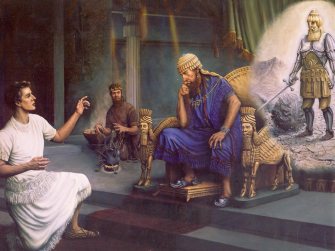
    In the Book of Daniel, Chapter 2, the Babylonia king has a disturbing dream, so he calls in the wisest men in his kingdom to tell him what his dream means.

    41. DanielDescribesDreamBut he does not want to be fooled. Instead of first telling them the dream and then asking for their interpretation, he tells the wise men they have to describe the dream to him and then tell him their interpretation.
    Well, the wise men aren’t the wise men for nothing. They know they can’t discern what the king’s dream was, so they plead with him to describe the dream to them. Even under penalty of death, the wise men are not able even to make a guess as to what the king was thinking.

    While the king sends his guard out to execute the wise men, Daniel offers to interpret the dream for the king, but first, he asks his closest comrades to pray with him for divine revelation.

    During the night, the Lord reveals the king’s dream to Daniel as well as the dream’s meaning.

    +++

    NOT SO WITH JESUS.

    In John’s gospel, also in Chapter 2, we read that Jesus has just cleared the  Temple of money changers and demanded that His Father’s House be a house of prayer, not a market for the enrichment of the Jewish religious leaders.

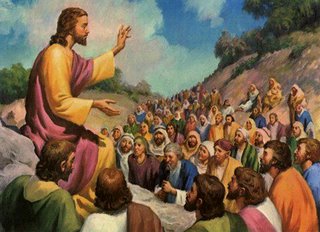
    John tells us that many of the Jews who watched Jesus perform miracles and who heard His teaching “believed in his name” or “believed in him.”  41. JesusTeachesYet Jesus “would not entrust himself to them” (vv. 23-24 NIV) because He knew what was in their hearts.


    Why the difference?

    Why did a godly man like Daniel need to surround himself with other godly men and spend time in prayer, asking the Lord for His revealing power to present the king’s dream and meaning to him, when Jesus did not seek Divine intervention and yet still knew the hearts of men?

    Simply this: Jesus is God; Daniel is not.

    There are so many ways the Bible tells us that Jesus is God. Of course, there are the direct comments from Jesus Himself, like in John 14:6 NIV, when He says, “I am the way and the truth and the life” or in John 4:26 TLB, when He tells the Samaritan woman at the well, “I am the Messiah!” or even John 10:30 ESV: “I and the Father are one.”

    +++

    THERE ARE MANY OTHER REFERENCES, TOO.

    One of the most beloved is Luke’s account of Jesus returning from the wilderness, where, after 40 days and nights of fasting, He had been subjected to the devil’s abuse, and returns to Nazareth to the temple where His family worshipped when He was a boy.

    There, He was given the sacred scroll to read, and He selected a passage from the Old Testament prophet Isaiah, “The spirit of the Lord is on me because he has anointed me to preach good news to the poor.” After reading this, He sat down and proclaimed to all, “Today this scripture is fulfilled in your hearing.”

    41. DanielAndGabriel

    Some of them are so rich, they can be relished over and over, like when Jesus in John 5 says that “the Father who sent me has himself testified  concerning me” (v. 37 NIV) or Luke 18:19 TLB, when He said,“Do you realize what you are saying when you call me ‘good’?” Jesus asked him. “Only God is truly good, and no one else”; or John 14:9 CEB, “Whoever has seen me has seen the Father.”

    While Jesus made it abundantly clear that He was the long-anticipated Messiah, Daniel made no such claim about himself.

    In fact, Daniel had his own dreams and did not know their meaning. In Daniel Chapter 8:16 NIV, for example, Daniel describes watching a vision, when he heard a man’s voice telling the angel Gabriel, “Gabriel, tell this man the meaning of the vision.”

    Again, Daniel relied on divine intervention; Jesus did not rely on divine intervention because He, himself, was and is divine.

    +++

    WHAT IS STRIKING IN BOTH STORIES, that of Daniel seeking God’s help, and that of Jesus proclaiming God’s Kingdom at hand, is how frequently and how personally the God of the universe intervenes in human affairs.

    This is not your remote god off somewhere on a mountaintop sending thunderstorms when he’s in a bad mood, or just a block of wood sitting on the shelf, or even a rotating spirit inhabiting the same statute somewhere in the Far East.41.Bible_Words_Spoken_by_God.

    This is a God who lays it right out there. Check Isaiah 44:6 NCV: “This is what he [the Lord] says, ‘I am the beginning and the end. I am the only God.’”

    Now, add Jesus’ numerous statements that He is God, that He and the Father are one, that He obeys the Father, that if we have seen Jesus, we have seen the Father, and then backs it up with amazing miracles, spot-on prophesies, and promises that give us hope of eternal life with him.

    What we have is what the apostle John called “the Word [becoming] flesh and … dwelling among us” (John 1:14 NIV).

    PRAYER: O Lord, You can look into our hearts and know our thoughts, our feelings, our loves and hates, our desires, our sins — and You love us anyway. Be present in our lives, change our hearts from stone to flesh, and lead us on straightened paths. May Your light shine through the cracks in our lives to brighten a troubled world in desperate need for a Savior. We lift this petition in the name of Jesus, our Lord and Your Son. Amen

    Missed a blog post? Find prior posts at LoveAndGrace.


  • Parallels With Jesus: Job


    In Part 2 of a 3-part series, “Parallels With Jesus,” we examine the life of Job, a man who, like Jesus, suffered, and, like Jesus, maintained his faith in God’s mercy and goodness. Previously, we looked at Jesus and Joseph. Next, we’ll look at Jesus and Daniel.

    I know that my redeemer lives, and that in the end he will stand on the earth. (Job 19:25 NIV)

    For Christ did not enter a holy place made with hands, a mere copy of the true one, but into heaven itself, now to appear in the presence of God for us. (Hebrews 9:24 NASB)

    TWO MEN. TWO BATTLES WITH SATAN. ONE OUTCOME — SATAN LOSES.

    40. GodSatanTalkHow did Satan lose? Was it because of the superior attributes of the two men doing battle with him? Or was it something else? Was another force involved that tipped the scales away from Satan?

    Here are the two men: Job in the Old Testament and Jesus Christ in the New Testament.

    Let’s set the stage: In Job, Chapter 1, Satan is holding a conversation with God and claims that Job’s faith in the Creator is based solely on the health and material blessings God has bestowed on him. Strip Job of his blessings, Satan argued, and his faith will disappear.

    Okay, we can understand the point that it’s easier to sing Praises and Hallelujah when you’ve got a good marriage, a big house, a wonderful job, obedient children, two cars, and a vacation home, but if you lose all the “stuff,” there goes the faith.

    Now, let’s swing over to Jesus. In Matthew, Chapter 4, just after Jesus has emerged from His baptism in the Jordan River, He was led by the Holy  Spirit into the wilderness “to be tempted by the devil.”

    Satan was then given the opportunity to challenge Jesus on whether He really was the 40. JesusTemptedbySatanSon of God. Now, Jesus believed He was. In fact, in the preceding chapter, Matthew tells us the voice of God said, “This is my Son,” which should settle the matter.
    +++

    WHAT IS CLEAR WITH BOTH the temptation story facing Job and that facing Jesus is that Satan, the tempter, was striking at their faith in God. He tried to rattle them and force them to recant their belief that God exists, that He created us, and that He is present in our lives.

    We all face temptations in our lives, and Scripture is clear that how we handle those moments helps shape our character and our witness for our belief in Jesus Christ.

    But look at what Jesus and Job went through. For Jesus, the second person of the Trinity, we read that the Holy Spirit, the third person of the Trinity, purposefully led Him into the wilderness for the express purpose of being tempted.

    Not only that, but the temptations did not begin until Jesus had fasted for 40 days and 40 nights. At that point, He would have been weak with hunger and more easily susceptible to wrongdoing.

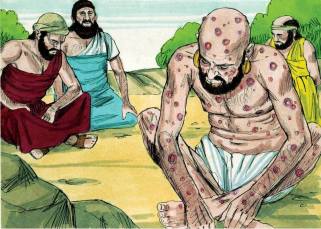
    40. JobHasBoilsIn our own lives, we know we are more likely to give into temptations, whether of actions or words, when we are tired or hungry or upset about work.

    Imagine how we might react if we had been fasting for five weeks.

    +++

    Job’s temptations were a complete surprise to him, as far as we can tell from Scripture. We read that “one day” everything is going along pretty much for him the way every day went, when a succession of messengers ran up to him to announce that his farm animals were taken and his servants slaughtered.

    After three such messages, he receives a fourth message that tops the first three: His sons and daughters were partying, and the house in which they were gathered was felled by a mighty wind, killing them all instantly.

    As we read through the succession of calamities that befell Job, we see him rent with despair but calling out to God for salvation: “Then he fell to the ground in worship and said: … ‘may the name of the Lord be praised’” (Job 1:20-22 NIV).

    Jesus did much the same thing. As He was faced with temptations, from turning stones into bread to jumping off the top of the temple to worshipping the devil with the offer of his earthly kingdom, Jesus quoted Scripture.

    The verses were all from Deuteronomy: “Man does not live by bread alone, but on every word that comes40.Jesus_Always_With_Us from the mouth of God,” “Do not put the  Lord your God to the test,” and “Worship the Lord your God, and serve him only” (Matthew 4:1-11 NIV).

    +++

    GOD IS CLEAR IN HIS REVEALED WORD that our temptations are designed to improve our character. Paul tells us in Romans 5:3-4 NIV that “we also glory in our sufferings, because we know that suffering produces perseverance; perseverance, character; and character, hope.”

    This is the point where it becomes clear that Satan may win some battles in the short run, but in the long run, God wins the war.

    God also reassures us through Paul’s writing in 1 Corinthians 10:13 NIV that “No temptation has seized you except what is common to mankind.” That means, whatever you are dealing with, others are, have, and will face, as well.

    But Paul goes on to tell us that “God is faithful; he will not let you be tempted beyond what you can bear. But when you are tempted, he will also provide a way out so that you stand up under it.”

    Job certainly knew that he could count on God’s goodness and faithfulness. In Job 19:25 NIV, Job proclaims his undying faith in God: “I know that my redeemer lives, and that in the end, he will stand on the earth.”

    40. Cross_And_BibleJesus also knew that He could count on the Father’s love and presence.  Immediately after He faced His trials, He began His public ministry, preaching, “Repent, for the kingdom of heaven is near,” which meant himself. Then, he called His first disciples, so He could begin to build His church (Matthew 4:12-22).

    “Come, follow me,” He said, “and I will make you fishers of men.”

    Those two models show us that even in the most trying of situations, God is faithful, and He is always there to help us.

    Take that, Satan. Now, be gone …

    +++

    PRAYER: Our gracious and loving Heavenly Father. We are so grateful that You are sovereign, that You are watching over us and helping us, as You promised You would, through the valleys of life, just as You are with us when we’re experiencing the blessings. Forgive us, Lord, when we doubt or wander away from Your presence. Bring us back every time into Your loving arms. We ask this in Jesus’ Name. Amen


  • Parallels With Jesus: Joseph


    You meant to hurt me, but God turned your evil into good to save the lives of many people, which is being done. (Genesis 50:20 NCV)

     “Therefore let all Israel be assured of this: God has made this Jesus, whom you crucified, both Lord and Messiah.” (Acts 2:36 NIV)

    In Part 1 of a 3-part series, “Parallels With Jesus,” we examine the life of Joseph, an Old Testament precursor to Jesus Christ, and note some key similarities in their lives. Next, we’ll look at Jesus and Job, and then Jesus and Daniel.

    THERE’S SOMETHING FUNDAMENTALLY UNFAIR WITH UNFAIRNESS.

    There, I said it. It had to be said, right? We all agree with the idea that when something strikes us as being unfair, not right, that the universe is amiss.

    We don’t like it, and we start to wonder if we can ever trust solid ground again … or any institution, or any value system, or any group.

    jm_100_OT_-P10.tiffSo, with that settled, what does the “unfairness of unfairness” have to do with us? How is that relevant to our lives?

    Joseph, we may recall, was the favored son of Jacob, whose sons became the patriarchs of Israel’s 12 tribes. He was the next-to-last of Jacob’s sons and the first of two born to Rachel, Jacob’s favored wife, and the love of the old man’s heart.

    His older brothers hated him. They were jealous, really, of the love and attention bestowed on him. His fancy multi-colored coat, his clean hands, his conceit, his fanciful dreams — made their blood boil.

    So, they sold him to a band of Ishmaelite traders headed for Egypt.

    That was the end of Joseph! Or so his brothers thought.

    +++

    FAST FORWARD TO JESUS CHRIST.

    This was the Son of God come into the world in human form to redeem fallen mankind from its sins, its depravity, and its sentence of death. Jesus said He came to proclaim truth, restore mankind to the Father, and liberate us from slavery … slavery to sin.

    His brothers hated him. In this case, His brothers were the religious leaders of the day.

    They hated His miracles, they hated His parables, they hated 38.Peter.Speaks.PentecostHis disciples and followers, and they hated His condemnation of their legalistic teaching. Why, Jesus even healed the blind and crippled on the Sabbath — and they hated that!

    So, they turned Him over to the Roman authorities to be scourged, beaten, and crucified.

    That was the end of Jesus! Or so the religious authorities thought.

    +++

    BOTH JOSEPH AND JESUS were unfairly treated by those who should have loved them, respected them, and enjoyed their company.

    Both were turned over to authorities who, in turn, turned them over to  superior authorities with the power to harm them.

    Jesus was whipped and crucified; Joseph was thrown into prison. Those were just some 41.Bible_Words_Spoken_by_God.of the high marks — or low marks — of their remarkably parallel lives.

    Here are some others, along with supporting Bible verses for further reference: Hated by brothers (Genesis 37:13-14, Hebrews  2:11); others plotted to harm them (Genesis 37:20, John 11:53); robes taken from them (Genesis 37:23, John 19:23); sold for the price of a slave (Genesis 37:28, Matthew 26:15); bound in chains (Genesis 39:20, Matthew 27:2); and falsely accused (Genesis 39:16-18, Matthew 26:59-60).

    That was just the beginning stuff; here’s the really good stuff: Exalted after suffering (Genesis 41:41, Philippians 2:9-11); forgave those who wronged him (Genesis 45:1-15, Luke 23:34); and saved their nation (Genesis 45:7, Matt. 1:21).

    Don’t be surprised if I tell you the best one was saved for last.

    God’s wisdom … is a wisdom that none of the present-day rulers have understood, because if they did understand it, they would never have crucified the Lord of glory!
    (1 Corinthians 2:7-8 MEV)

    God redeemed the evil done to them, first to Joseph and then to Jesus, for the good of those who harmed them! See Genesis 50:20 and 1 Corinthians  2:7-8. Both verses will be very easy to find, not just in the Bible but also in this meditation. The Genesis verse is at the top of this column; the verse from Paul’s letter to the Corinthians is in the highlighted text.

    With Joseph, God was able to use his imprisonment in Egypt to prepare him for the humility required to lead his adoptive country — and his father’s family — out of famine. With Jesus, God was able to use His crucifixion to satisfy the debt we cannot pay for our sins and so open the path to our salvation.

    Take a moment to meditate over the awesome-ness of those verses and then pray this one-sentence prayer: “Thank you, Loving God, for redeeming good from evil. Amen.”

    +++

    FOR ANY BIBLICAL LESSON to make an impact in our lives, we have to see its relevance. Just a wild guess, but I don’t image most of us can relate to the evil perpetrated — unfairly and unjustly — on either Joseph or Jesus.

    Sure, we know that “bad things can happen to good people,” but that’s not what the parallel stories are about.

    They’re about how God redeems the evil in this world — the evil we do to others and the evil others do to us — for His purpose and His glory.38. God's.Mercy

    That’s an amazing concept! We are the children and heirs of a God so loving and gracious — and so powerful — that He takes the sin of the  world and redeems it for His glory!

    Every sin — every malignant thought — every unkind word — every cruel deed He can use to further His kingdom.

    Remember what Jesus said about His defeating Satan on Satan’s home turf? “I have told you these things, so that in me you may have peace. In this world you will have trouble. But take heart! I have overcome the world” (John 16:33 NIV).

    Job, whose faith was tested by Satan, put it this way: “I know that my Savior lives, and at the end he will stand on this earth” (John 19:25 CEV).

    What mankind does for evil, whether intentionally or just because it’s part of our sinful nature, God can, does, and will redeem for His glory and for His purpose.

    That’s not fair, either, but it’s a far better deal than what we deserve.

    This unfairness is called “Grace.”

    +++

    PRAYERDear Lord, Your mercy amazes us. It exceeds what we can understand. We know we don’t deserve grace. We know it’s a gift of incredible love. It’s amazingly unfair the way You take our sins, our willful disobedience, and turn it around to serve Your glory and our redemption. Thank you for that love. In Jesus’ Name we pray.  Amen

  • Jesus and the Good and Bad Neighbors


    “Two men went up to the temple to pray, one a Pharisee and the other a tax collector.” The Pharisee stood up and prayed about himself: ‘God, I thank you that I am not like other men.” (Luke 18:10-11a NIV) 

    “But a Samaritan, as he traveled, came where the man was; and when he saw him, he took pity on him.” (Luke 10:33 NIV)

    “Whoever claims to love God yet hates a brother or sister is a liar. For whoever does not love their brother and sister, whom they have seen, cannot love God, whom they have not seen.” (1 John 4:20 NIV)

    JESUS TAUGHT US TO LOVE OUR NEIGHBORS, BUT WHAT DOES THAT MEAN?

    Oh, sure, we can hear the words and cobble together a respectable answer, something like, “help our neighbor when he or she is in need,” or “watch their house and take in the mail,” or even “transport their child to baseball practice and bring them back.”

    36.Love.NeighborsThere might be more items we can offer, especially if God has placed on our hearts a love for His creation. In that case, we can bake a casserole or help someone take down storm windows, or even pick up a few items while we’re in the grocery store.


    Is that what He meant?

    Doesn’t anyone who’s halfway decent reach out an occasional helping hand to a neighbor, especially a nice one, who’s friendly and helps us out? Isn’t that what we call “being neighborly”?

    If Jesus repeated His command for us to love our neighbors, isn’t there a high probability He meant something else, something more meaningful and deeper, something beyond our reach?

    +++

    IN OUR TWO PARABLES, Jesus showed us that loving our neighbor means going out of our way to lend a hand, even to someone we might want to avoid.

    That might not be pleasant, but Jesus often urged us out of our comfort zones.

    Aren’t there commands to “love your enemies and pray for those who persecute you” (Matthew 5:44 NIV), “do good to those who hate you” (Luke 6:27 NIV), and even this incredible gem, as Jesus, having been flogged and nailed to a Cross, says, “Father,  forgive them, for they do not know what they are doing” (Luke 23:34 NIV). 36. Love.Others
    To wrap up His two parables about good and bad neighbors, Jesus said of the Samaritan’s actions: “Go and do likewise” (Luke 10:37 NIV); but in the parable of the bad neighbor, illustrated by the Pharisee’s prayer, Jesus said: “I tell you that this man [the tax collector], rather than the other [the Pharisee], went home justified before God” (Luke 18:14a NIV).

    In other words, Jesus praised the selfless actions of the despised Samaritan but condemned the self-centered egoism of the highly respected Pharisee.

    +++

    LET’S UNPACK THOSE PARABLES briefly so that we see clearly just what Jesus meant by His two incredible punch lines.

    In the story about the Good Neighbor, or Good Samaritan, Jesus said a traveler was beaten and robbed and left for dead along the road and that two Jewish religious leaders found him, but neither stopped to help. It was a despised foreigner who picked the man up, dressed his wounds, carried him to a nearby inn, and paid for his care.

    In the story about the Bad Neighbor, or Pharisee and tax collector, Jesus said the two men were gathered in the Temple to pray. Whereas the religious leader looked to the heavens and self-righteously told God all of his good qualities, the humble tax collector  lowered his head and mumbled a few words confessing his sin and asking for God’s mercy.

    Matt. 7:28-30 NIV — “When Jesus had finished saying these things, the crowds were amazed at his teaching because he taught as one who had authority and not as their teachers of the law.”love_thy_neighbor-billboard

    Jesus turned to His listeners, which included Pharisees but also tax collectors, prostitutes, shepherds, farmers, and other common folk, to be like the Samaritan, the Good Neighbor — “Go and do likewise” — but not like the Pharisee, the Bad Neighbor — “I tell you that this man [the tax collector], rather than the other [the Pharisee] went home justified before God.”

    +++

    IF WE WANT TO UNDERSTAND JESUS’ COMMAND on loving our neighbor, we have to refer to a related account in Matthew (chapter 22:34-40), where Jesus tells a Jewish religious leader that the most important commandment is to love God with our whole being, and that the second commandment, to love our neighbor, “is like the first” (emphasis added).

    Swing back to Luke’s account. If Jesus can show the crowd that loving your neighbor — our neighbor — is difficult and often goes well beyond our comfort zone, then it’s no stretch for Him to show us that, like the first commandment, we don’t love God all that much, either.

    31-jesusteachingreligiousleadersKeep in mind that the religious leader was a scholar extremely well versed in the Jewish canon — what Christians call the Old Testament — and probably could quote most, if not all, of the Torah, the books compiled and written by Moses.

    That means the scholar was well versed with the Book of Leviticus. In Chapter 19, the Lord laid out a clear list of actions the Jews should do and should not do to show love and concern for their neighbor. Leviticus was written some 1,300 years before the scholar’s encounter with Jesus.

    +++

    THE SCHOLAR KNEW LEVITICUS 19. His question may have been intended to trap Jesus, or it might have been a real question touched by something Jesus said, or maybe the scholar was, for just a moment, responding to Who Jesus Is.

    In any case, the Lord used the occasion to expose man’s sinful weakness. What Jesus told us is this: We don’t love our neighbors as ourselves — nor do we love the Lord with all our hearts, souls, minds, and strength.

    Fortunately, Jesus does love us unconditionally, even though we fail to love Him as He commands.

    For that, we can be ETERNALLY grateful!

    +++

    PRAYER: O Holy and Merciful Father, God Almighty, we thank You that You are not like us. You are everlasting; we are finite. You are truthful; we are deceitful. You embody light; we prefer darkness. You are love; we are a jangle of lies, hatred, and evil. Thank You for loving us, for saving us from the punishment we deserve, for lifting us up to glory in Jesus’ Name! Lord, we honor and adore You. In Jesus’ Name we pray. Amen

  • Jesus and John … The Savior & The Beloved Disciple


    One of them, [John] the disciple whom Jesus loved, was reclining next to him. (John 13:23 NIV)

    When I [John] saw him, I fell at his feet as though dead. (Rev. 1:17 NIV)

    WHAT A DIFFERENCE ASCENSION INTO HEAVEN MAKES!

    Two radically different views of the apostle John, the apostle generally known as “the disciple whom Jesus loved.”

    The first image is at the Last Supper; the second image is much later, after Jesus has 34. Beloved Disciple by Ary Schefferbeen crucified, resurrected from the dead, and ascended into Heaven. In this second view, from the book of Revelation, John is in his later years and sees a vision where the Holy Spirit takes him into Heaven.

    There He sees the risen Lord, seated on His heavenly throne, surrounded by heavenly hosts, and John falls prostrate on the ground, afraid of looking. Such holiness is beyond his ability to take in.

    Yet, when the Lord walked the earth, John was His buddy. In fact, one day John and his older brother, James, approached Jesus with their mother and requested preferred seating when Jesus became king, thinking that Jesus would become an earthly king, and the two former fishermen naturally would become his top ministers.

    “When you sit on your glorious throne, we want to sit in places of honor next to you, one on your right and the other on your left” (Mark 10:37 NLT).

    Of course.

    +++

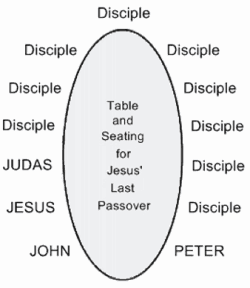
    WHO COULD FORGET this description of the Last Supper when Jesus was reclining at the table surrounded by His 12 disciples and announces “one of you is going to betray  me.” 34. LastSupperSeatingArrangement

    John’s gospel tells us the disciples began asking one another what their Master could possibly have meant, when Peter, yes, that Peter — Peter the bold, Peter the impetuous — motioned to John and said, “Ask him [Jesus] which one he means.”

    Well, of course, Peter would ask John for the inside scoop. John was sitting the closest to Jesus. In fact, John tells us in his gospel that he was “leaning back against Jesus” when he relayed Peter’s question, asking the Lord to identify the betrayer (John 13:21-25 NIV).

    In this scene at the Last Supper, John casually leans against the earthly form of the Creator of the Universe, innocently oblivious of who He really is; later, in the scene depicting divine revelation, John sees who He really is and falls flush against the earth after seeing a heavenly vision of “someone like a son of man … [whose] face was like the sun shining in all its brilliance” (Revelation 1:12-16 NIV).

    The difference?

    Before Jesus was crucified and resurrected, even His closest disciples, John and Peter, could not fathom that this man they lived with for three years, for whom they gave up their livelihoods and everything they knew to follow, was … well … who He was and is.

    God.

    After Jesus was resurrected and ascended into Heaven to be with the Father, and the 34. JohnBowingBeforeJesusHoly Spirit descended on the apostles (Acts 2:1-4), they realized they had walked with God incarnate!

    Big big difference.

    When John was “in the Spirit” (Rev. 1:10 NIV) and saw Jesus in His Glory, this was way beyond the time when the two of them were buddies and they dipped their bread in the wine and talked about who might betray Him. This was a time for worship!

    But Jesus, ever loving, ever gentle, ever merciful, “placed his right hand on [John] and said, ‘Do not be afraid. I am the First and the Last. I am the Living One; I was dead, and now look, I am alive for ever and ever!” (Rev. 1:17-18 NIV).

    +++

    WHEN WE SEE THE TWO VIEWS of John in his relationship with Jesus, we catch a glimpse of the majesty of heaven and a smidgeon of the sacrifice Jesus made on our behalves.

    Paul says it this way, “Let this mind be in you which was also in Christ Jesus: Who, existing in the form of God, did not consider equality with God something to cling to, but emptied Himself, taking the form of a servant, being made in human likeness. And being found in appearance as a man, He humbled Himself and became obedient to death—even death on a cross” (Philippians 2:5-8 BSB).

    This concept of the divine-become-human was too much for Jesus’ contemporaries — His mother and siblings, His disciples, His followers, even His enemies and betrayers — to comprehend.

    The Roman authority, Pontius Pilate, looked Him straight in the eye and “said to him, ‘What is truth?’” (John 18:38 ESV).

    Indeed, what is truth?

    +++

    Truth is Jesus, and Jesus is Truth.

    Jesus told us in John 14:6 NIV, “I am the way and the truth and the life” and again in John 18:38 NIV: “In fact, the reason I was born and came into the world is to testify to the truth.” In His prayer for us in the garden, He again said God’s Word is 35. JESUS is the TruthTruth, “Sanctify them by the truth; your word is truth” (John 17:17 NIV).

    The Bible doesn’t tell us stories and give us images to entertain us; it does so to instruct us, and so we see here in the two scenes of John and the Messiah something about our own relationship with Jesus.

    We hear God’s call for our lives because our earthly minds can comprehend a loving Teacher who beacons us to follow Him since “He is gentle of spirit and we can learn from Him,” but once we accept Him in our hearts as Lord and Savior, we get a glimpse of heavenly glory, and when we do, we are stunned that such divine holiness could want fellowship with us.

    God wants it so much, in fact, that He would come looking for us, from that walk in the Garden of Eden when He called out, “[Adam,] where are you?” (Genesis 3:9 NIV) to the bold statement that He came into the world that man “may have life and have it abundantly” (John 10:10 ESV) to the glorious invitation to enjoy fellowship with Him, “Behold, I stand at the door and knock; if anyone hears My voice and opens the door, I will come in to him and will dine with him, and he with Me” (Revelation 3:20 NASB).

    35. Jesus Sends Holy SpiritYes, there’s an amazing transformation between Jesus the God-Man who walked the earth to establish a New Covenant with man—His prized creation—and Jesus, the resurrected Son of God and Second Person in the Trinity, to whom God has given “all authority in heaven and on earth” (Matthew 28:18 NIV).

    As much as we love the Jesus of the Gospel, so much more we love the Divine Jesus who sent us the Holy Spirit. As recorded in John 14:16 (NASB), Jesus said, “I will ask the Father, and He will give you another Helper, that He may be with you forever.”

    In our earthly form, we can perhaps understand, and envy, the close familial relationship the apostle John enjoyed with Jesus, but we stand in awe of the risen Jesus, who in His glory, caused John to fall onto his face in worship …

    … and then, in grace and tenderness, reached down to bid him “Welcome.”

    PRAYER: O Lord, our God and Father, we are in awe. Your majesty overwhelms us. Your grace exceeds our understanding. Your love is more than we can imagine. Lord, we thank You for wanting us to be with You so much that You sent Your Son to take our punishment and then to demonstrate, through His resurrection, the hope that awaits us of eternal life with You. In Jesus’ Name we pray. Amen

    #GodIsLove

    #HeFirstLovedUs

    #UnfathomableLove