The heart is deceitful above all things, and it is exceedingly corrupt: who can know it? — Jeremiah 17:9 WEB
For from within, out of the heart of man, come evil thoughts, sexual immorality, theft, murder, adultery, coveting, wickedness, deceit, sensuality, envy, slander, pride, foolishness. — Mark 7:21-22 ESV
You say, ‘I’m rich. I’m wealthy. I don’t need anything.’ Yet, you do not realize that you are miserable, pitiful, poor, blind, and naked. — Revelation 3:17 GW
All of us are dirty with sin. All the right things we have done are like filthy pieces of cloth. — Isaiah 64:6 NCV
Miss a blog post? Find blogs at LoveAndGrace and tweets at Twitter.
WE DON’T STAY AT THE MOUNTAINTOP FOR LONG, DO WE?
Nothing is more energizing than to join in Christian community in a weekend retreat. Without fail, retreat centers are strategically placed along mountain ranges, or beside pristine lakes, or shaded by a forest of bright leaves.
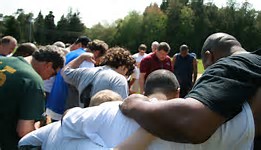 The joyful sounds of praise and worship ricochet off the walls, as celebrants eagerly jot down telephone numbers and e-mail addresses of newfound friends and pledge to keepin touch, just to encourage one another in their faith walks.
It’s all great stuff.
But a few days later, if that long, the bubble bursts, and we’re thrown right back into the midst of real life.
+++
ON THE MOUNTAINTOP, we can forget our sin for awhile. Sin takes a back step when we’re feeling alive in the Holy Spirit.
But Satan is watching our drive home, just waiting for his chance to pounce. We won’t see it coming; we’re still resonating to the joy of our holy huddle.
Temptation will creep in, and we’ll be a little slow in batting it away. Then it will grow and sprout its evil leaves, and we’re thrown into a head spin.
What happened?
+++
LIFE HAPPENED.
The Bible is clear that since the Fall — meaning the Book of Genesis, Chapter 3 — when Adam and Eve disobeyed God in the Garden of Eden, sin has encased our hearts. We are driven by our love of sin … and we’re usually blind to it, even as it eats holes in our soul.
Sin is so much a part of who and what we are that Jesus, Himself God in human form, told us
that what defiles us is not the food groups we should avoid or whether we wash our hands or cups before eating, but what comes from out of our hearts, our minds, our  inner selves.
God sees the filth that we hide, or at least try to hide, from ourselves and from one another, even while we recognize — at some conscious level — that it resides within us and that we’re not being honest with ourselves when we deny its existence.
The apostle John hit this one hard when he wrote, “If we say we have no sin, we deceive ourselves, and the truth is not in us” (1 John 1:8 ESV).
+++
IN HIS BOOK THE PURSUIT OF HOLINESS, Jerry Bridges says “One of Satan’s most powerful weapons is making us spiritually blind—unable to see our sinful character.” Bridges goes on to describe the cure that God has provided for us: “No one can understand it [sin] and expose it except the Holy Spirit.”
Yes, it is God’s Holy Spirit that exposes our sinful selves to us and stirs within us the desire to be holy, to be Christ-like in our thoughts, words, and actions.
It is God’s Holy Spirit that convicts us of our disobedience, whether it’s the commission of an immoral act, a casual conversation that slips into a slanderous or judgmental remark, or even a careless thought or fantasy.
As Bridges says, “The Holy Spirit opens the inner recesses of our hearts and enables us to see the moral cesspools hidden there. This is where He begins His ministry of making us holy.”
It’s an uphill climb, but the “good work” that Christ has begun in us will continue until the day Jesus returns or calls us home (Phil. 1:6). Bridges notes that our sinful natures, combined with the evil powers of spiritual warfare, “are too strong for us to persevere unless the Holy Spirit” is alive and working within our souls.
+++
GOD IS SO MERCIFUL.
The immortal, merciful, invincible God could, if He wanted to, blot us all out as a horrible experiment gone wrong from the first. He washed away the first bunch of humans for their unrestrained evil (Genesis 6:5), so He could do it again.
How fortunate we are that He promised not to resend the floodwaters to wash mankind away (Genesis 9:15). Instead, he sent His only Son, Jesus Christ, to atone for the evil we do and thereby give us the promise of reconciliation with Him (John 3:16; Romans 5:9).
We’ve seen this “mountain top high leads to valley low” before in the Bible.
 Remember Moses, spending 40 days and 40 nights on the mountaintop with God, who gave him the Ten Commandments on two stone tablets? When Moses began the long trek back to the Israelite community, as recorded in Exodus Chapter 32:7 (NIV), God said to Moses, “Go down, because your people, whom you brought up out of Egypt, have become corrupt.”
Moses returned to the camp to see his countrymen dancing drunk around a golden cafe they made to worship. He was so angry, he smashed the two tablets.
Then, in Matthew 17, we see Jesus take three disciples with him to the mountaintop to witness the Transfiguration, where the LORD’s appearance was changed to reflect His glory. When He and the three disciples began their descent, it was to find a commotion among his remaining disciples and a man who had brought his epileptic son for healing.
Jesus was so distraught, He said, “O unbelieving and perverse generation, … how long shall I stay with you? How long shall I put up with you?” (Matthew 17:17 NIV)
 The mountain top may be where inspiration and emotion reign, but it’s only in the valleys that we encounter real life — that’s where the growth occurs.
+++
THE APOSTLE PAUL TELLS US that “we also rejoice in our sufferings, because we know that suffering produces perseverance; perseverance, character; and character, hope.” (Romans 5:3-4 NIV)
James, the half-brother of Jesus, counsels us to “Consider it pure joy, my brothers, whenever you face trials of many kinds, because you know that the testing of your faith develops perseverance.” (James 1:2-3 NIV)
God gives us those blessed moments on the mountaintop to reassure us, to comfort us, and to pour His love and peace on us in an unhindered way. It’s really the closest to Heaven we experience in this world. It’s just a sample of what lies ahead.
God will take us to the mountaintop, but He doesn’t leave us there. He has work for us to do and work He has to do in our hearts to prepare us for those tasks that lie ahead. Paul tells us, “I am sure of this, that he who began a good work in you will bring it to completion at the day of Jesus Christ.” (Philippians 1:6 ESV)
Paul goes on to encourage us. “Is there any encouragement from belonging to Christ? Any comfort from his love? Any fellowship together in the Spirit? Are your hearts tender and compassionate?” (Philippians 2:1 NLT)
If that’s the case, if you are filled with the Holy Spirit from your time on the mountaintop, then go, you believer in Christ, as He calls you to minister to a world hungry for His message.
Leave the mountaintop and mingle with the world. “Everyone should look out not only for his own interests, but also for the interests of others.” (Philippians 2:4 CSB)
God wants us to leave the mountaintop and do the Kingdom work to which we are called: “But you will receive power when the Holy Spirit comes to you. Then you will be my witnesses.” (Acts 1:8 GW)
Once He can show us the sin in our hearts and our total dependence on Him, then and only then can He use us as His ambassadors.
+++
PRAYER: Heavenly Father, too often we are content to stay on the mountaintop, where we can huddle with fellow believers, hear inspirational testimonies, praise You in song, and engage in spirited discussions, when the real work of Kingdom building is done in the valleys after we descend. Forgive us our hesitation to leave the good feeling of that peace — and thank You for allowing us that respite. Please quicken our hearts to engage the world with our witness with eagerness and humility. In Jesus Name, Amen


 Don’t count them, but just notice the number of times someone uses the occasion — maybe it’s the anonymity of cyberspace — to lance someone.
  If we go back to the Gospels and watch how Jesus handled his accusers, we see that He never, ever sunk to their level rhetorically. He modeled love, patience, and understanding. Yes, He had the advantage of being divine, but He also was fully human.
 or developed enough to understand how much healing occurs when we unburden ourselves to one another (man to man or woman to woman).
 as well.
  other” implies a mutuality here, wherein each person confesses sin to the other. Unless one man’s (or woman’s) heart is unduly burdened and needs immediate relief, this is not a one-way deal. This is a
 many of the examples we tend to face in that I was not confessing to the one against whom I had sinned. Still, the principle of emptying oneself in submission to Divine authority is the same.
 portion of Israel) at the age of 8. The Bible says he “did what was right
 The Bible tells us, the king marched over to the Temple and called the elders of his country to join him, and
  Some 650 years after King Josiah made his stand, the apostle Paul faced a similar test. Paul dealt with crippling divisions in the church, where believers split up, siding with different evangelists. Paul would have none of it.
 Every time a door opens, and the Lord gives us an opportunity to enter in to give God glory, there will be a competing wind, trying to blow us back. The enemy hates God’s rule and is dedicated to gumming up the works.


 HE: What that means is that without the Holy Spirit in your heart, everything Jesus had to say sounds like gibberish, but once you accept
 HE: Easier, right.
 Picture a woman clutching a photograph or child’s drawing, her hands resting in her lap as she sits in a quiet room, her eyes shut tight, her lips moving slightly as she mouths words of petition.
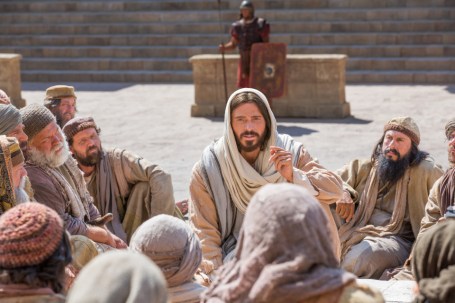 “Open the door, friend, and help me,” the first man says. “I have a friend who has journeyed and he just arrived at my house, but I have nothing to offer him.”
 faithful and trust in the
 me, no tasks to complete, no master to please.
 I was a slave to my sinful nature, but I was unaware of it. I had no clue. I imagine that put me in some pretty stellar company. There are a lot of people who have no clue how beholden they are to the pull of their sinful nature. Sadly, many of them are Christians … or, at least, church-goers … let’s call them “church-ers.”

 At first, when the boy was young, the slave, who was an adult and trusted by the child’s father, watched over the boy and guided his steps. You might say, the slave “ruled over” the child.
 “Chapter 4,” (the chapter headings were not in the original text of the letter), the apostle explains the migration that God the Holy Spirit provides everyone of us who progresses from our natural state — that of “unbelief” — to a new, born-again, state, that of “belief.”
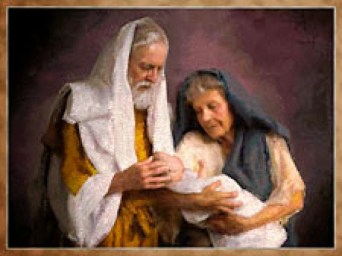 God had promised Abraham and Sarah that He would provide them with a son and that through that son, Abraham’s descendants would populate many nations and would become as numerous as the stars in the sky.
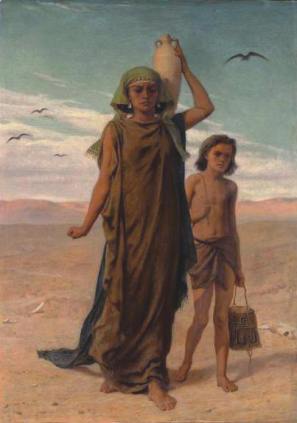 of inheritance.
  In effect, we who once were born of the slave woman now are children of the free woman and, thus, of God’s promise.
 tempered than that. I don’t know what came over me. I’m tired, hungry even, certainly
 Yes, absolutely true! The Bible is very clear about that. In 1 Corinthians 6:19-20 ESV, Paul states, “Or do you not know that your body is a temple of the Holy Spirit within you, whom you have from God? You are not your own, for you were bought with a price. So glorify God in your body.”
 GRACE IS GOD’S FREE GIFT TO MANKIND.
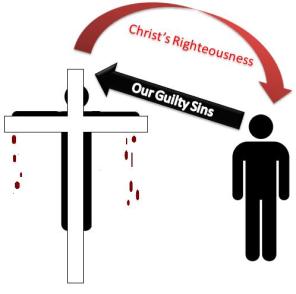 Paul says it this way: “not because I have my own righteousness derived from the law, but because I have the righteousness that comes by way of Christ’s faithfulness—a righteousness from God that is in fact based on Christ’s faithfulness (Philippians 3:9 NET, emphasis mine).
 All of them. Murder. Rape. Adultery. Theft. Slander. Lying.
  Ward's Words | BY WARD PIMLEY